


EV Charging Stations
Filtration for Power Equipment
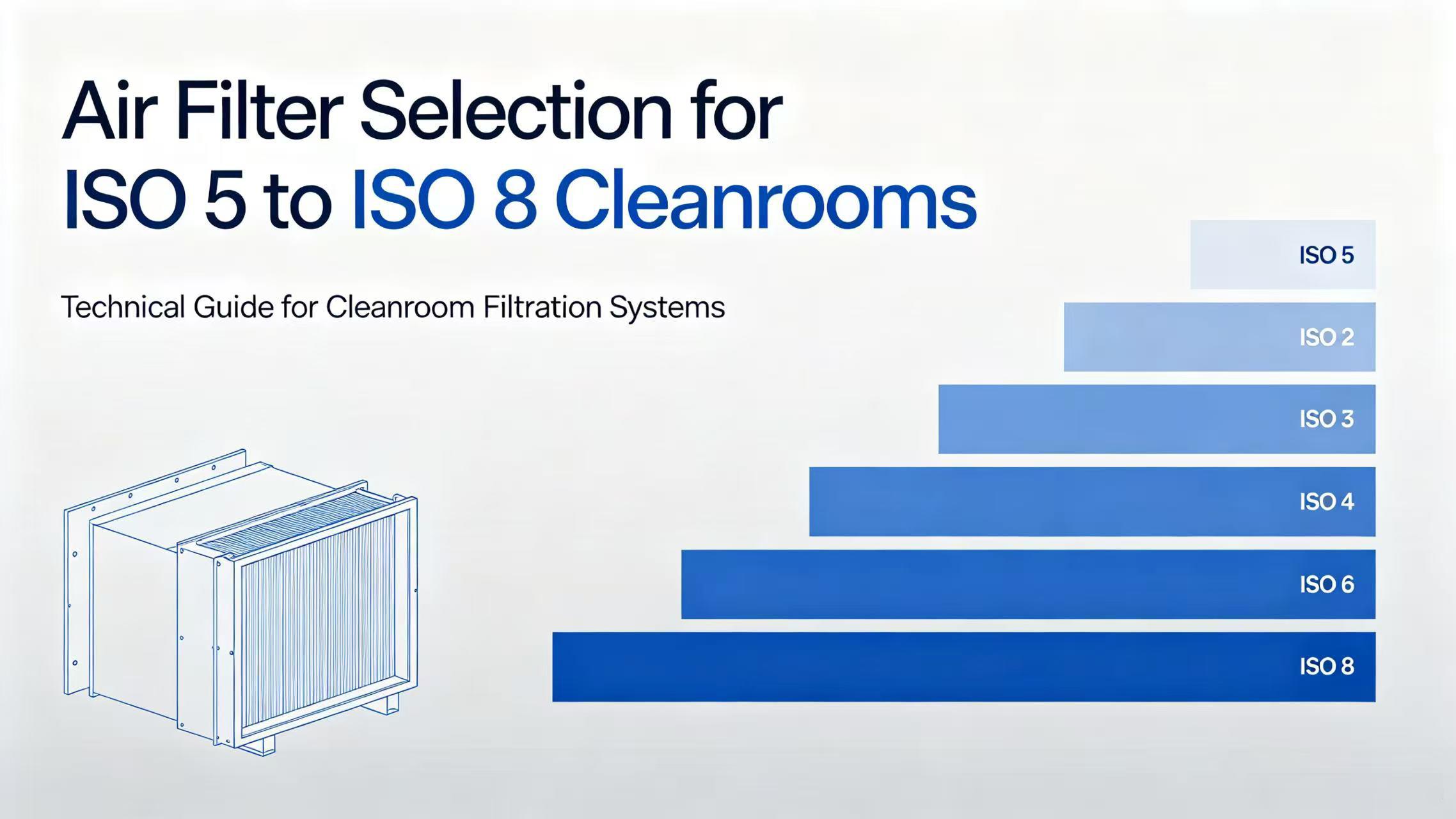
Cleanroom & Semiconductor
Ultra-High Cleanliness Filtration
Commercial HVAC
Central Air System Filtration
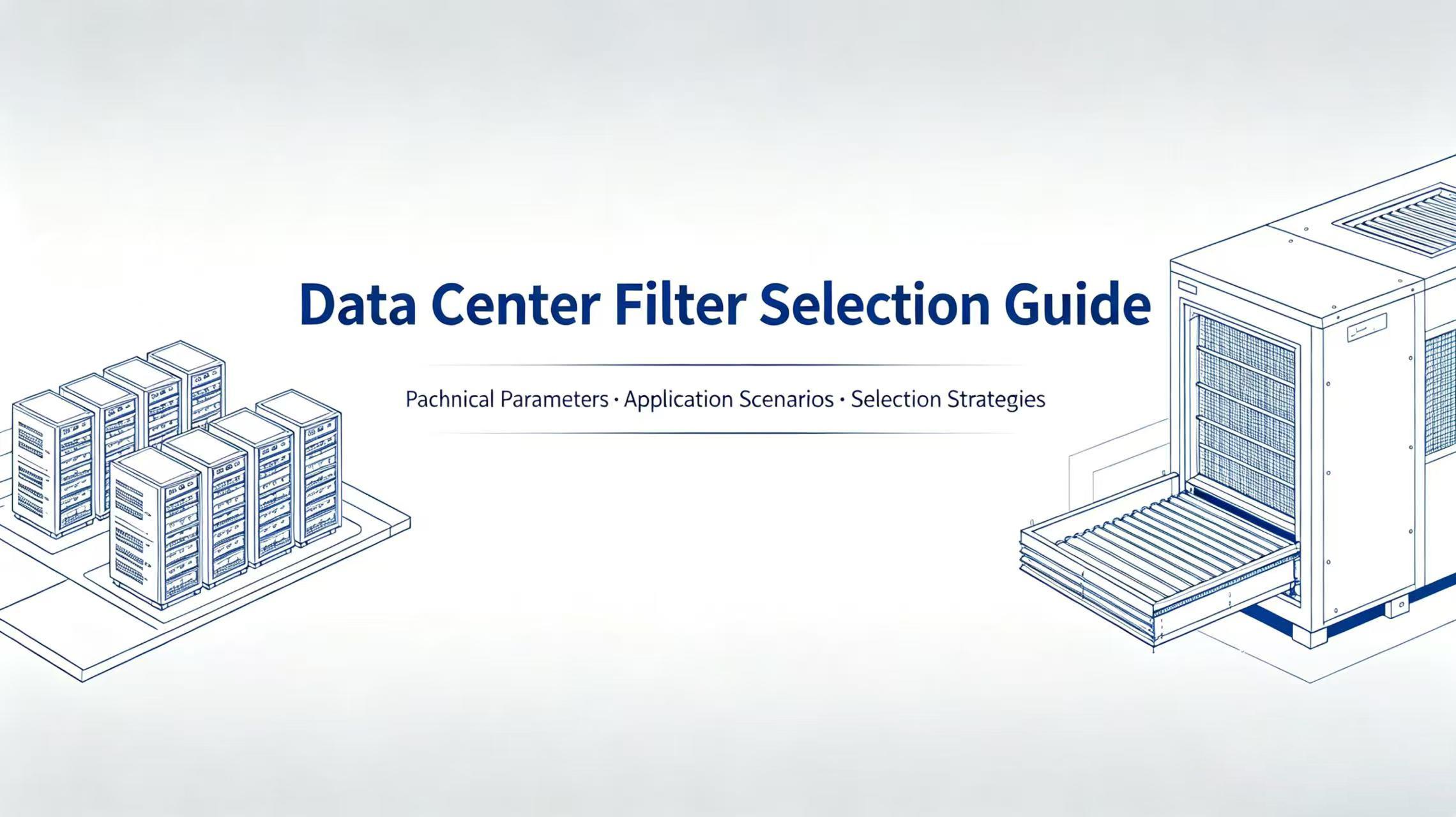
Data Centers
Precision Equipment Protection
Livestock & Farming
Farming Environment Purification
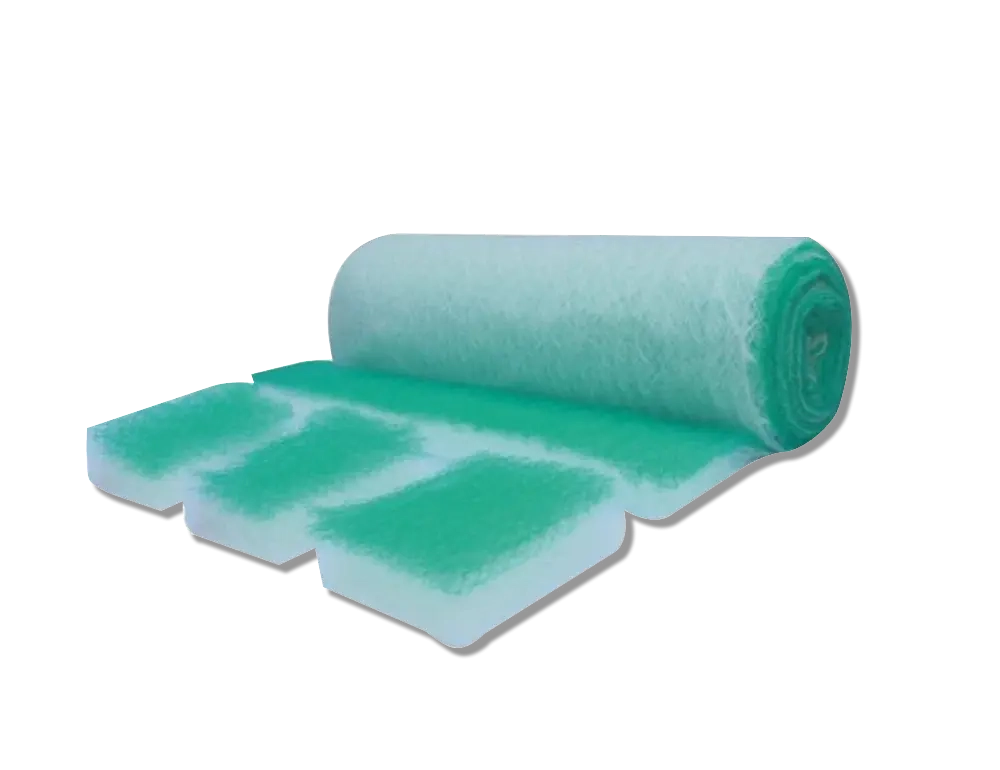
Spray Booths & Industrial Dust
Paint Mist & Dust Purification
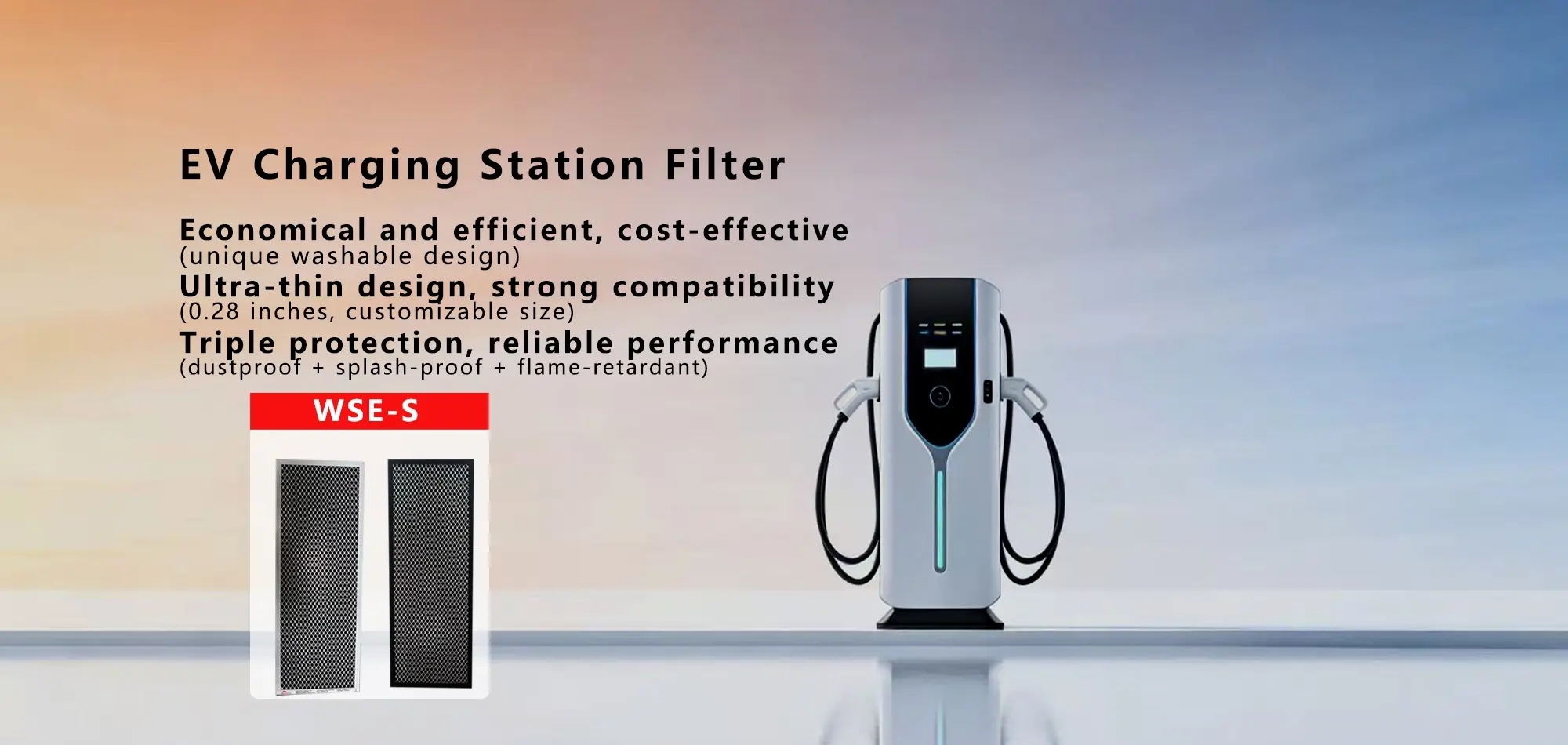
Filtration for Power Equipment
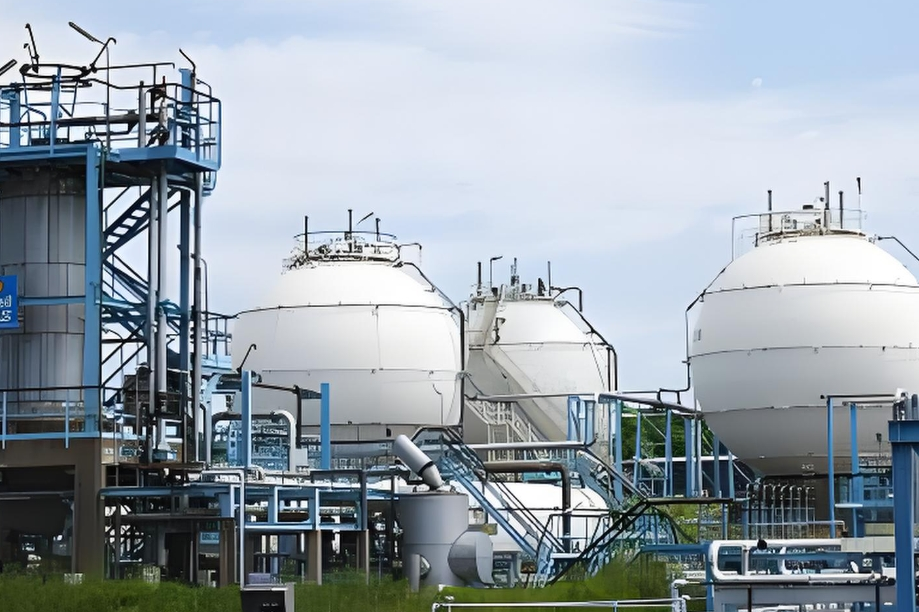
Professional air filtration for EV charging devices, protecting against dust and sand ingress to ensure stable, reliable operation of charging piles and station infrastructure.
View Related Products →Ultra-High Cleanliness Filtration
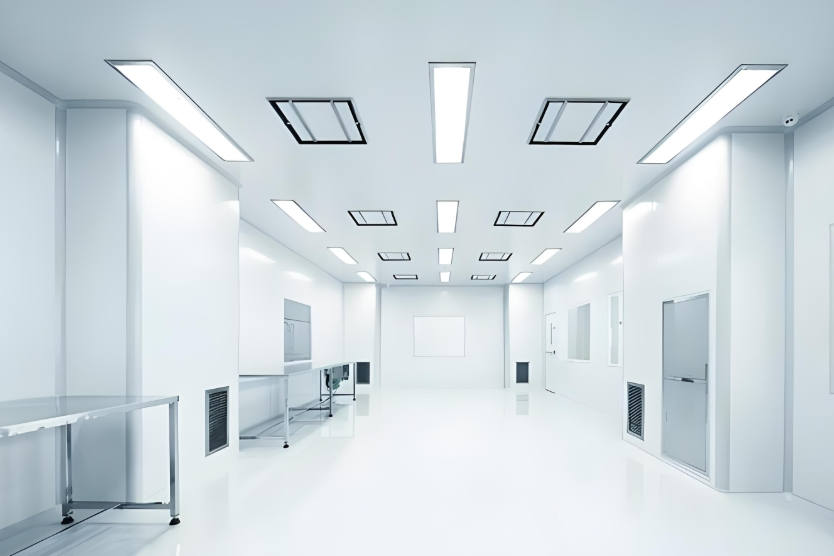
Ultra-high efficiency filtration for semiconductor wafer fabs and precision electronics cleanrooms, capturing nano-scale particles to meet ISO Class 1–3 standards and maximize product yield.
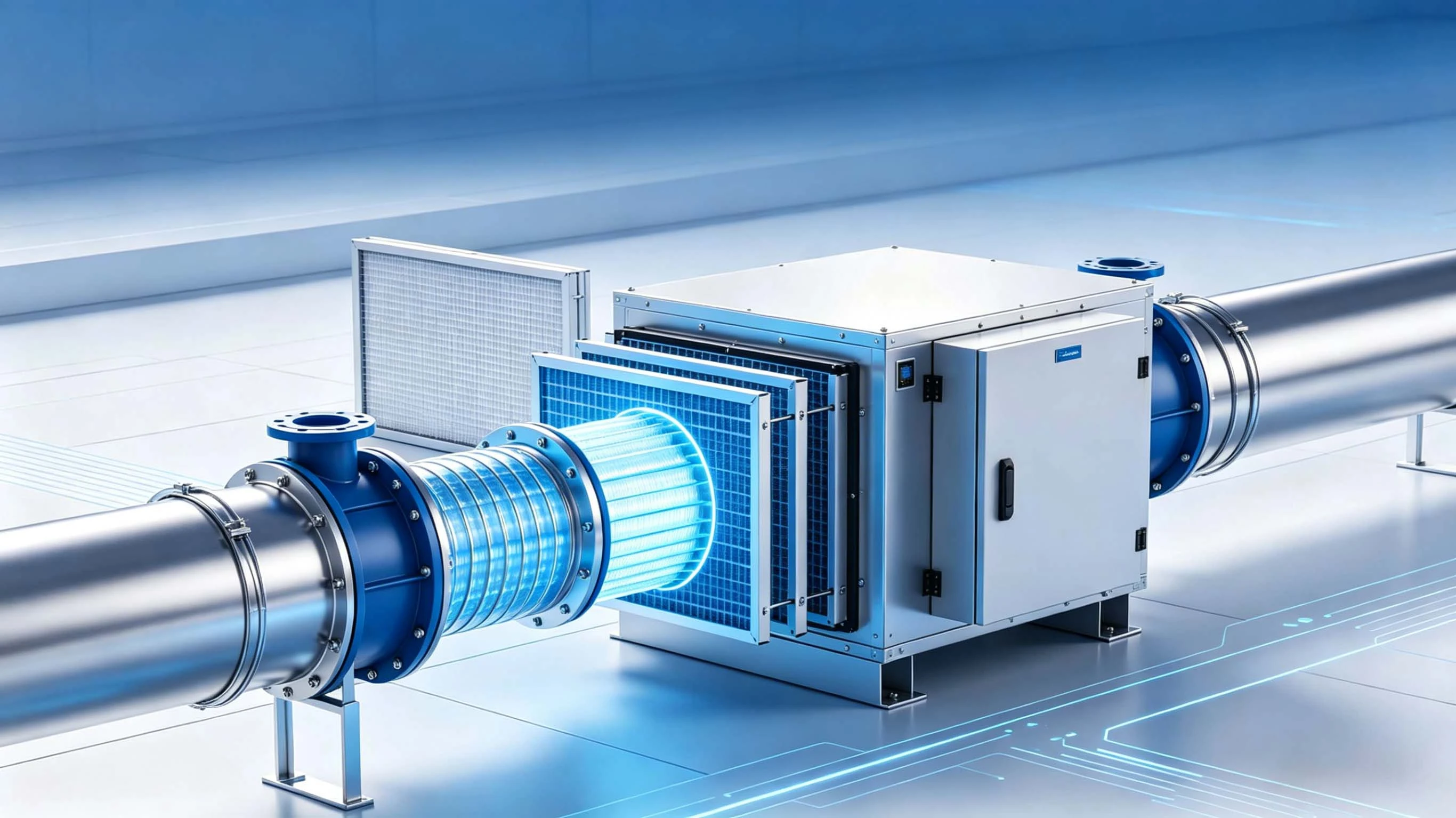
View Related Products →Central Air System Filtration
High-efficiency filtration for commercial building HVAC systems, improving indoor air quality, reducing energy consumption, and extending equipment service life.
View Related Products →Precision Equipment Protection
Precision air filtration for data centers, shielding servers and critical hardware from dust contamination to keep cooling systems running efficiently and reliably.
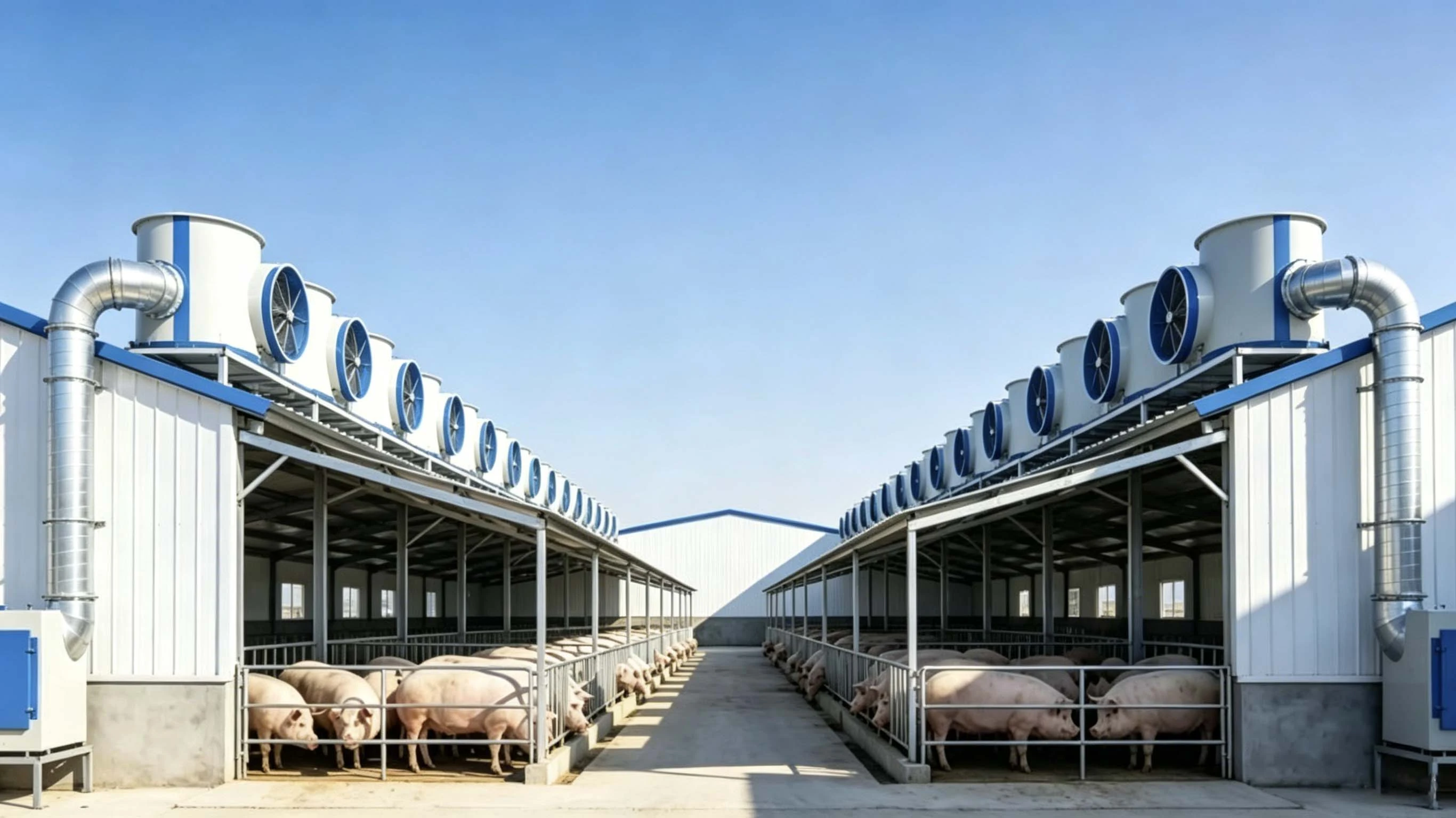
View Related Products →Farming Environment Purification
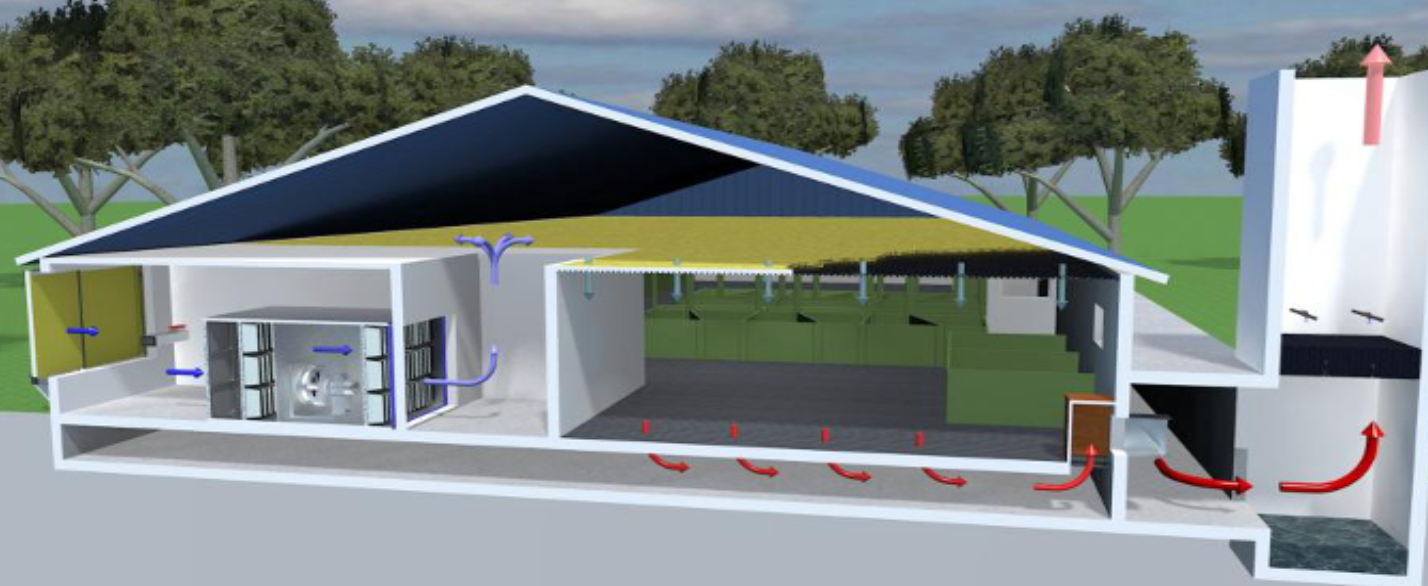
Dedicated filtration systems for farms and livestock facilities — capturing dust, adsorbing ammonia, and inhibiting pathogen spread to improve animal health and overall productivity.
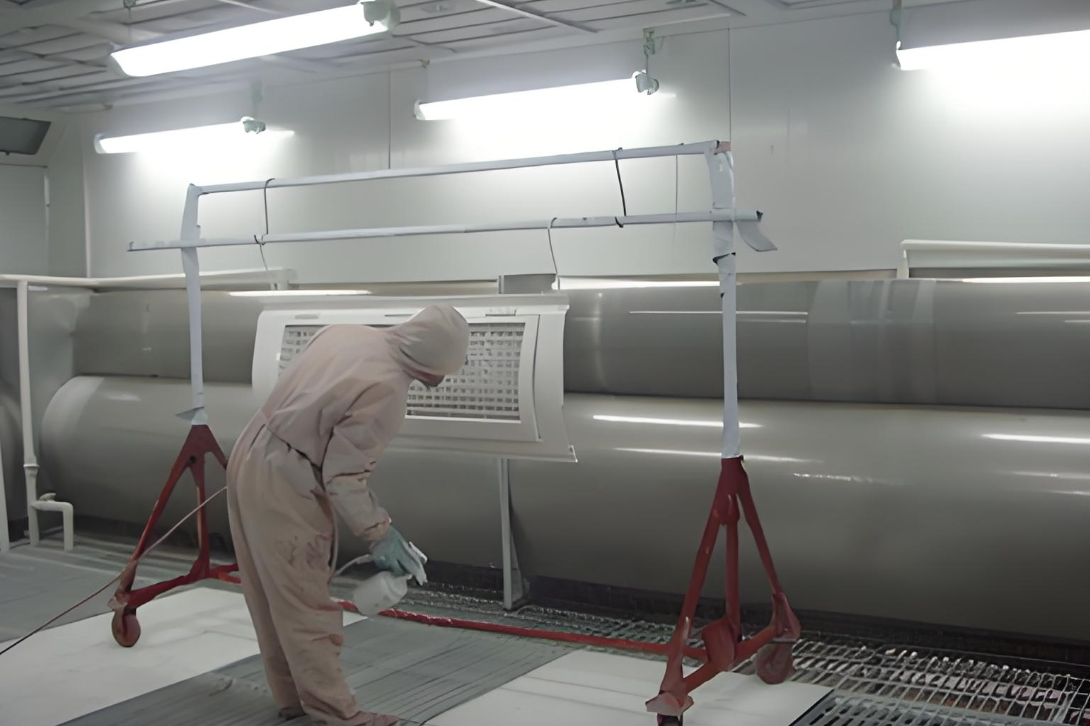
View Related Products →Paint Mist & Dust Purification
Designed for spray booths and grinding workshops, efficiently capturing paint mist, metal dust, and wood chips to meet emission standards while protecting finished surface quality.
View Related Products →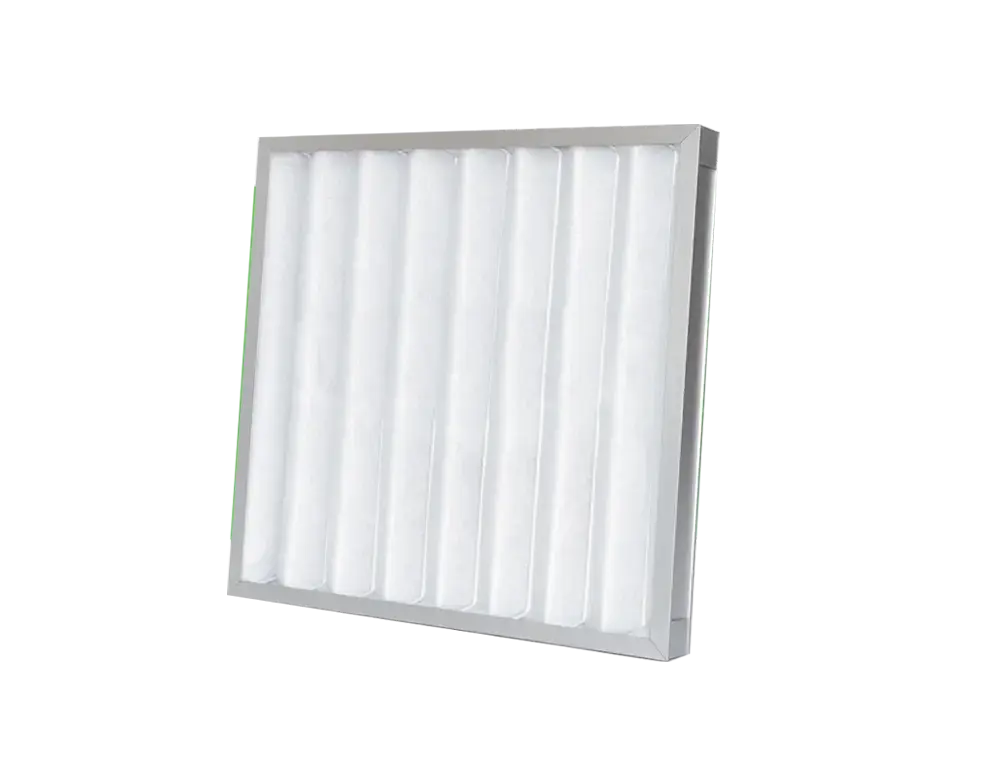
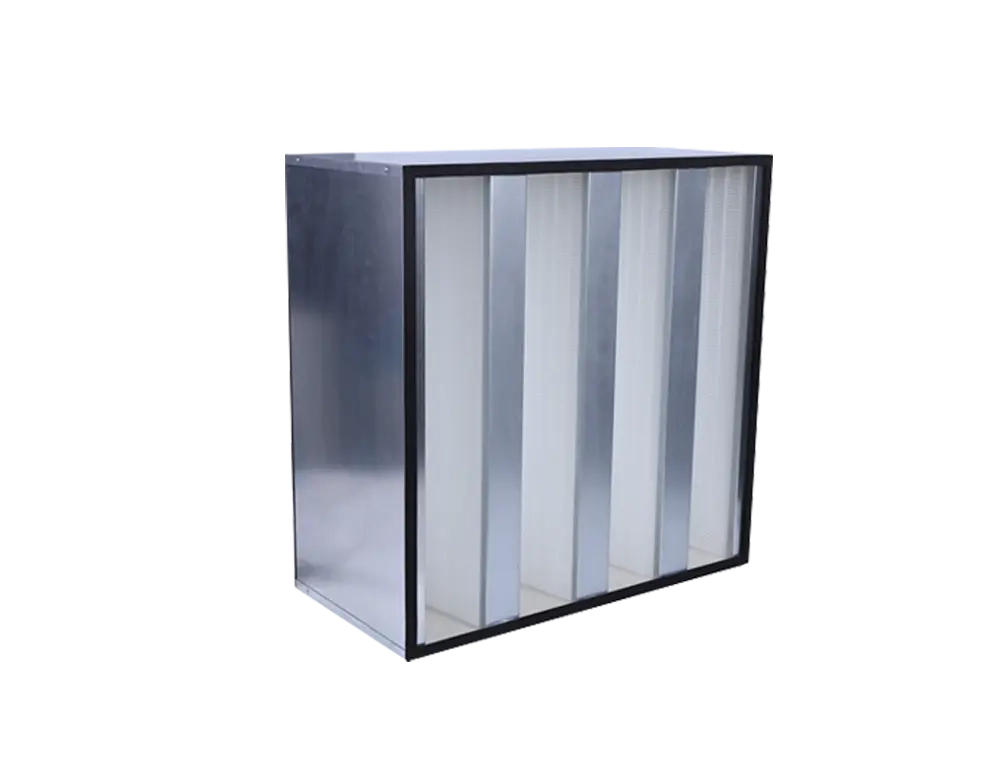
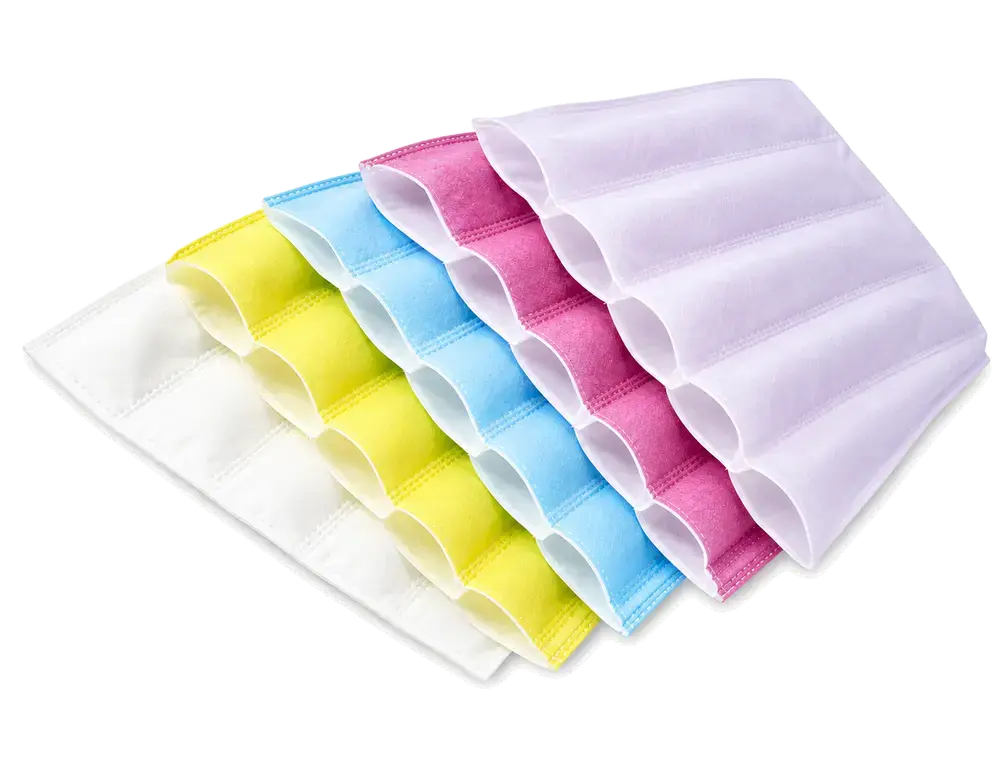
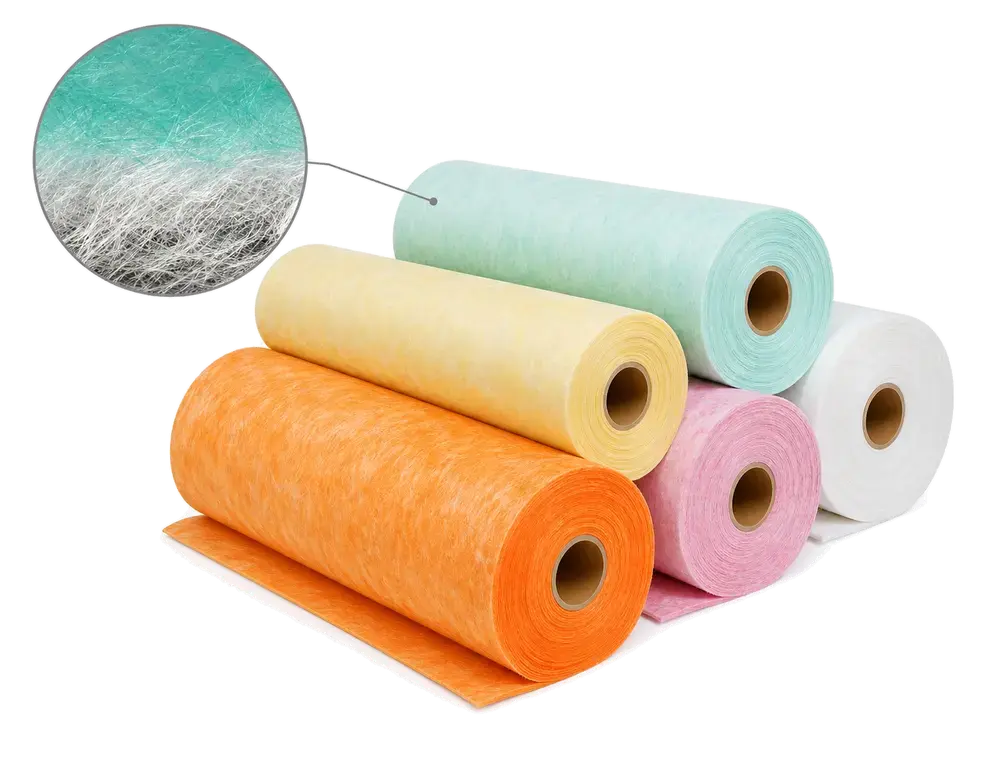
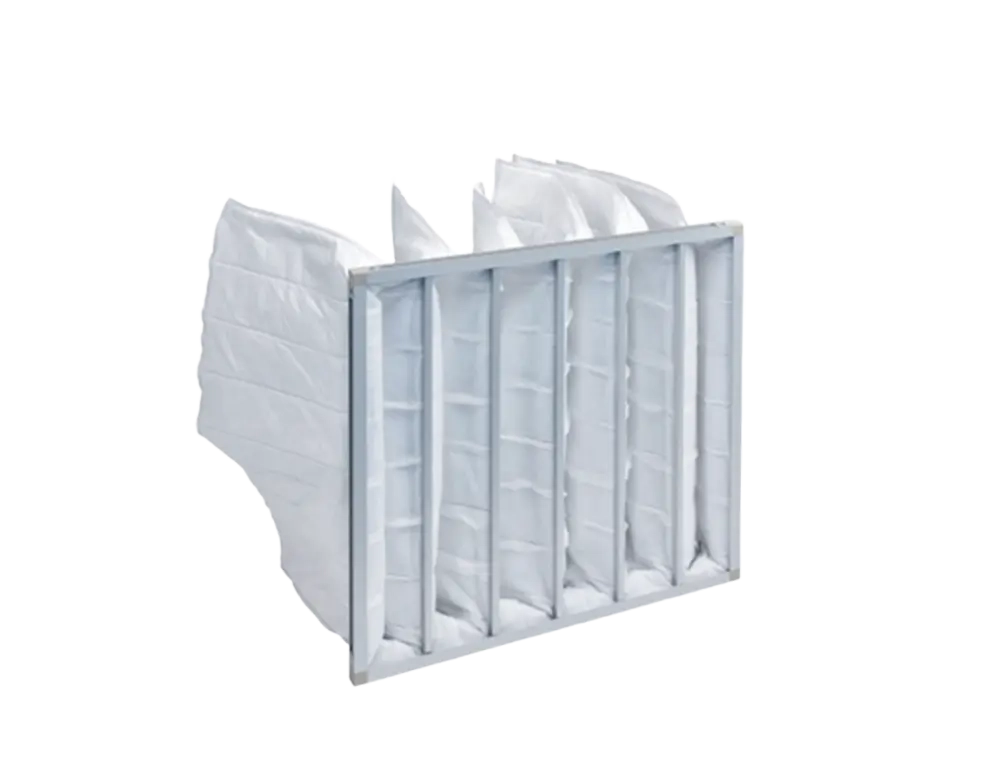
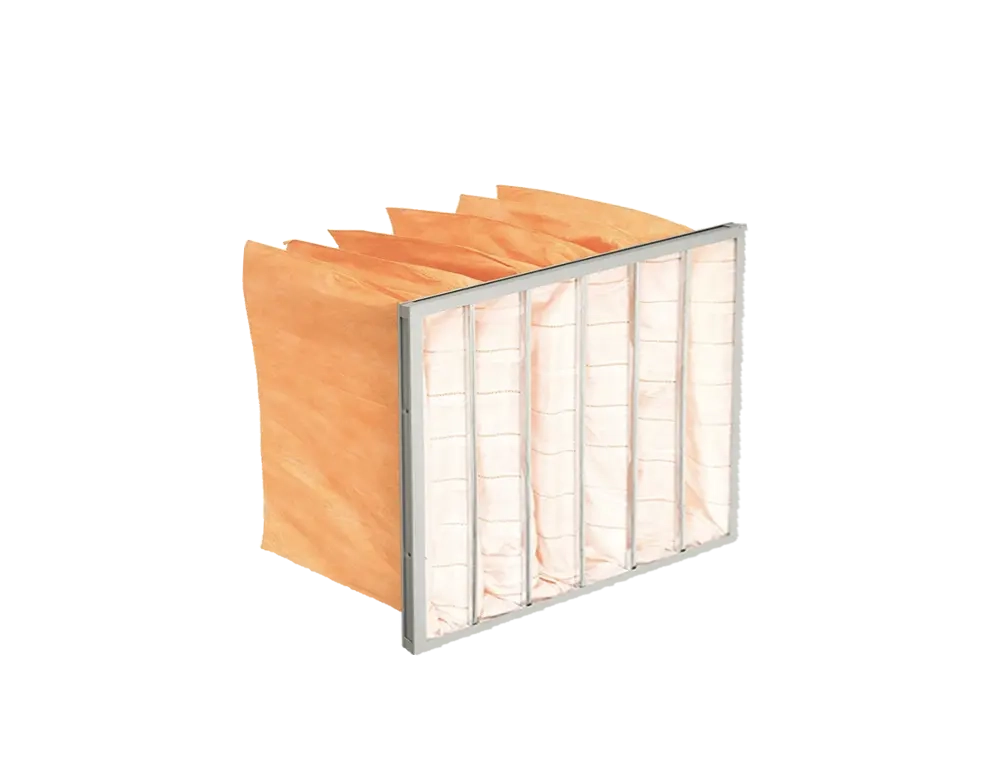
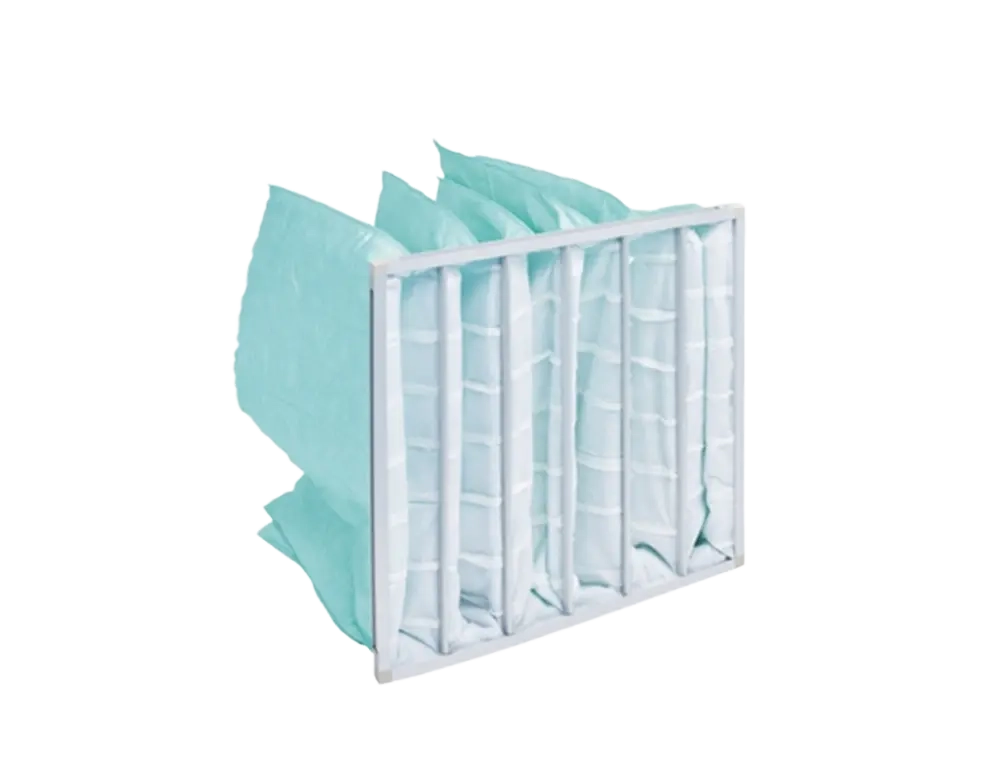
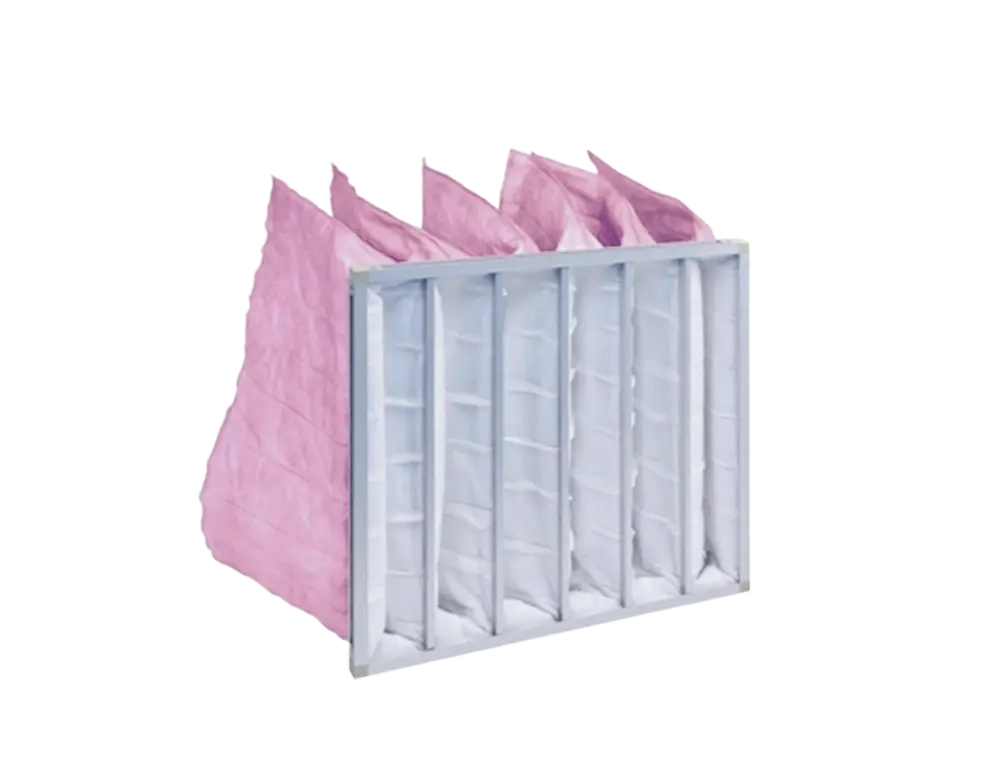
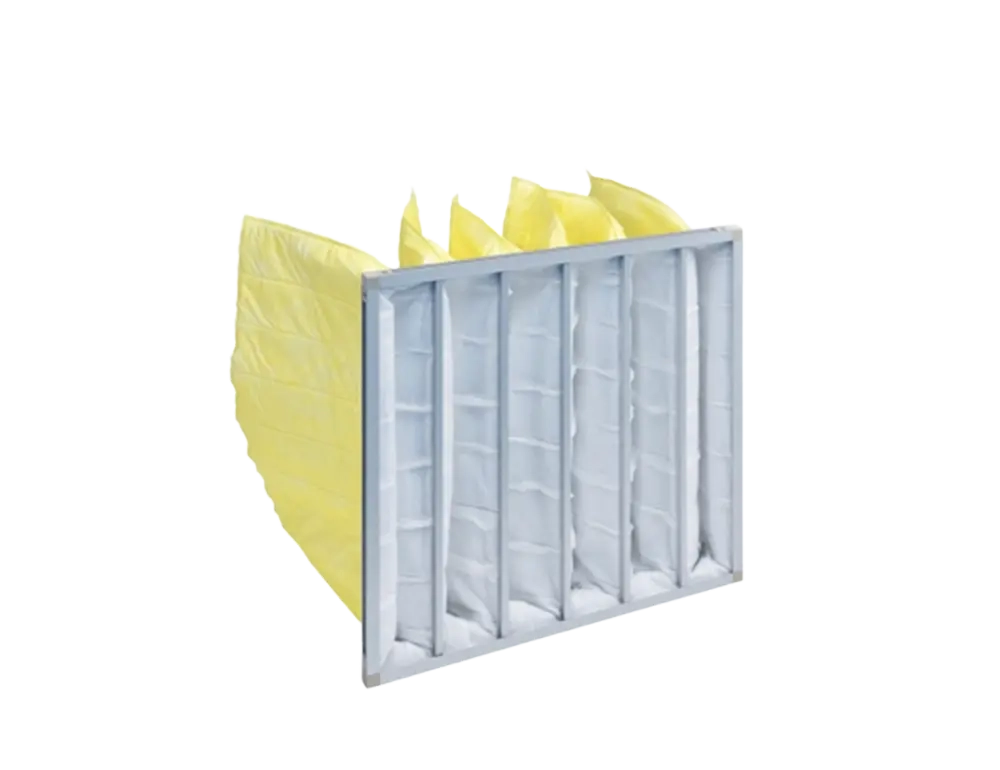
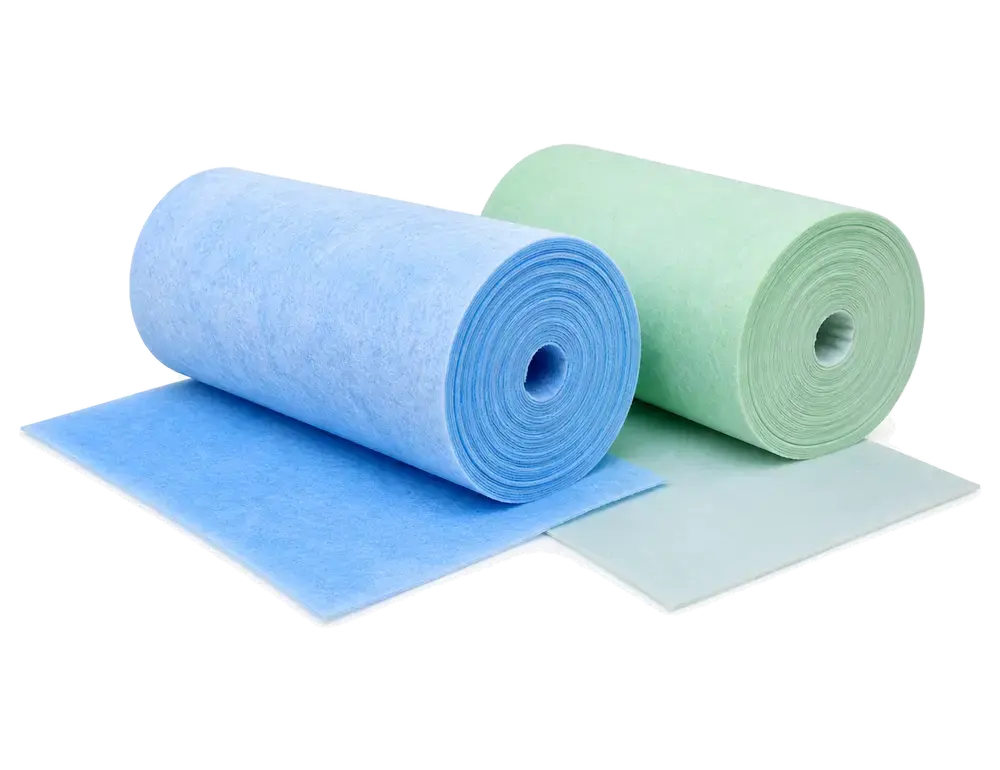
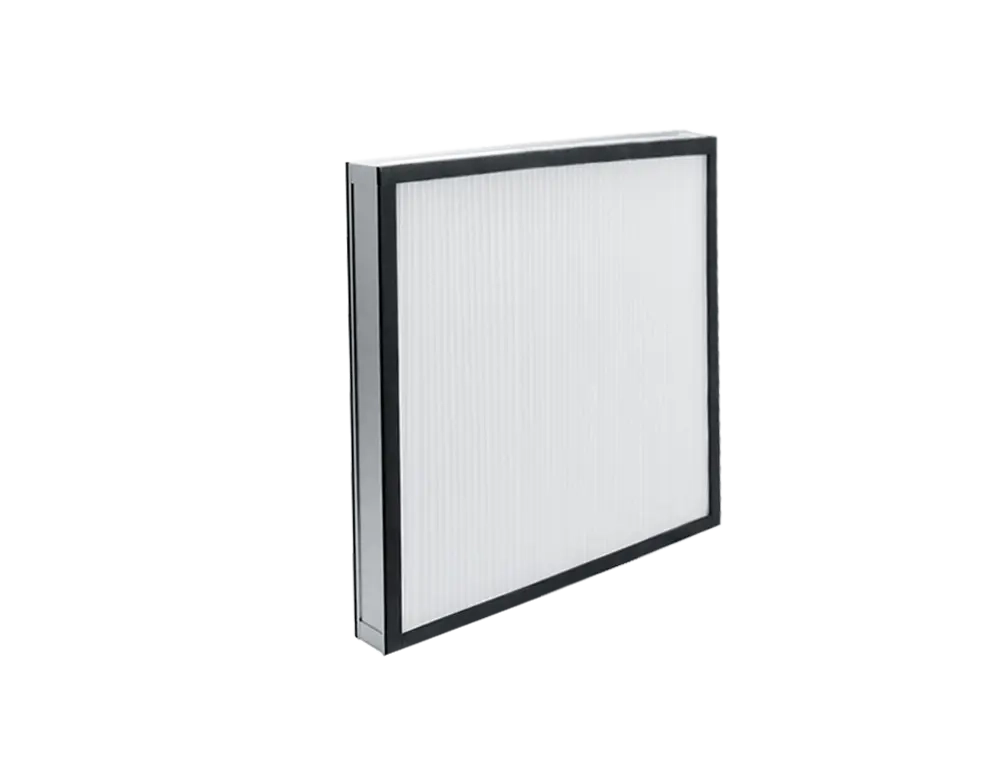
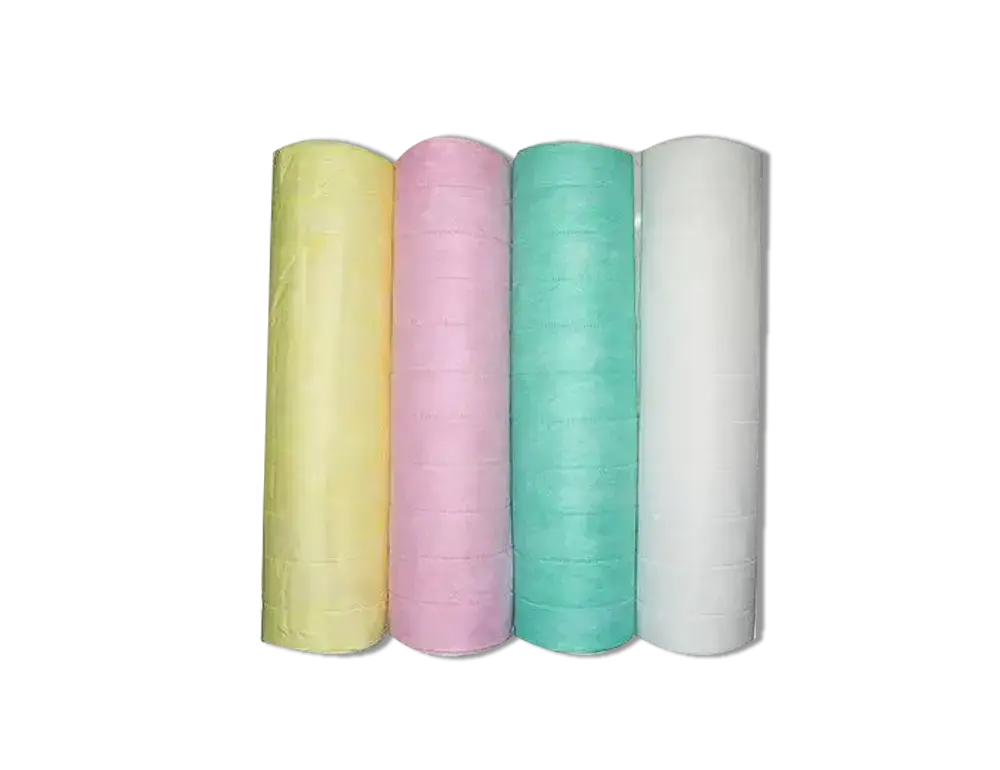
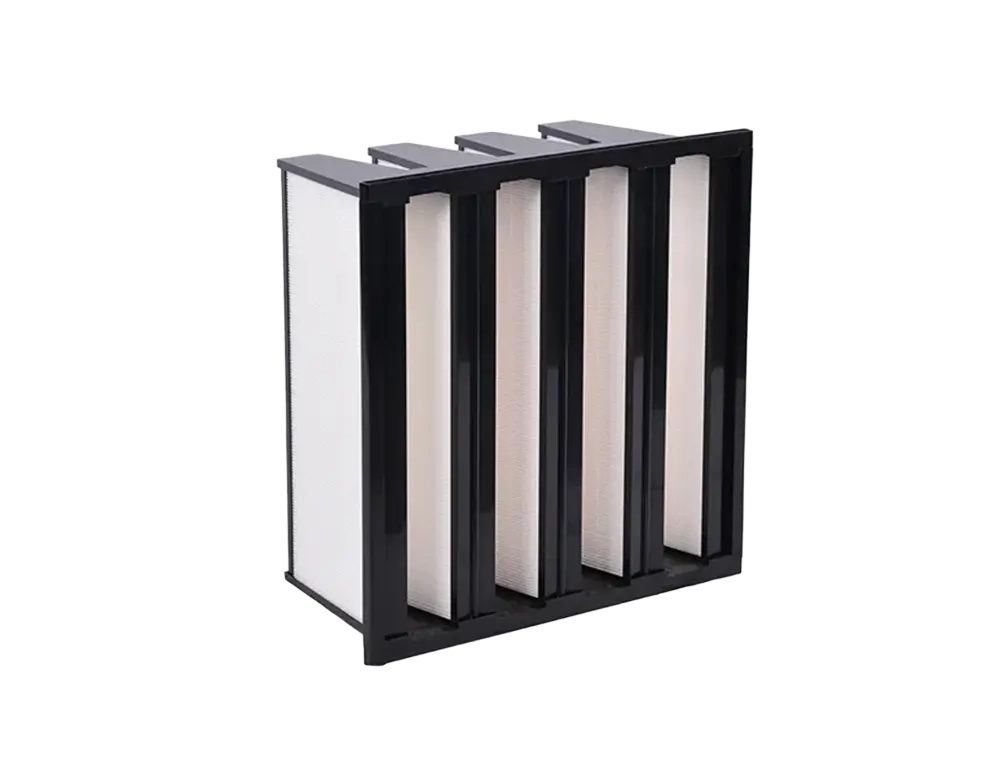
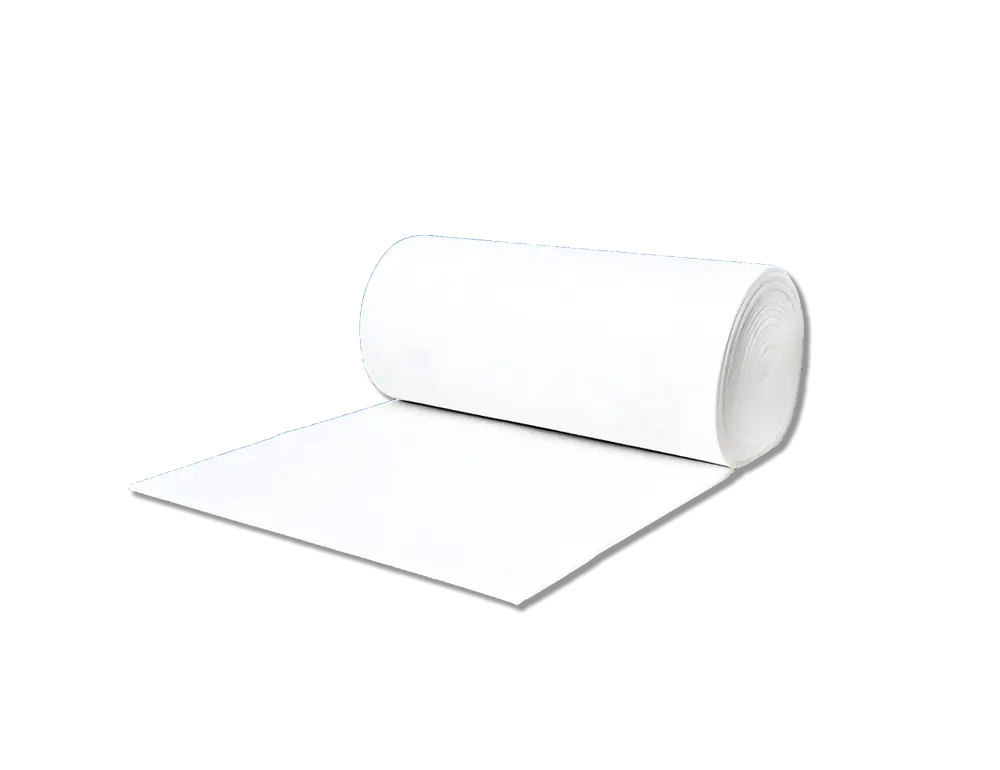
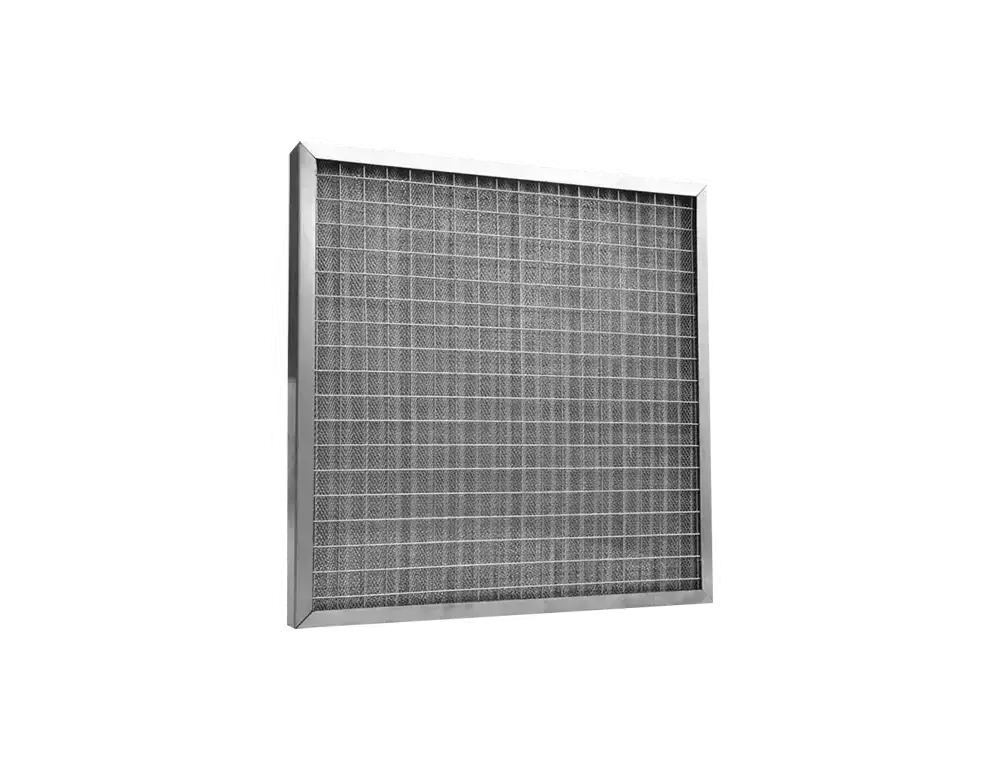
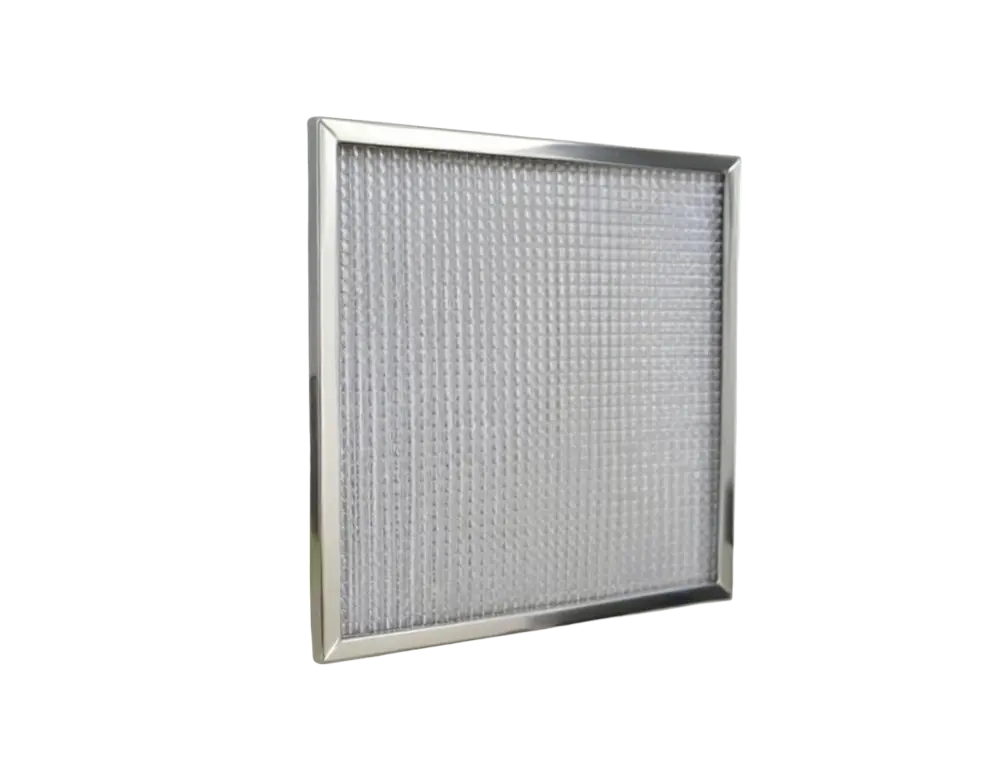
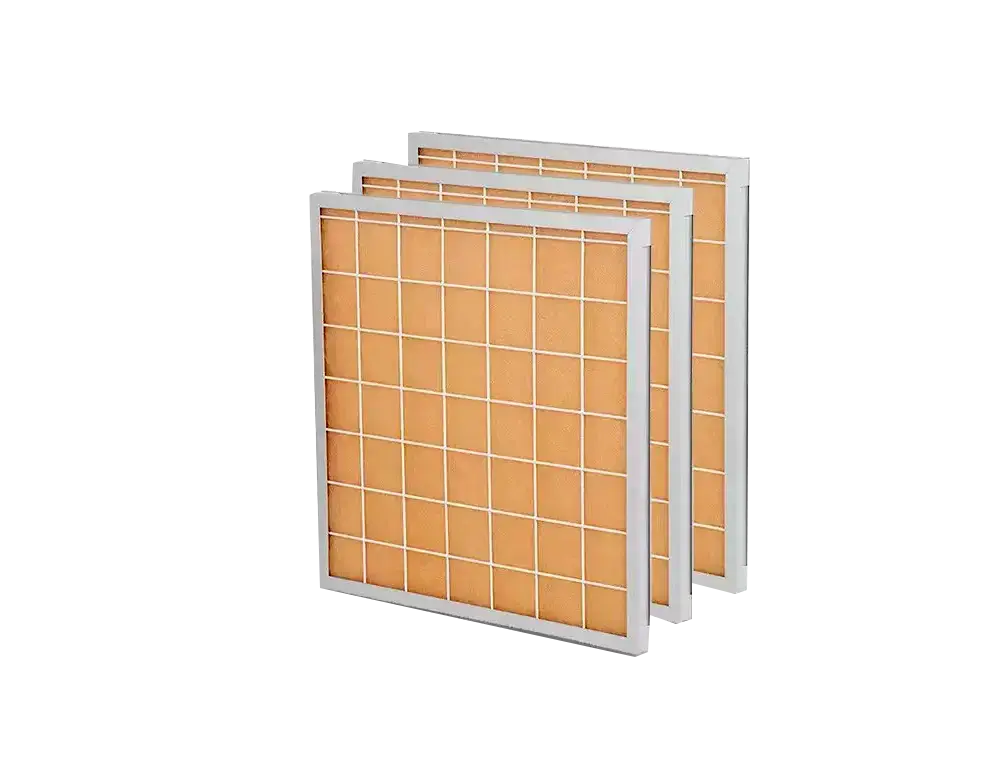
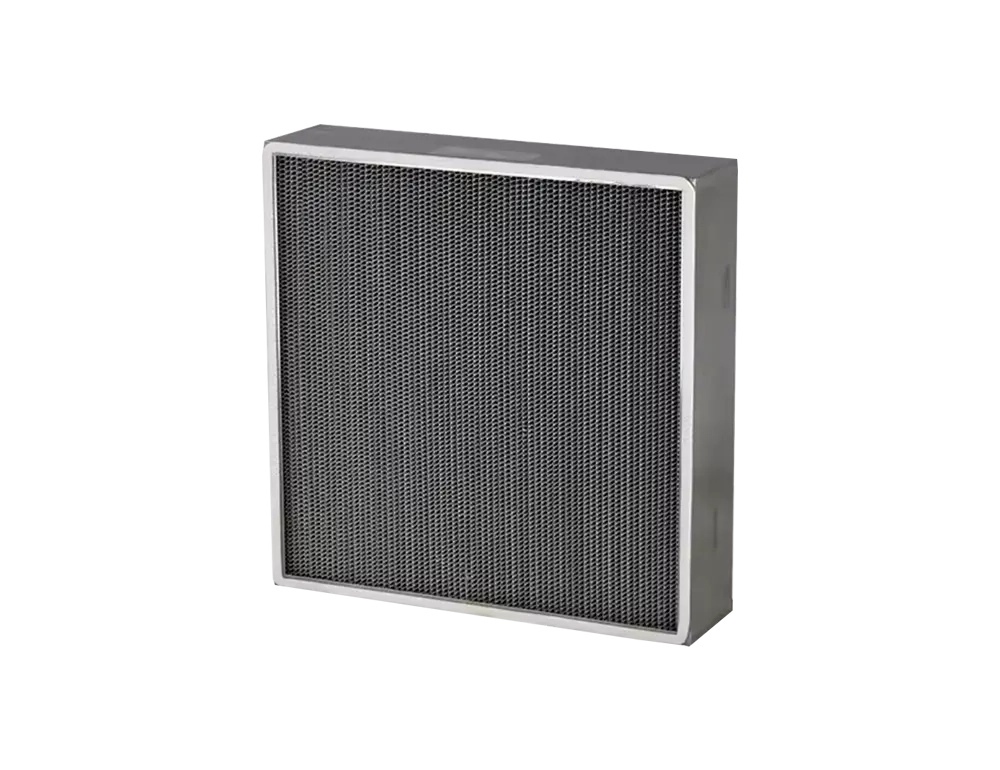
Pre-Filter (G1–G4)
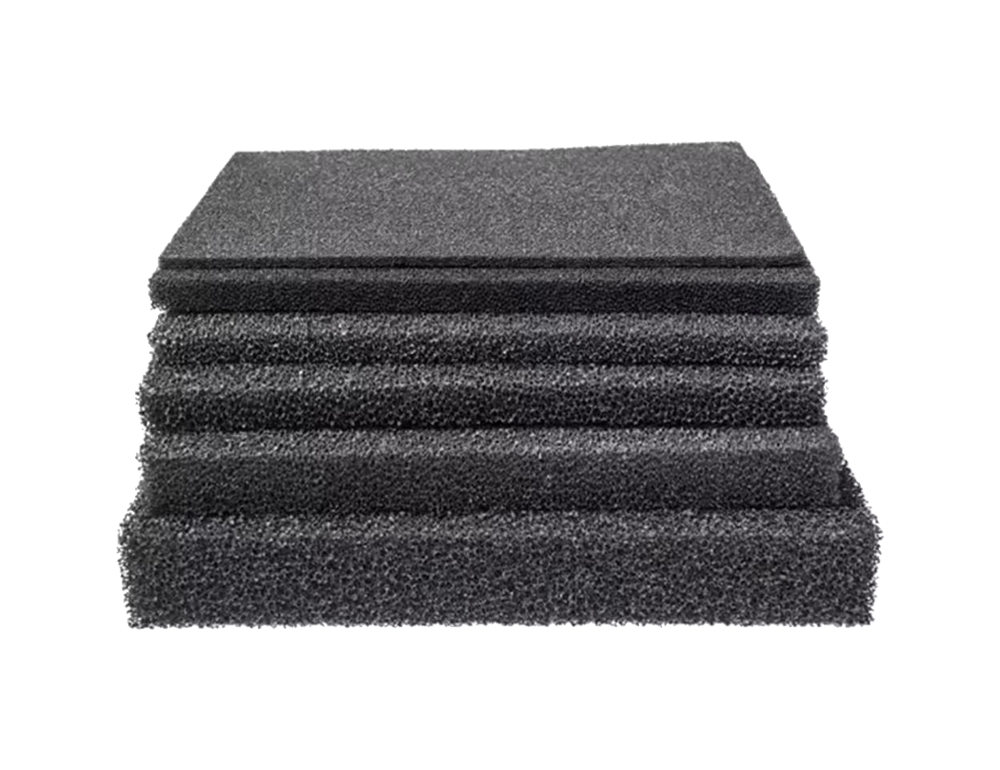
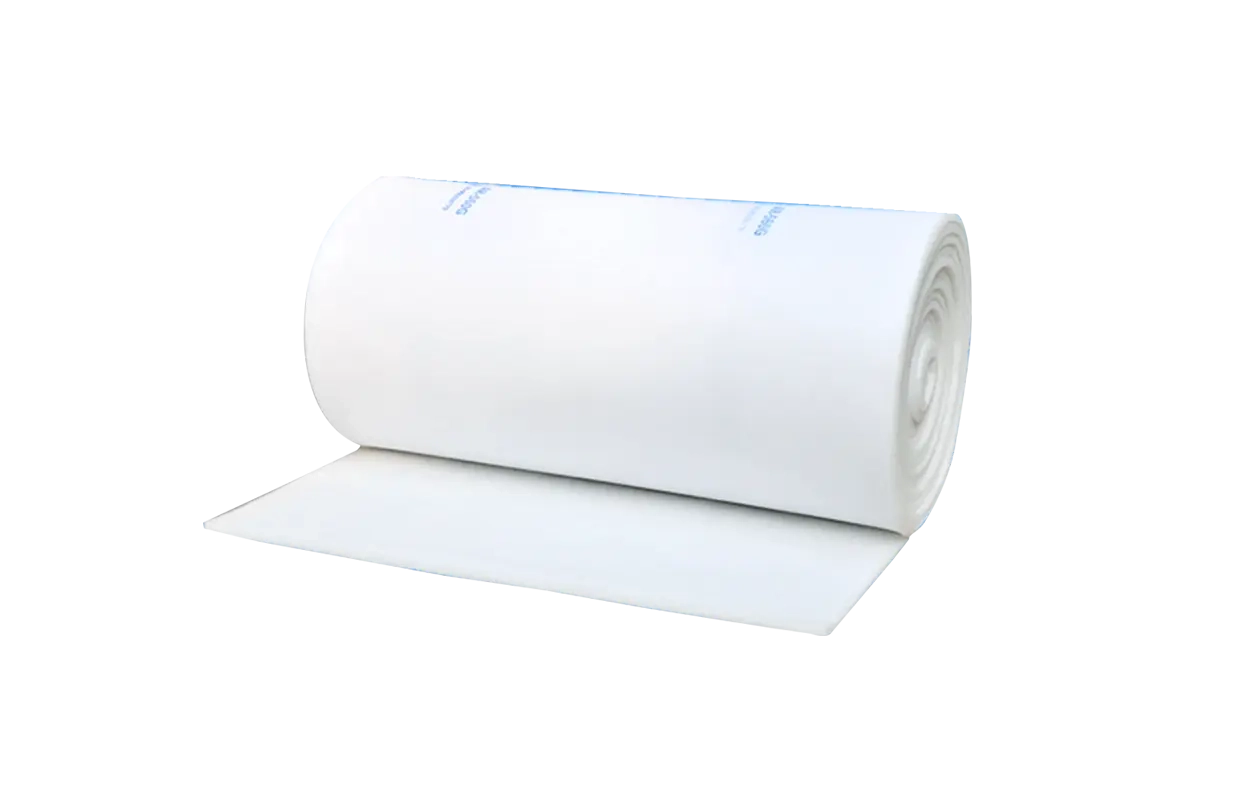
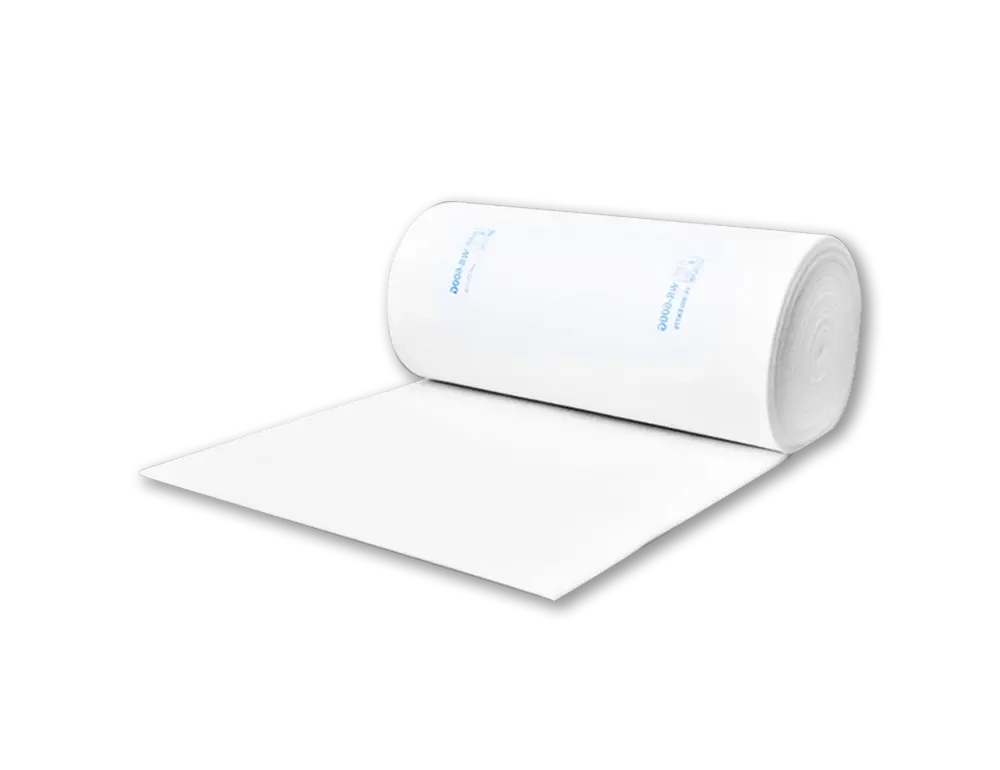
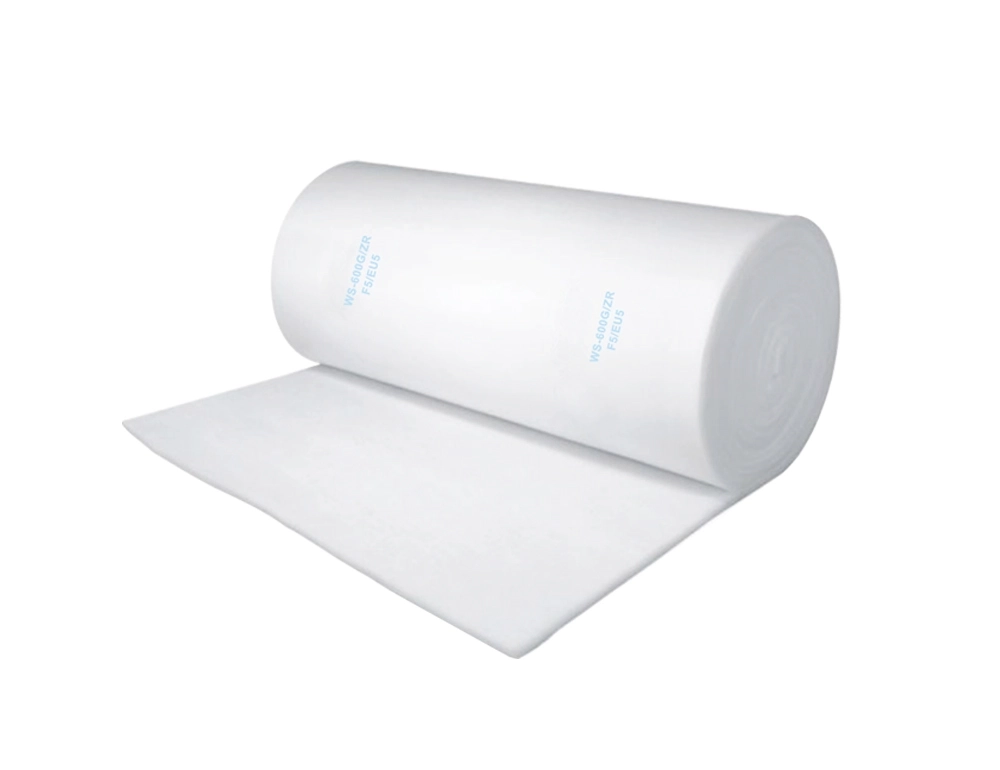
First-Stage Large-Particle Capture
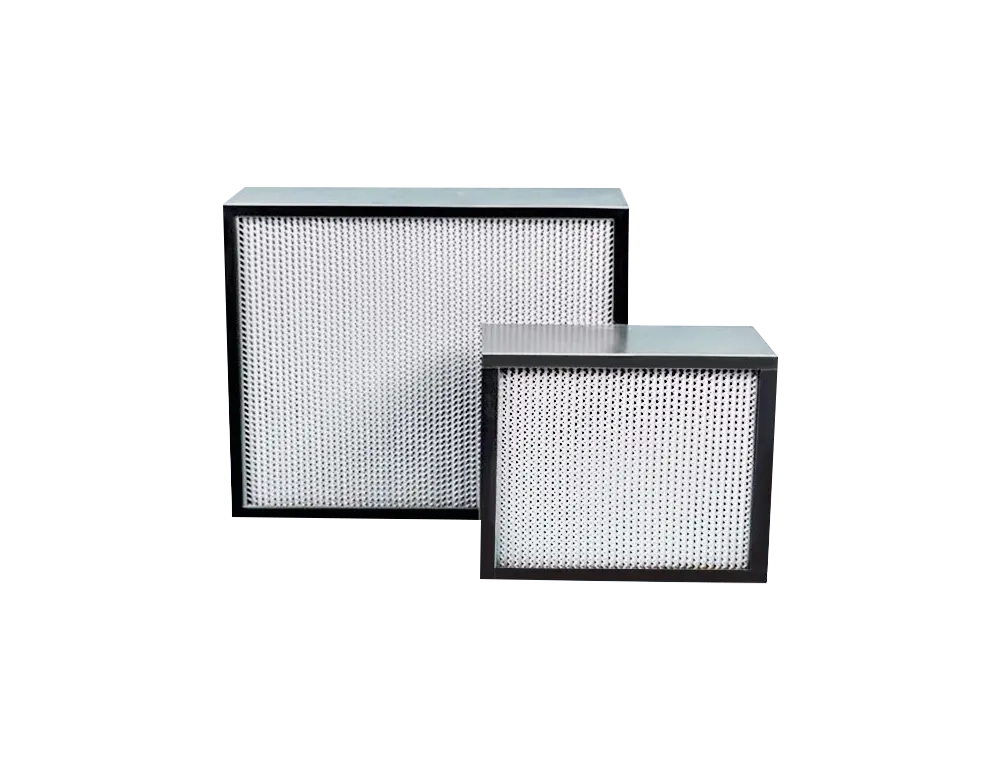
Medium-Efficiency Filter (F5–F9)
Precise PM2.5 Capture
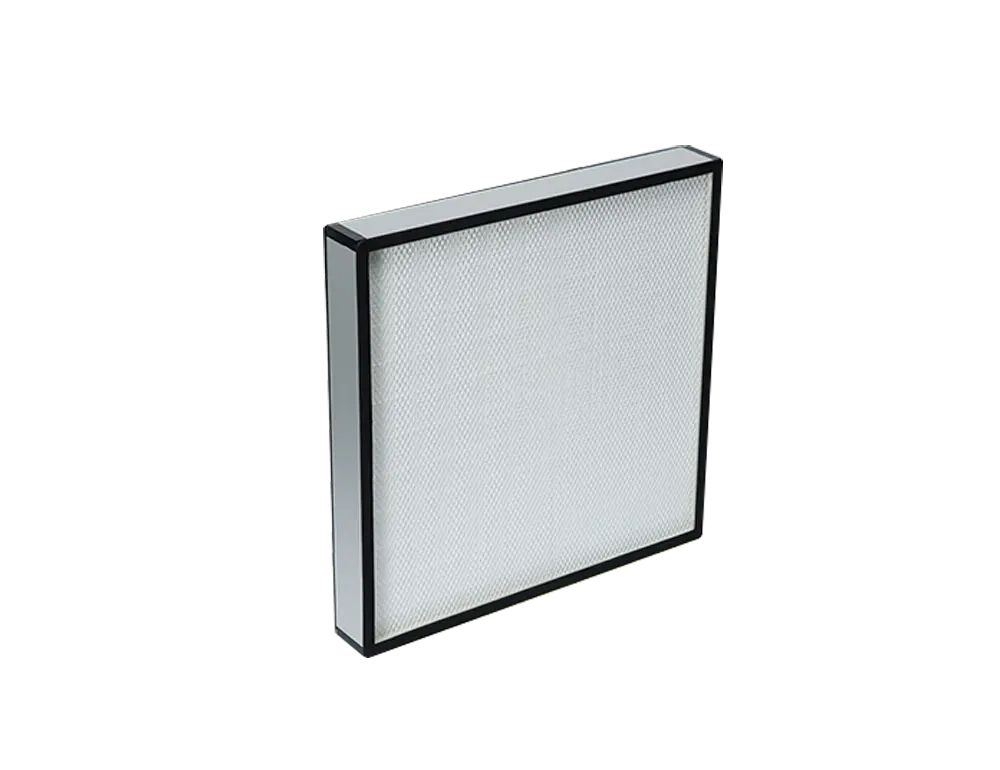
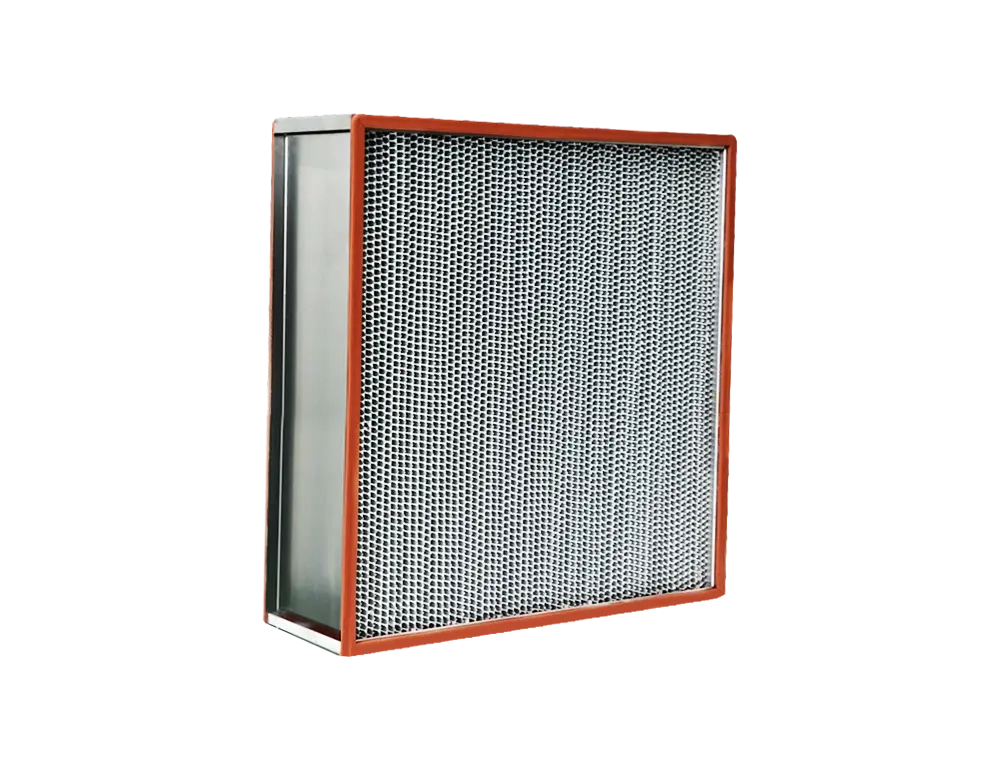
HEPA High-Efficiency Filter
Sterile-Grade Purification
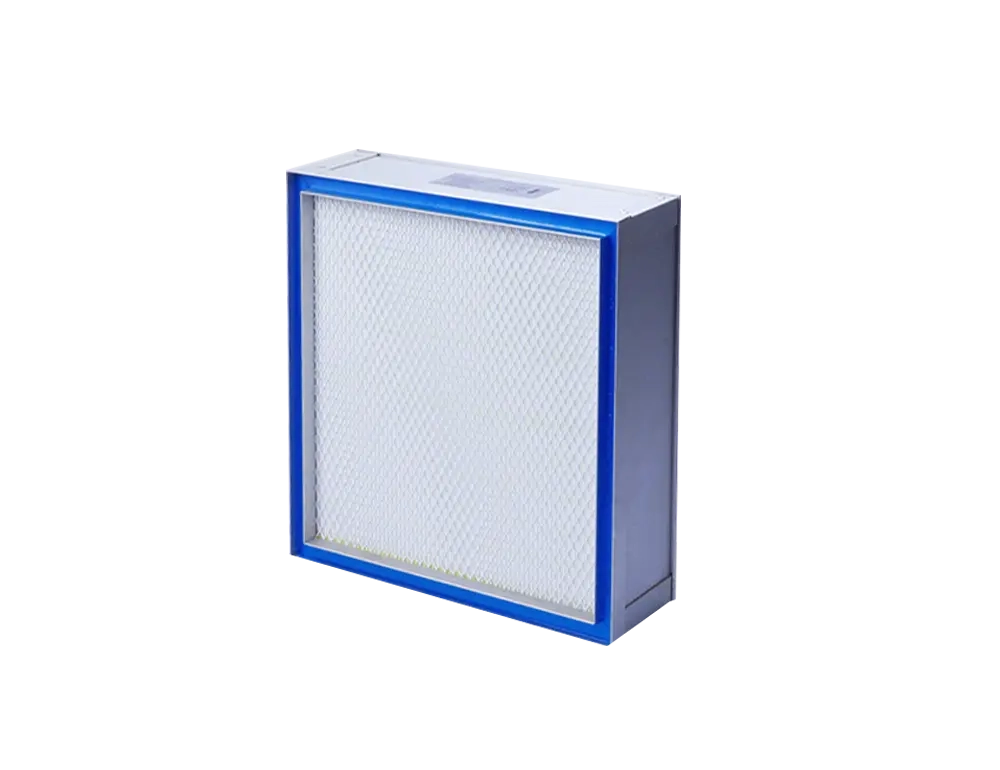
ULPA Ultra-High Efficiency Filter
Sub-Micron Particle Capture
First-Stage Large-Particle Capture
The first line of defense, capturing particles ≥5 μm such as dust, hair, and fibers to protect downstream filters and extend overall system service life.
View Related Products →Precise PM2.5 Capture
Captures fine particles of 1–5 μm including PM2.5, pollen, and mold spores, significantly improving indoor air quality for commercial HVAC and ventilation systems.
View Related Products →Sterile-Grade Purification
≥99.97% filtration efficiency for particles ≥0.3 μm, delivering sterile-grade clean air widely used in medical, pharmaceutical, and electronics manufacturing.
View Related Products →Sub-Micron Particle Capture
≥99.9995% efficiency for particles ≥0.12 μm, meeting the extreme cleanliness demands of semiconductor fabs, aerospace, and other ultra-precision applications.
View Related Products →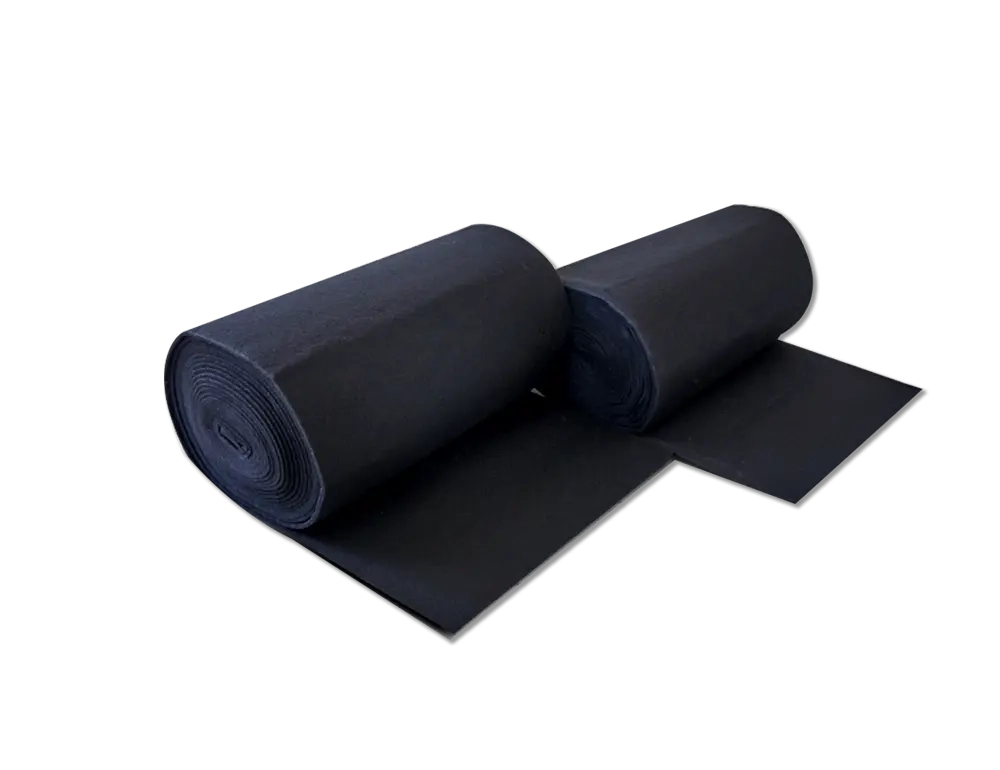
High-Temperature Resistant
Industrial-Grade Heat Tolerance
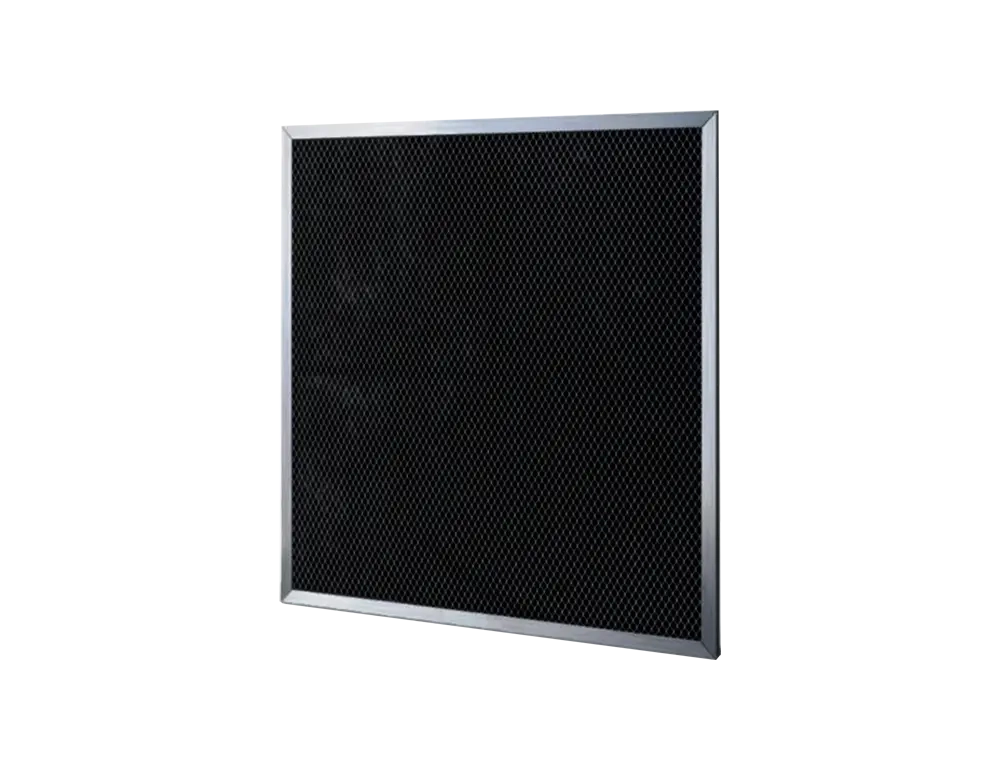
Washable & Reusable
Cut Costs, Reduce Waste
Activated Carbon
Odor & Harmful Gas Removal
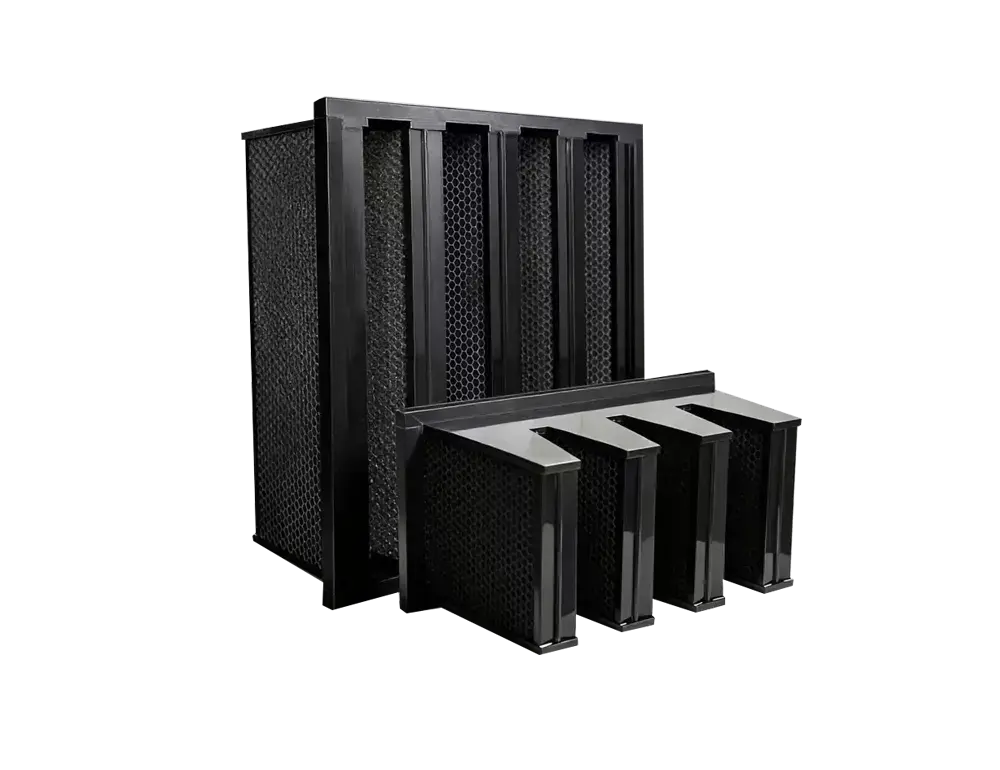
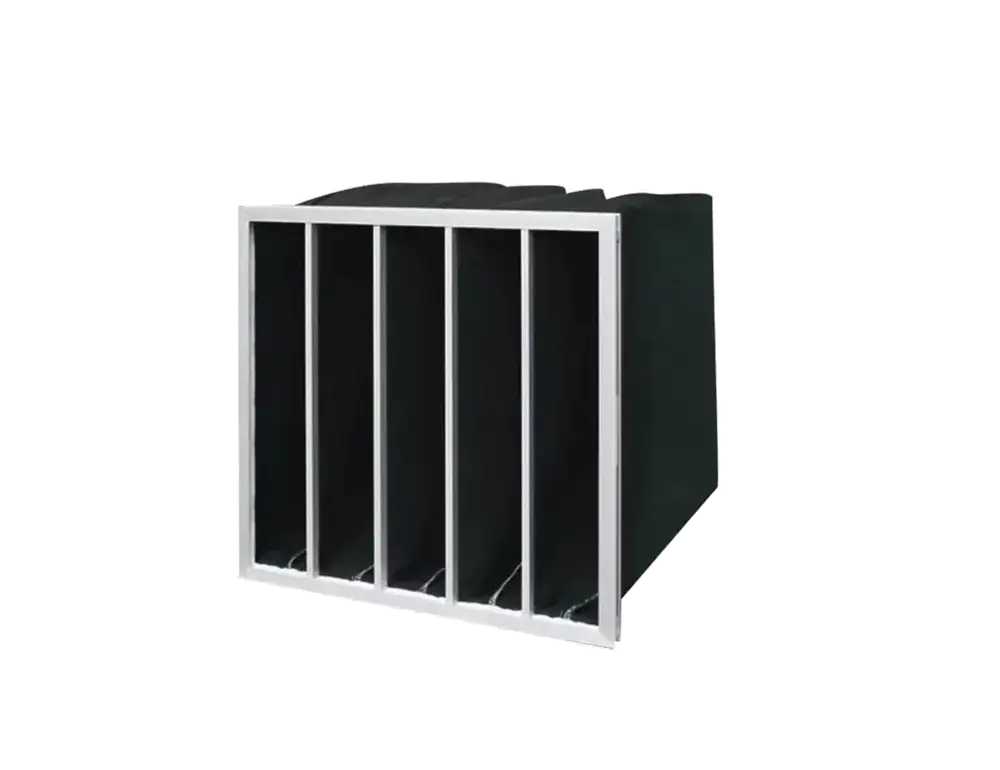
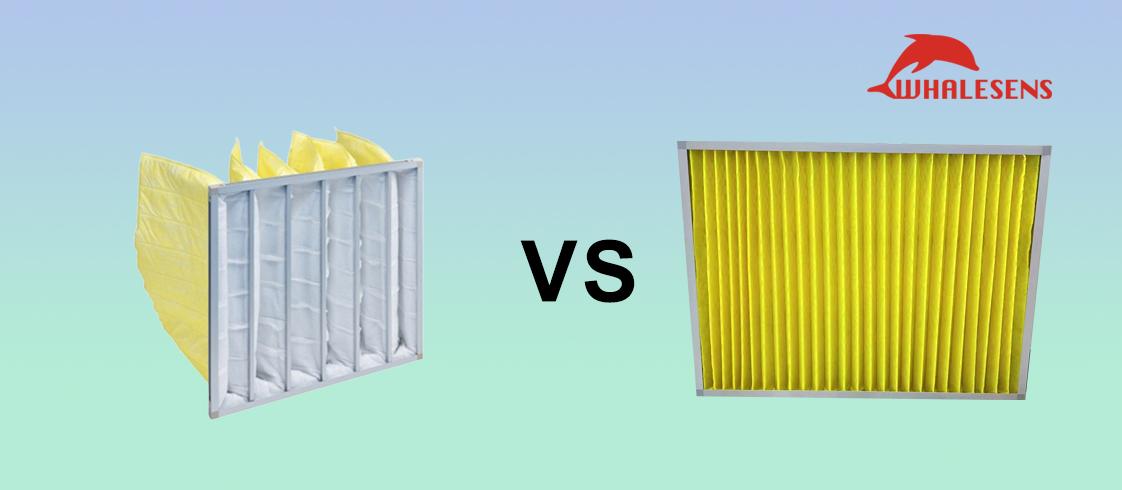
Bag Filter
High Dust-Holding, Long Life
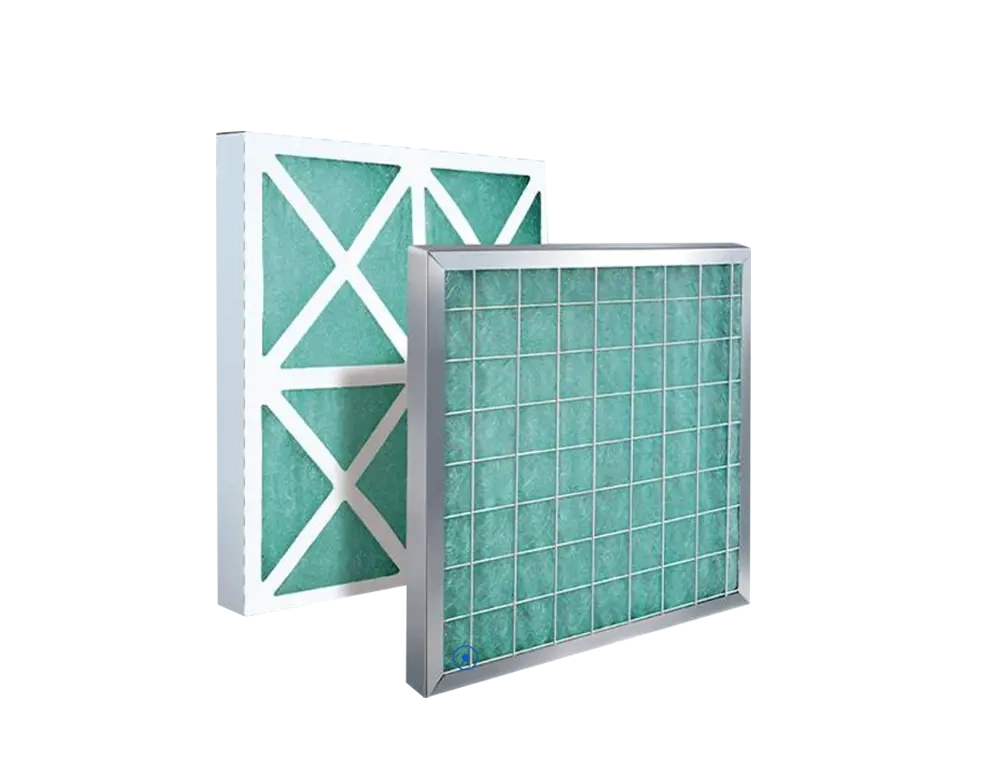
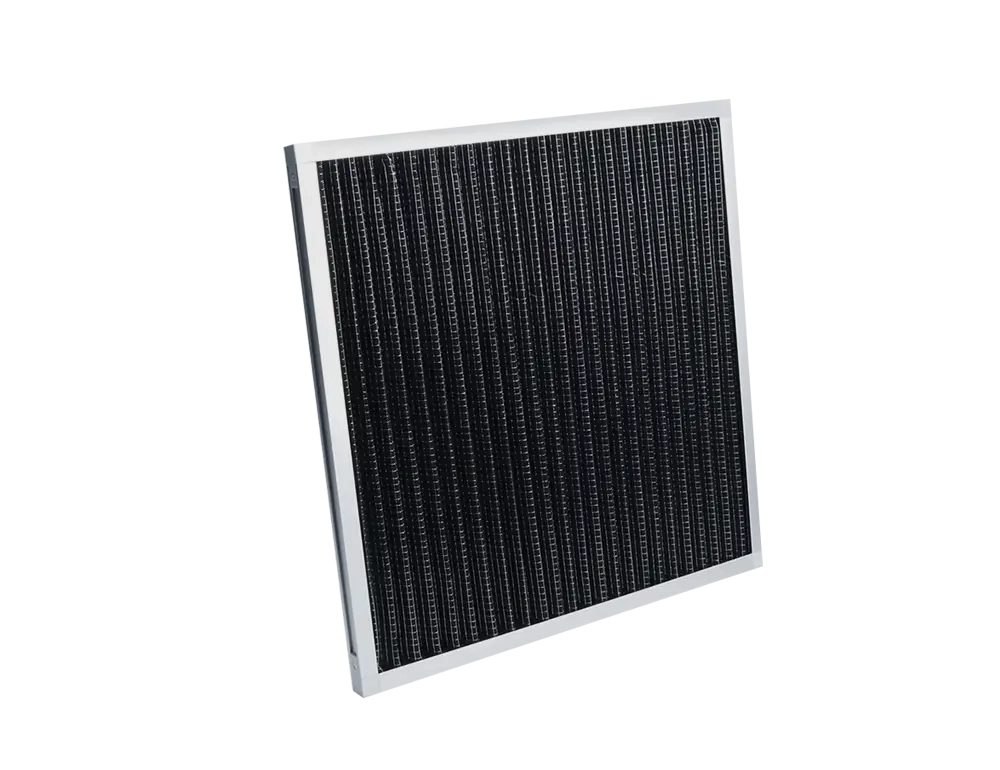
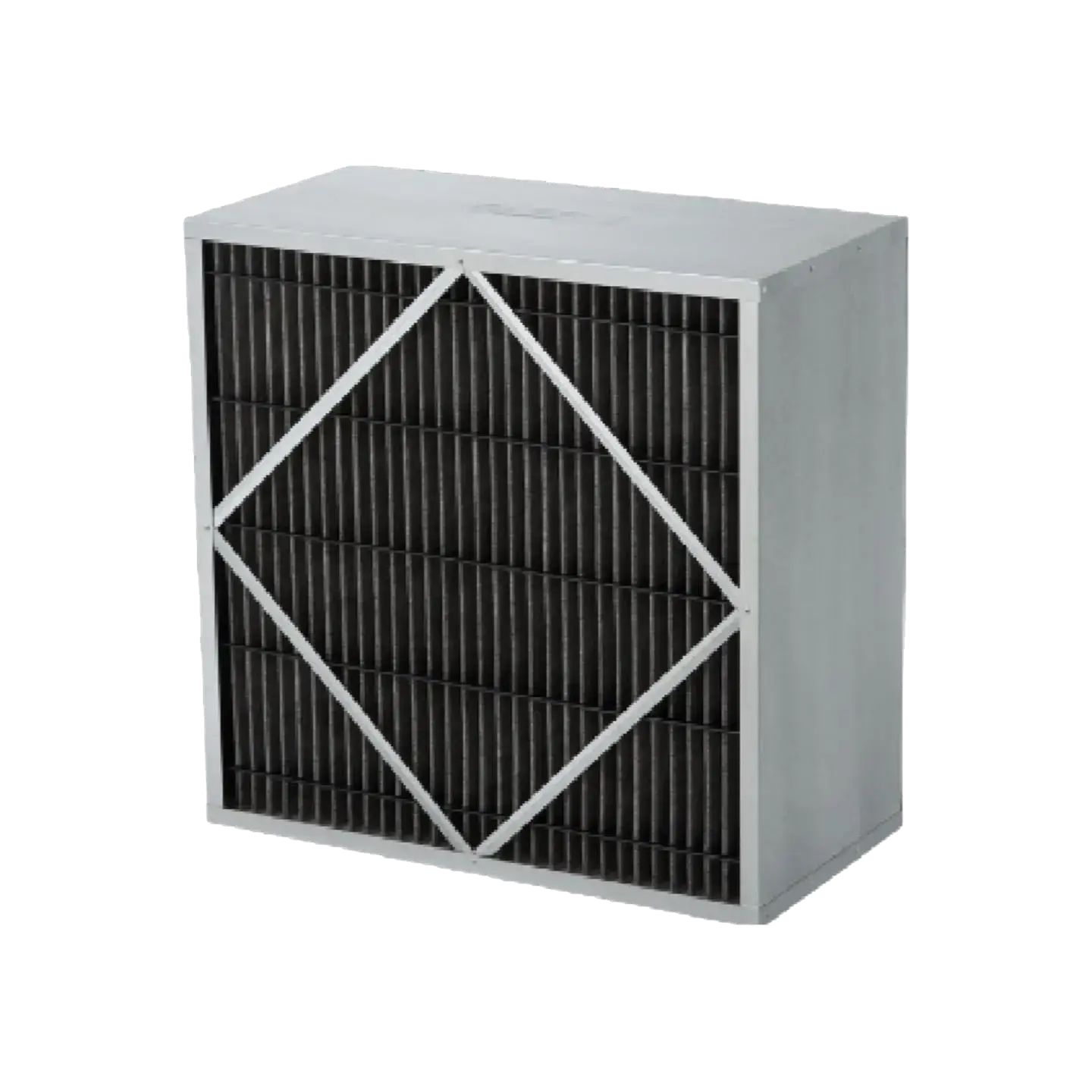
Panel / Pleated Filter
Compact Space-Saving Design
Low-Resistance Airflow
Energy-Saving Operation
Industrial-Grade Heat Tolerance
Built with specialized heat-resistant materials, operating stably up to 250°C for paint ovens, industrial dryers, and high-temperature process environments.
View Related Products →Cut Costs, Reduce Waste
Cleanable by water washing or air blowing, reusable multiple times to significantly reduce replacement frequency and O&M costs — an economical, eco-friendly choice.
View Related Products →Odor & Harmful Gas Removal
Leverages activated carbon's high adsorption capacity to eliminate odors, VOCs, and formaldehyde, ideal for newly renovated spaces and industrial exhaust treatment.
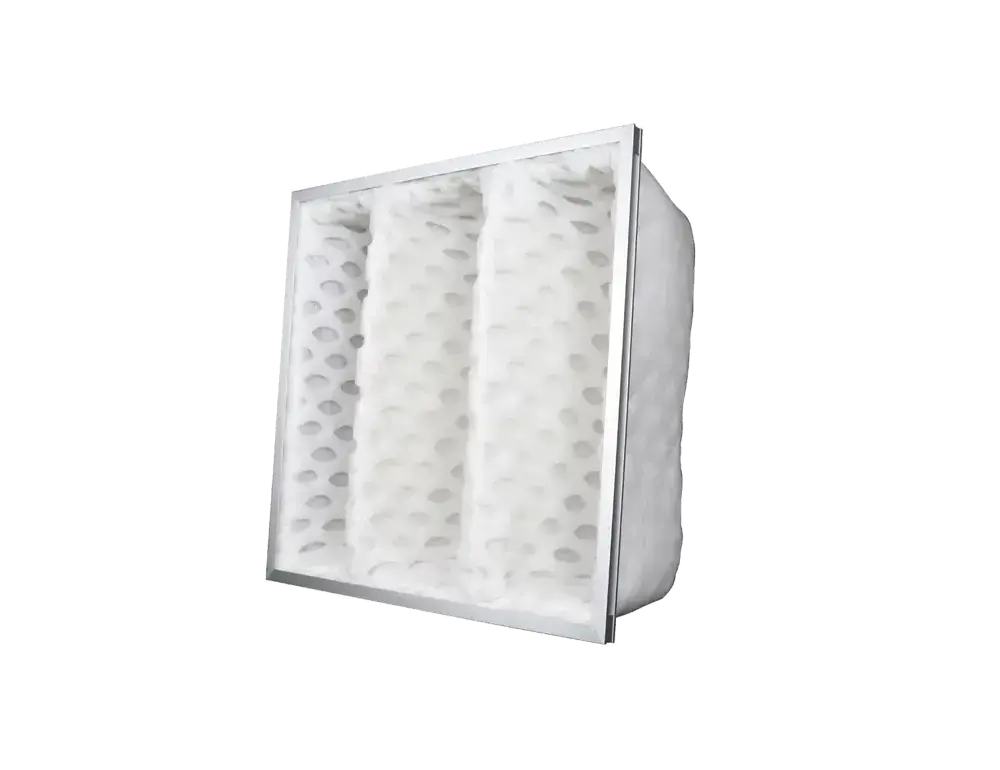
View Related Products →High Dust-Holding, Long Life
Bag-style construction delivers a larger filtration area, high dust-holding capacity, and extended service life — ideal for high-dust environments with reduced replacement frequency.
View Related Products →Compact Space-Saving Design
Compact form factor for easy installation and replacement; pleated structure maximizes filtration area within a small footprint for higher efficiency.
View Related Products →Energy-Saving Operation
Low-resistance design minimizes pressure drop while maintaining filtration performance, reducing fan energy consumption for cost-effective, eco-friendly operation.
View Related Products →






















 English(Global)
 简体中文
简体中文 Language




Panel Air Filter Selection: Frame, Media & Efficiency
Panel Air Filter Selection: The Three Numbers That Matter
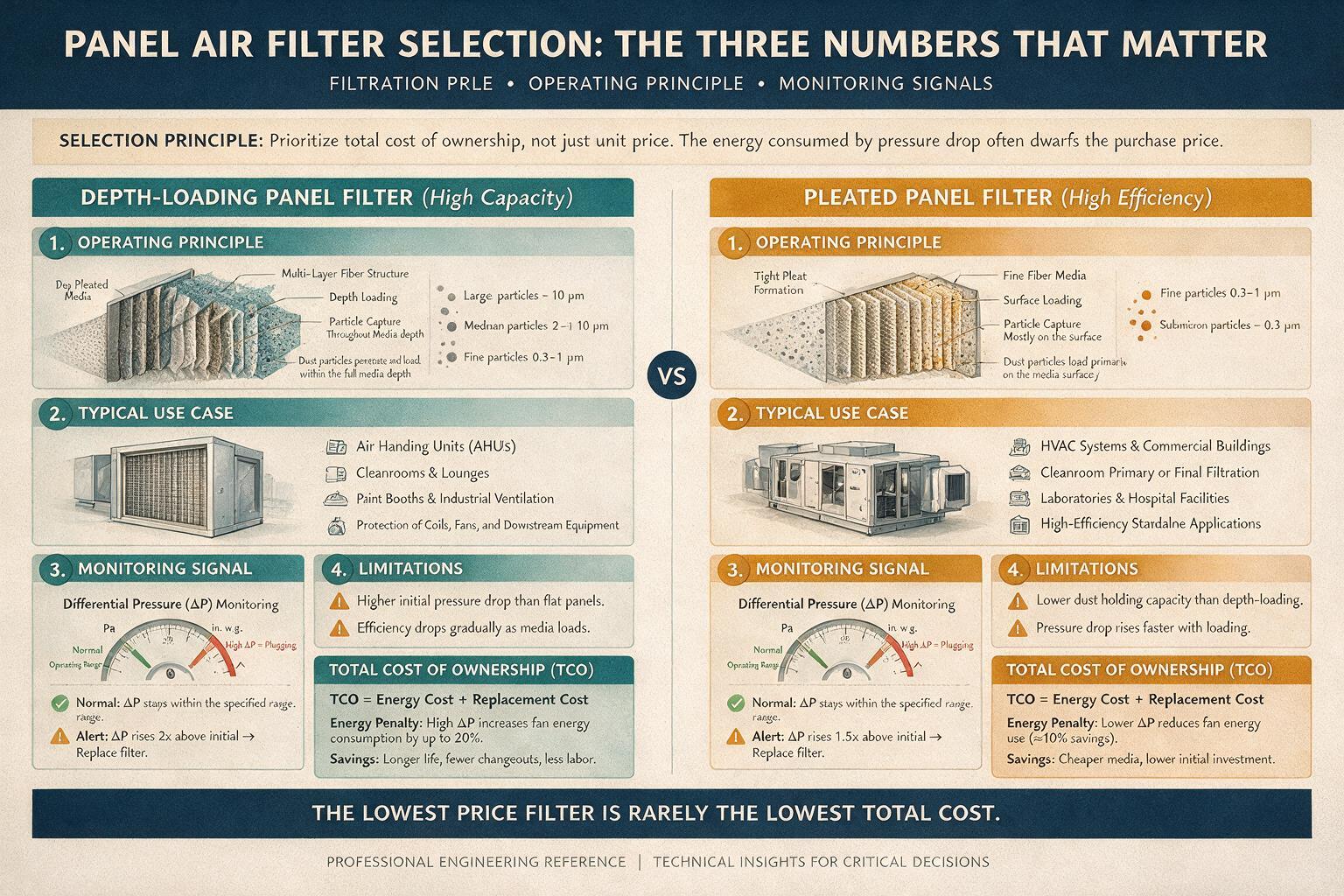
Panel air filter selection starts with total cost, not unit price. You'll see a panel air filter priced as a cheap line item, but you'll buy it in large quantities and replace it often. The energy it consumes through pressure drop often dwarfs the purchase price.
Plenty of projects save 10% on initial cost, then spend 20% more on electricity in the first year. That trade rarely makes sense.
Panel air filters—also called pleated panel filters—sit at the front of air handling units, cleanrooms, and paint booths. They protect coils, fans, and downstream high-efficiency stages. The real selection decision comes down to three accounts: initial capital, operating energy, and maintenance replacement.
For a broader look at how these components fit into complete air handling systems, see the industrial air filter guide.
Operating energy depends mainly on pressure drop. Pressure drop is set by filter media, efficiency grade, and frame sealing. A cheap panel air filter with high pressure drop can wipe out its purchase savings within months.
Here's the deal: before you compare quotes, run the three-number calculation. Unit price alone tells you almost nothing.
Frame Materials: Paper, Aluminum, or Galvanized Steel?
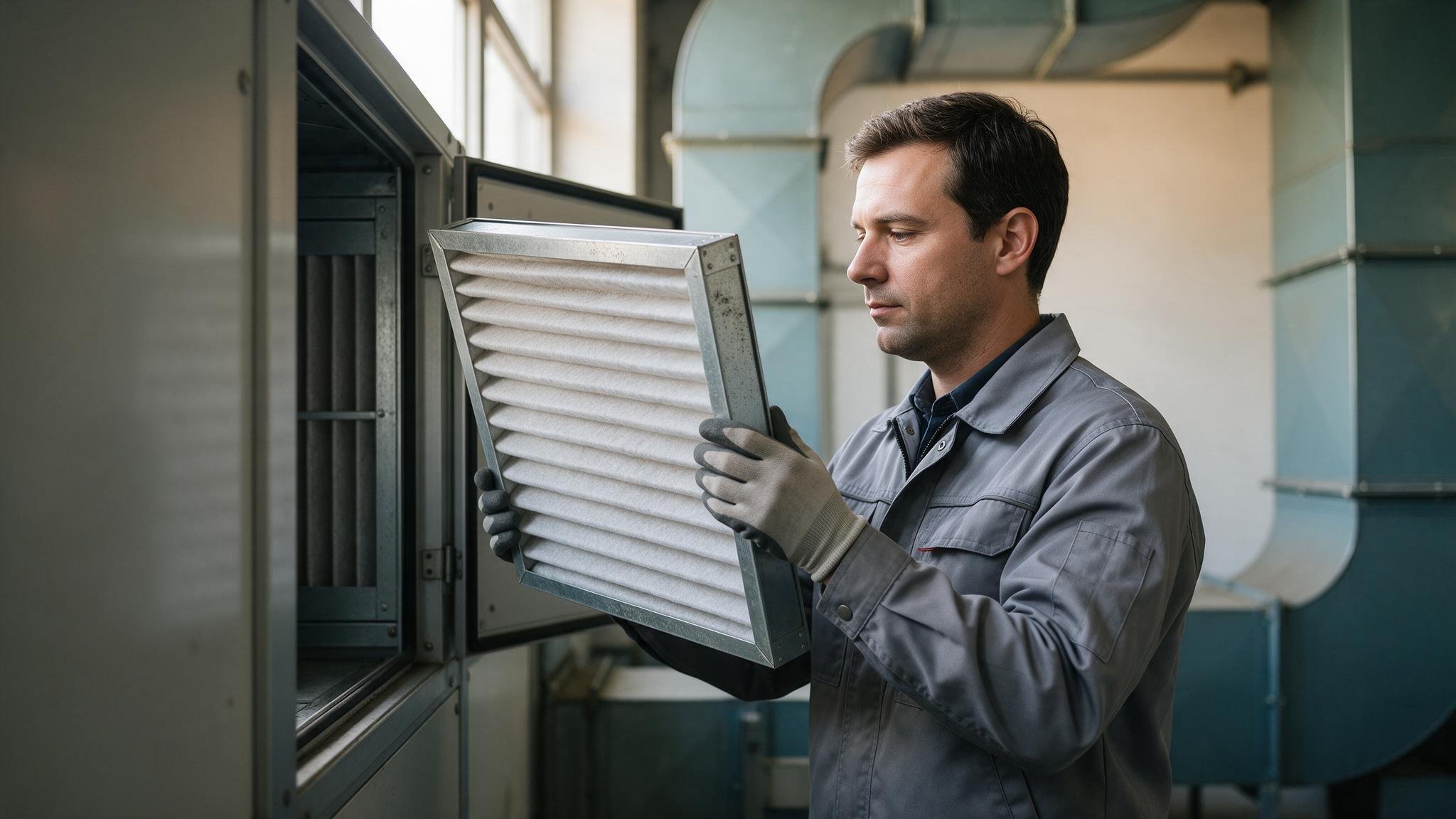
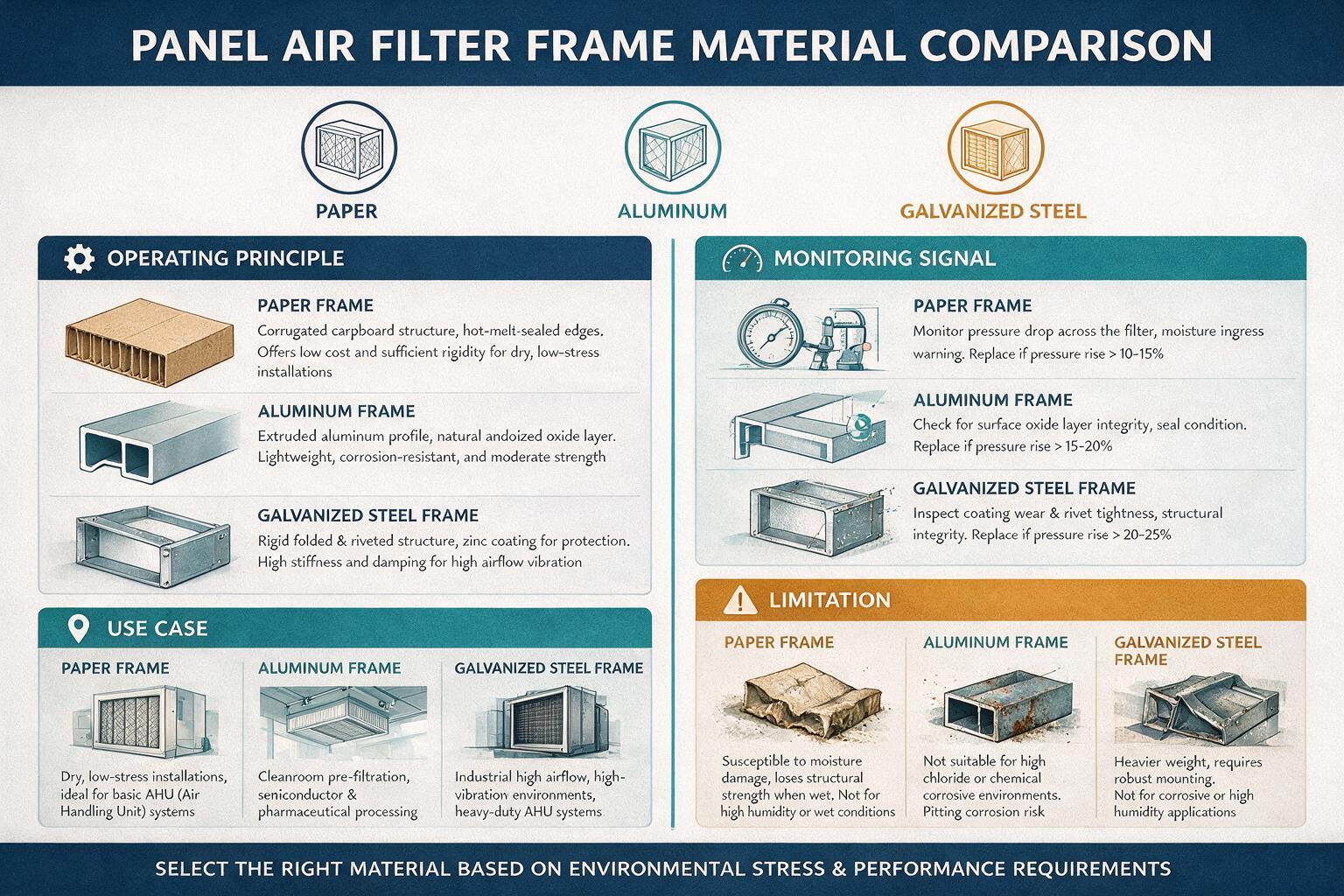
Panel air filter frames come in three common materials: paper, aluminum, and galvanized steel. Each fits a different operating environment.
Paper frames cost the least and work well in dry, low-stress installations. Aluminum frames are lightweight, corrosion-resistant, and moderately priced. Galvanized steel frames offer high strength for high airflow or vibration-prone mounting positions.
Paper frame | Low cost, avoid moisture, ideal for dry air handling units
Aluminum frame | Lightweight and corrosion-resistant, good for cleanroom pre-filtration
Galvanized steel frame | High strength, handles high airflow and vibration
To be honest, if the installation point sees water vapor or cleaning agents, skip the paper frame. Moisture weakens the cardboard and leads to frame collapse or bypass leakage.
The frame also has to match the filter housing precisely. Even a small dimensional gap lets unfiltered air bypass the media. I've seen this failure too many times: the media is fine, but the housing fit causes low efficiency readings. The same fit principles apply to any filter system—see the bag filter housing guide for details on housing tolerances and sealing.
One more point: gaskets and corner construction matter as much as frame material. A rigid frame with a poor corner seal will still leak. Check the supplier's assembly method before buying.
Filter Media: Synthetic Fiber, Glass Fiber, or Nonwoven?
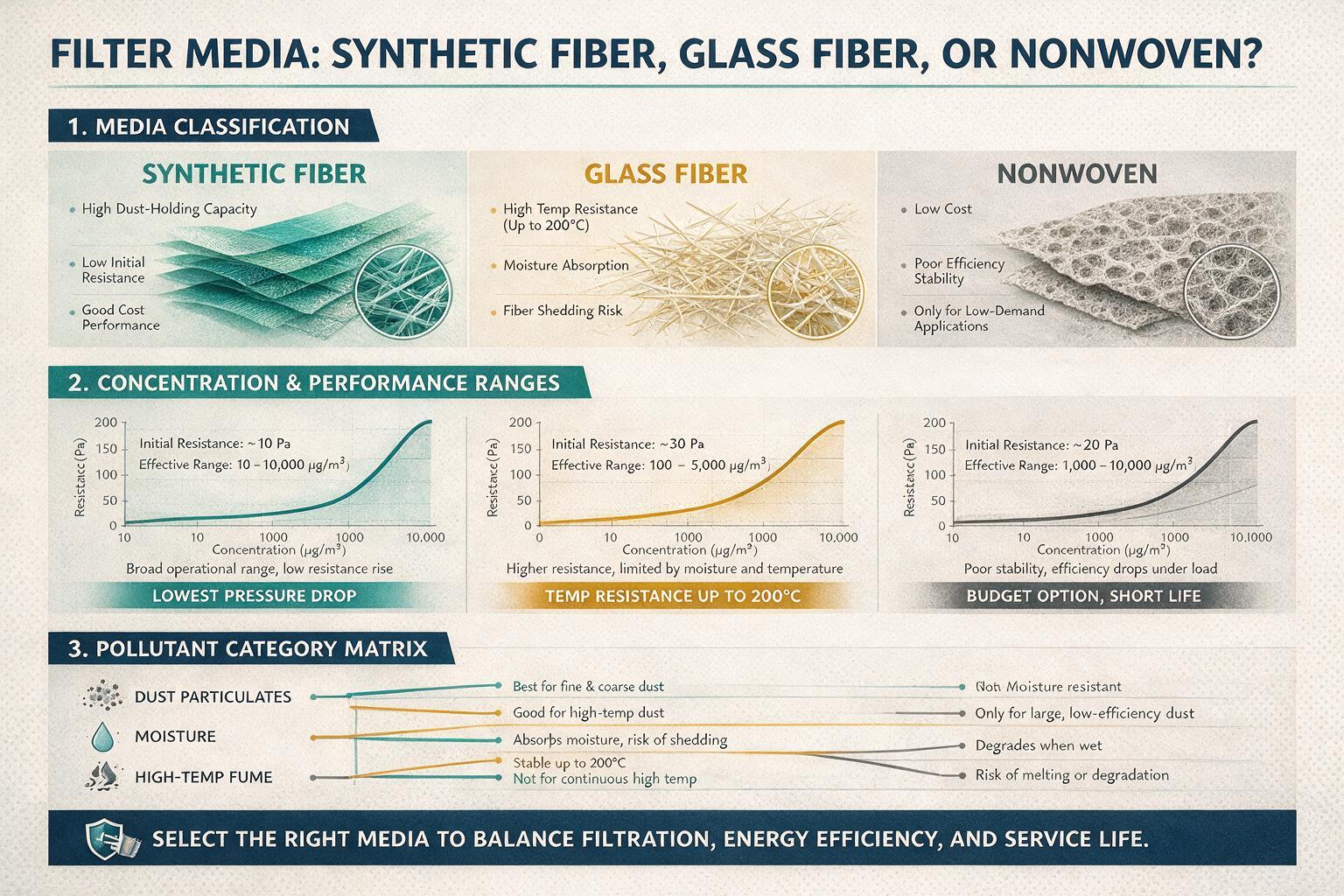
Filter media determines dust-holding capacity, efficiency, and airflow resistance. Choosing the wrong media leads to short service life or high energy bills.
Synthetic fiber is the most common media in an HVAC panel filter. It offers high dust-holding capacity, low initial resistance, and good cost performance. Glass fiber withstands temperatures up to 200°C but absorbs moisture and can shed fibers. Nonwoven media is cheap, but its efficiency stability is poor—only suitable for very low-demand applications.
Synthetic fiber media
- High dust holding capacity
- Low resistance
- Max temp ≤80°C
- Low fiber shedding
Glass fiber media
- High temp resistance (up to 200°C)
- Moisture sensitive
- Possible fiber shedding
- Higher price
For high-temperature process air—such as bake ovens or paint curing lines—glass fiber may be the only option. I'd lean toward synthetic fiber for standard HVAC and cleanroom pre-filtration—it performs well and keeps total cost lower.
Here's the thing: more expensive media does not always mean higher total filtration cost. A durable synthetic fiber panel filter that lasts two years can cost less per operating hour than a cheap nonwoven unit replaced every six months.
I've seen this mistake in action. A customer bought the lowest-priced nonwoven panels for a dusty pre-filtration stage. They clogged within three months, starved the air handling unit, and drove fan energy up. Switching to a pleated synthetic panel filter doubled the service life and cut annual replacement labor.
Pleat depth also affects media performance in a pleated panel filter. Deeper pleats create more surface area, lower pressure drop, and longer life at the same airflow. Ask for pleat count and media area, not just filter dimensions.
Efficiency Grades: G4, F7, or F9?
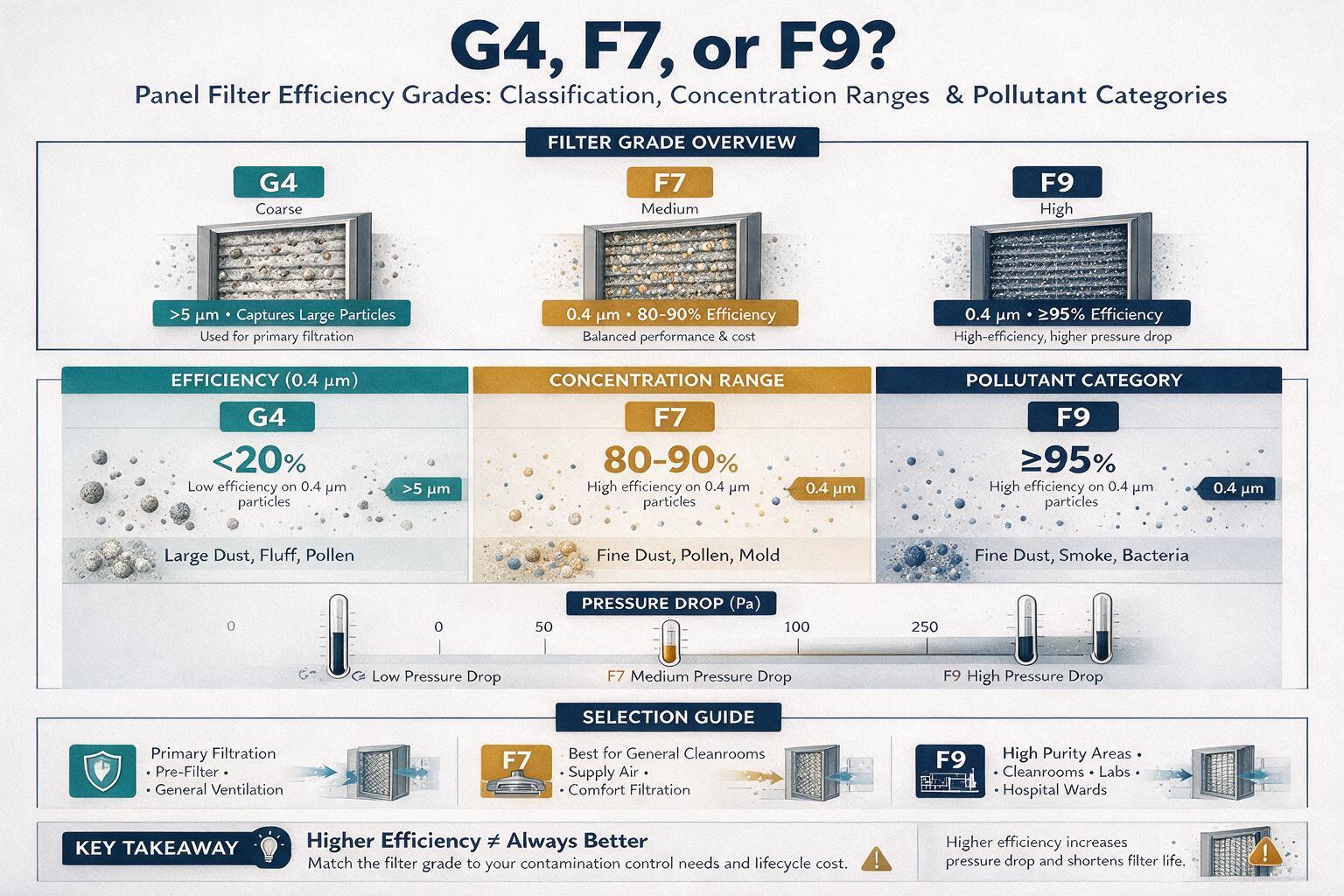
Efficiency grades for panel air filters commonly range from G4 to F9. The span is wide, and choosing the wrong grade creates avoidable cost.
G4 is a coarse filter that captures particles above 5 μm. F7 is a medium-efficiency filter with 80–90% efficiency on 0.4 μm particles. F9 captures more, but its pressure drop climbs sharply.
Many buyers assume higher efficiency is always better. That's not true for panel filters. Higher efficiency usually means higher pressure drop and shorter media life, which increases fan energy and replacement frequency.
Here's the thing: the correct grade depends on what you need to protect downstream. If you only protect an air handling unit coil or fan, G4 is enough. For cleanroom pre-filtration before a HEPA filter, F7 or F8 extends the HEPA's service life.
A HEPA filter is expensive to replace. Choosing an F7 panel air filter as pre-filtration can cut HEPA replacement cost more than the extra panel filter cost. For the full cost picture, see the HEPA filter guide.
Efficiency matching should aim at protecting the right downstream component at the right cost—not at maximum capture for its own sake.
If you work with ASHRAE 52.2 MERV ratings, G4 roughly corresponds to MERV 7–8, F7 to MERV 13, and F9 to MERV 15. Use the standard your site already follows, but don't mix them on the same specification sheet.
Pressure Drop: The Hidden Cost of Panel Air Filters
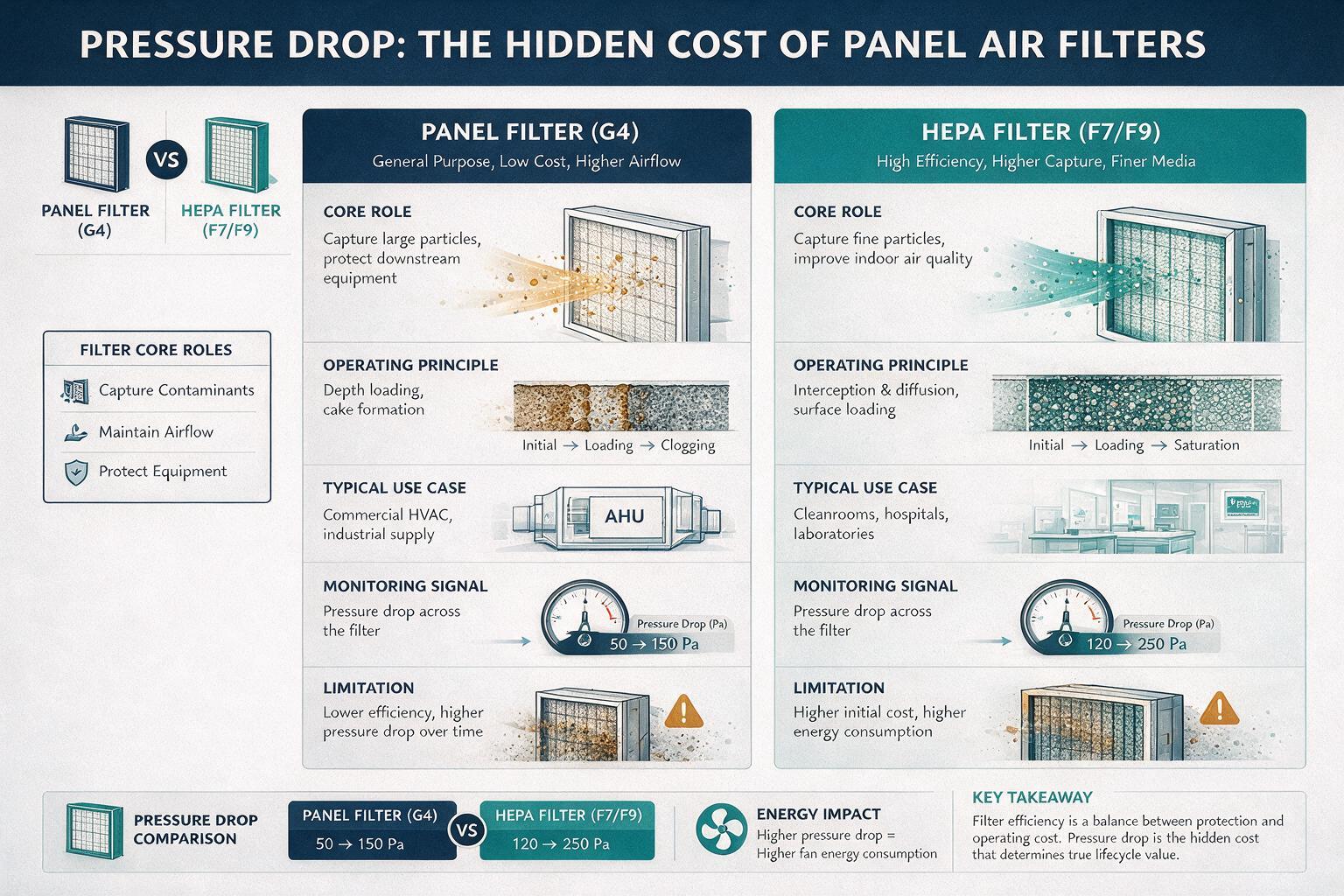
Pressure drop is the airflow resistance a panel air filter creates. It is the single largest operating cost driver, yet many selection documents ignore it.
Initial pressure drop determines fan energy consumption. Final resistance is usually set at about twice the initial value. Once the filter reaches that point, you replace it.
Typical initial pressure drops by efficiency grade look like this:
A 20 Pa difference in pressure drop is not trivial. At 10,000 m³/h airflow, 20 Pa equals roughly 0.6 kW of fan power. Over 8,000 operating hours per year, that's 4,800 kWh of extra electricity.
Honestly, this is where the hidden cost lives. A panel air filter with high initial pressure drop can cost more in electricity each year than the filter itself. Always ask the supplier for both initial and final resistance values—not just efficiency.
At an electricity rate of $0.10 per kWh, that 20 Pa difference costs $480 per fan per year. For a facility with five air handling units, that's $2,400 annually—just from one selection mistake.
Final resistance also drives maintenance frequency. If you set final resistance too high, the filter blocks airflow and wastes energy. If you set it too low, you replace media before it's fully loaded. A balanced final resistance recommendation from the supplier is part of a proper panel filter selection.
Matching Panel Air Filters to Application Scenarios
Different applications require different panel air filter configurations. The logic changes whether you are protecting coils, HEPA filters, or paint booth exhaust.
Paint lines produce heavy dust and overspray. A panel air filter works as the first stage, followed by ceiling media and exhaust filters. The exact configuration depends on booth airflow and coating type—see the bag filter guide for downstream high-dust options.
For wind turbine nacelles or outdoor installations, a panel air filter must handle moisture, salt spray, and vibration. Pre-filtration quality directly affects gearbox and converter component wear. The wind turbine filter selection guide explains why pre-filter choices matter so much in these environments.
When dust loading is extremely high, a panel filter can act as a pre-filter before a baghouse. Use a high dust-holding synthetic media and monitor pressure drop closely. That way the main bag filter sees less abrasive load and lasts longer.
Before you approve a panel air filter purchase order, verify these points:
Panel Air Filter Sizing Checklist
- Confirm cleanliness class or downstream protection target
- Request initial and final pressure drop values at design airflow
- Match frame material to moisture, temperature, and vibration conditions
- Check filter housing dimensions and sealing mechanism
- Verify media type against temperature and dust characteristics
- Calculate annual energy cost using average pressure drop
Run this checklist on every bid. It forces suppliers to reveal the numbers that determine total ownership cost, not just the unit price.
A panel air filter is not a commodity item. The right choice depends on how the frame, media, and efficiency grade work together under your specific airflow, temperature, and contaminant load. Run the three numbers before you sign the purchase order.
Need a custom air filtration solution?
Contact the Whalesens engineering team for product selection and OEM/ODM support.
Email whalesens@gmail.com
