


EV Charging Stations
Filtration for Power Equipment
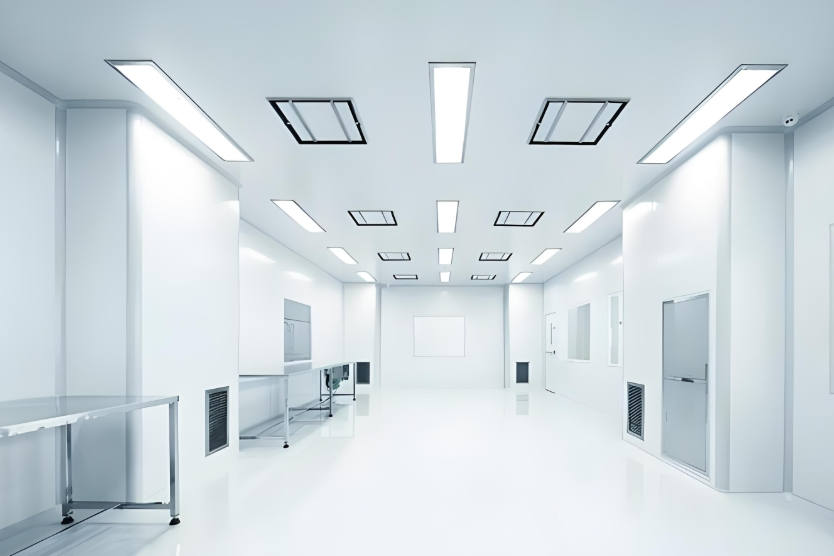
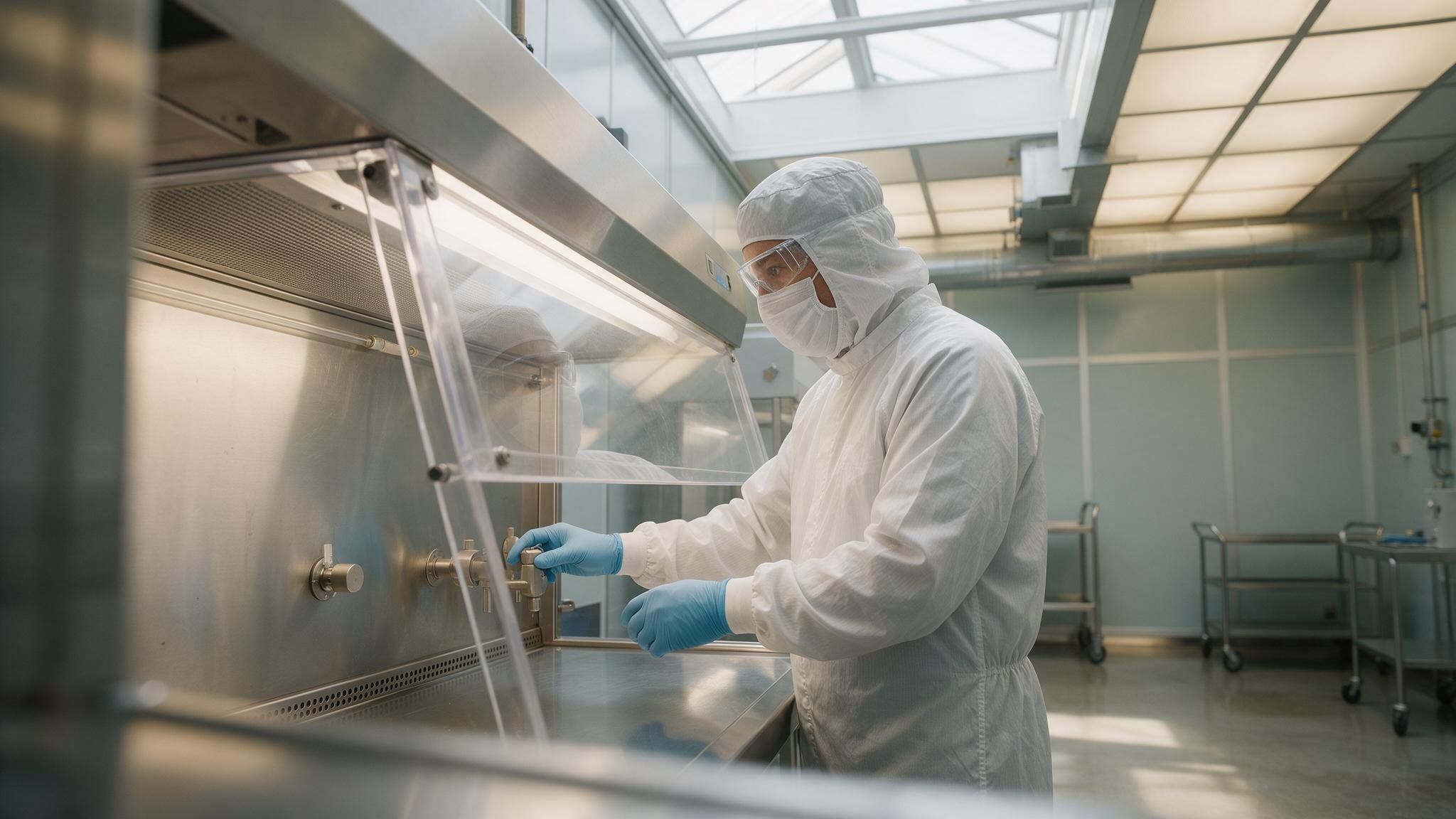
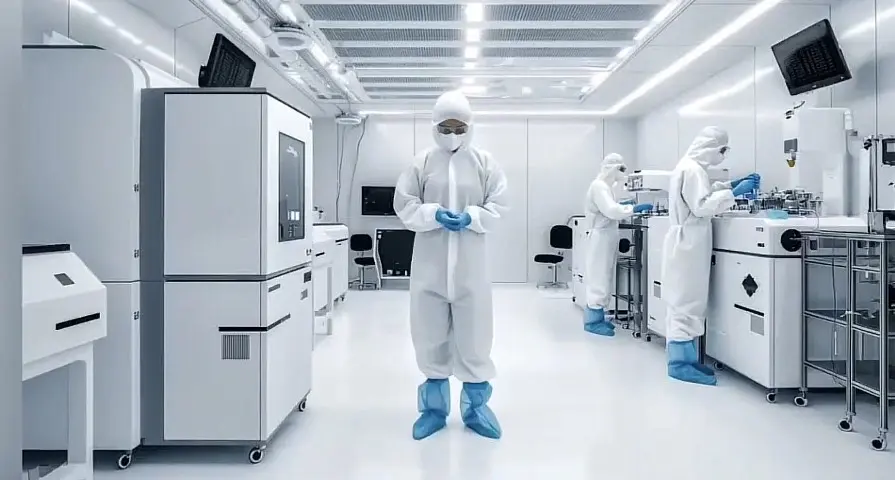
Cleanroom & Semiconductor
Ultra-High Cleanliness Filtration
Commercial HVAC
Central Air System Filtration
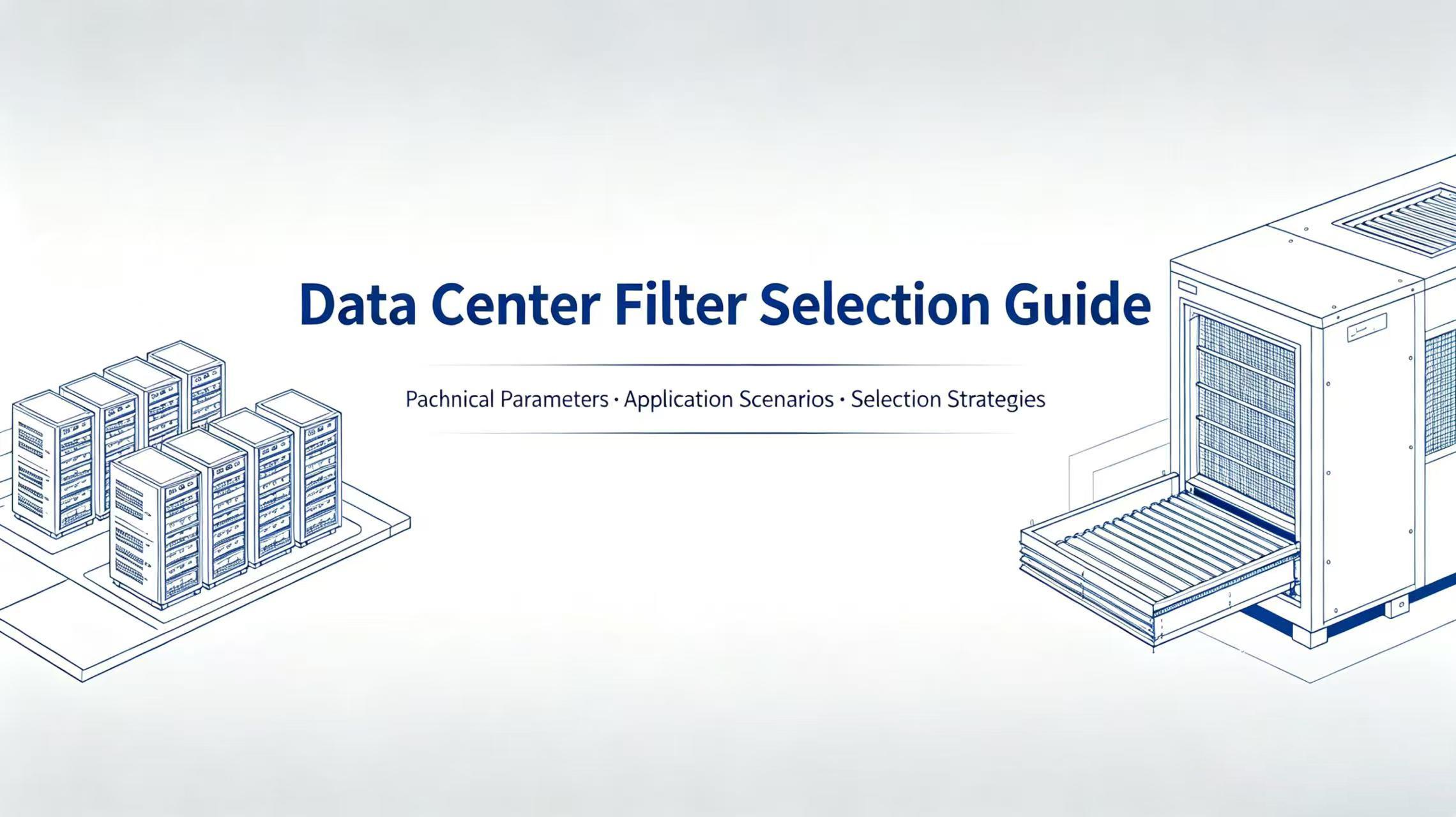
Data Centers
Precision Equipment Protection
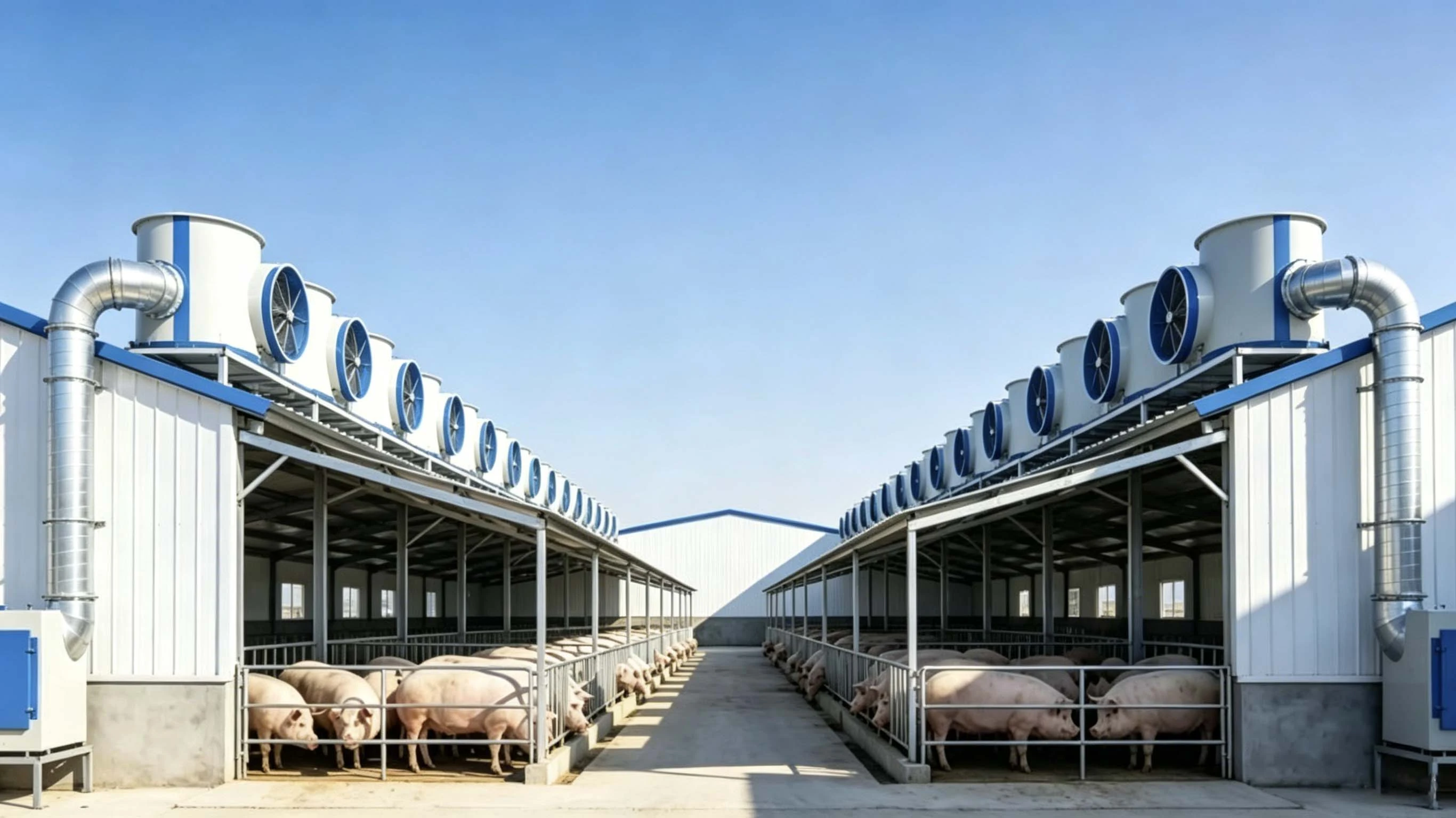
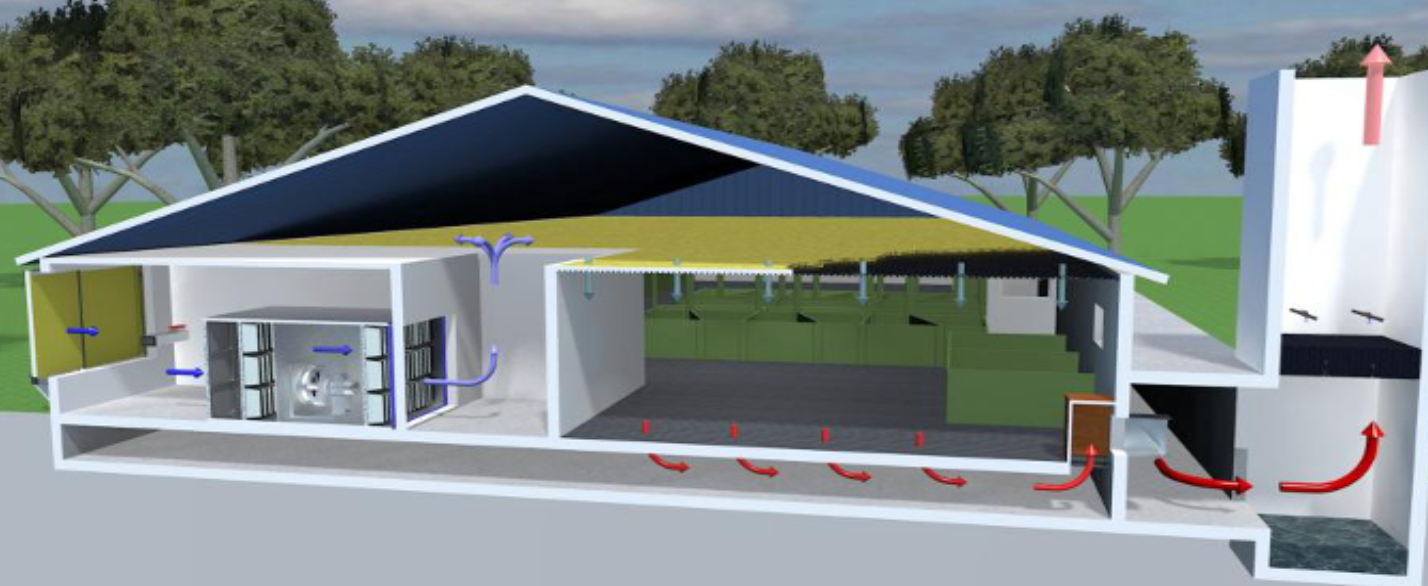
Livestock & Farming
Farming Environment Purification
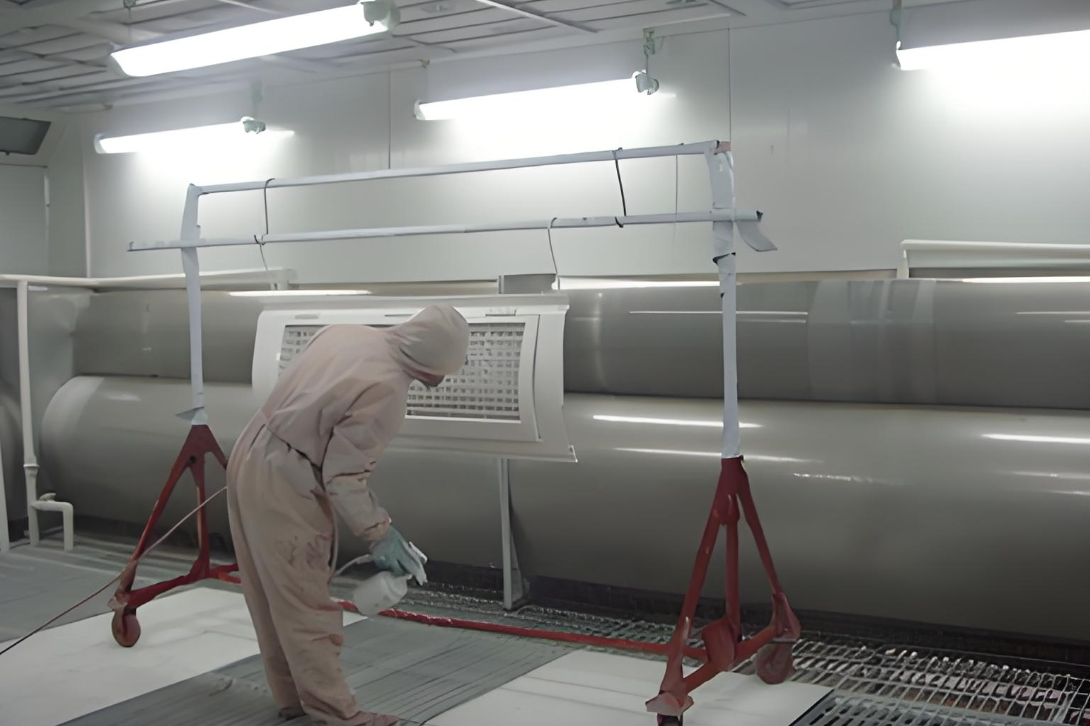
Spray Booths & Industrial Dust
Paint Mist & Dust Purification
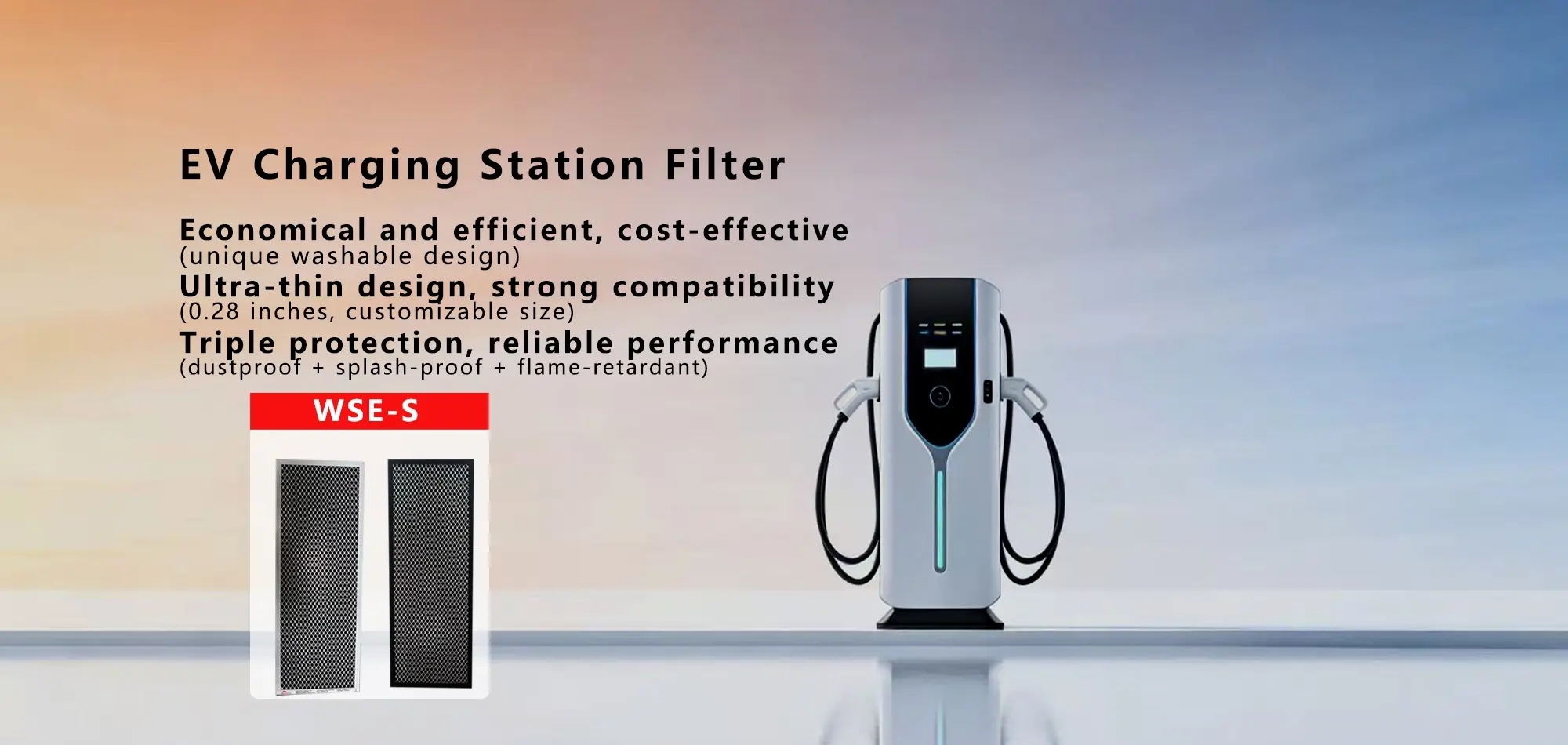
Filtration for Power Equipment
Professional air filtration for EV charging devices, protecting against dust and sand ingress to ensure stable, reliable operation of charging piles and station infrastructure.
View Related Products →Ultra-High Cleanliness Filtration
Ultra-high efficiency filtration for semiconductor wafer fabs and precision electronics cleanrooms, capturing nano-scale particles to meet ISO Class 1–3 standards and maximize product yield.
View Related Products →Central Air System Filtration
High-efficiency filtration for commercial building HVAC systems, improving indoor air quality, reducing energy consumption, and extending equipment service life.
View Related Products →Precision Equipment Protection
Precision air filtration for data centers, shielding servers and critical hardware from dust contamination to keep cooling systems running efficiently and reliably.
View Related Products →Farming Environment Purification
Dedicated filtration systems for farms and livestock facilities — capturing dust, adsorbing ammonia, and inhibiting pathogen spread to improve animal health and overall productivity.
View Related Products →Paint Mist & Dust Purification
Designed for spray booths and grinding workshops, efficiently capturing paint mist, metal dust, and wood chips to meet emission standards while protecting finished surface quality.
View Related Products →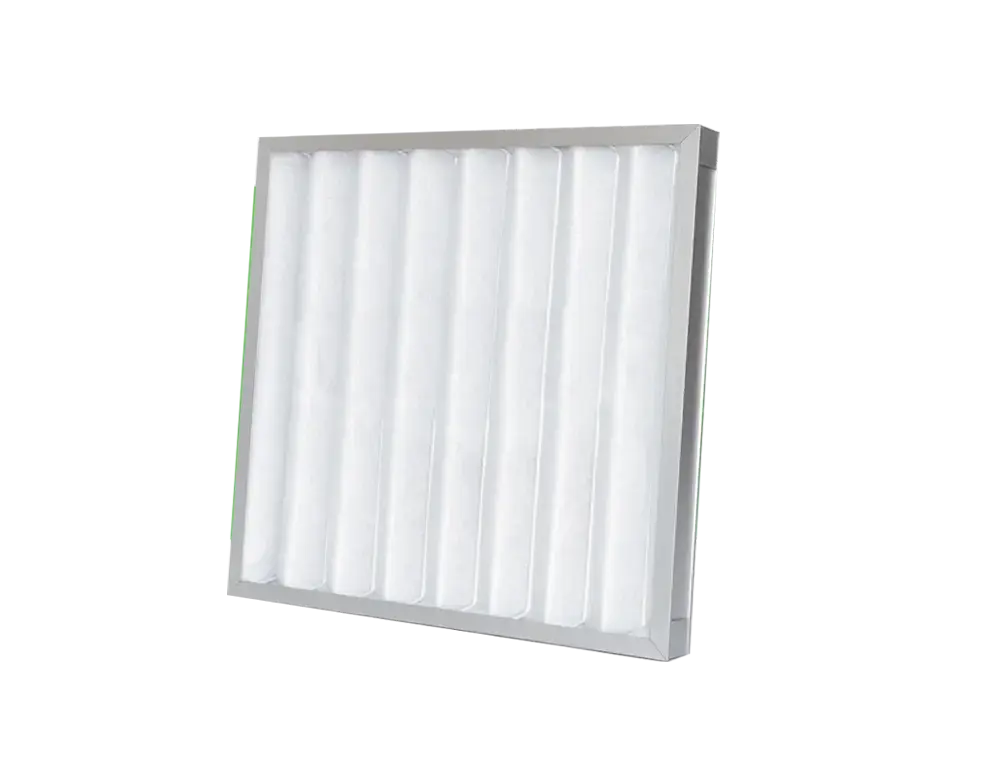
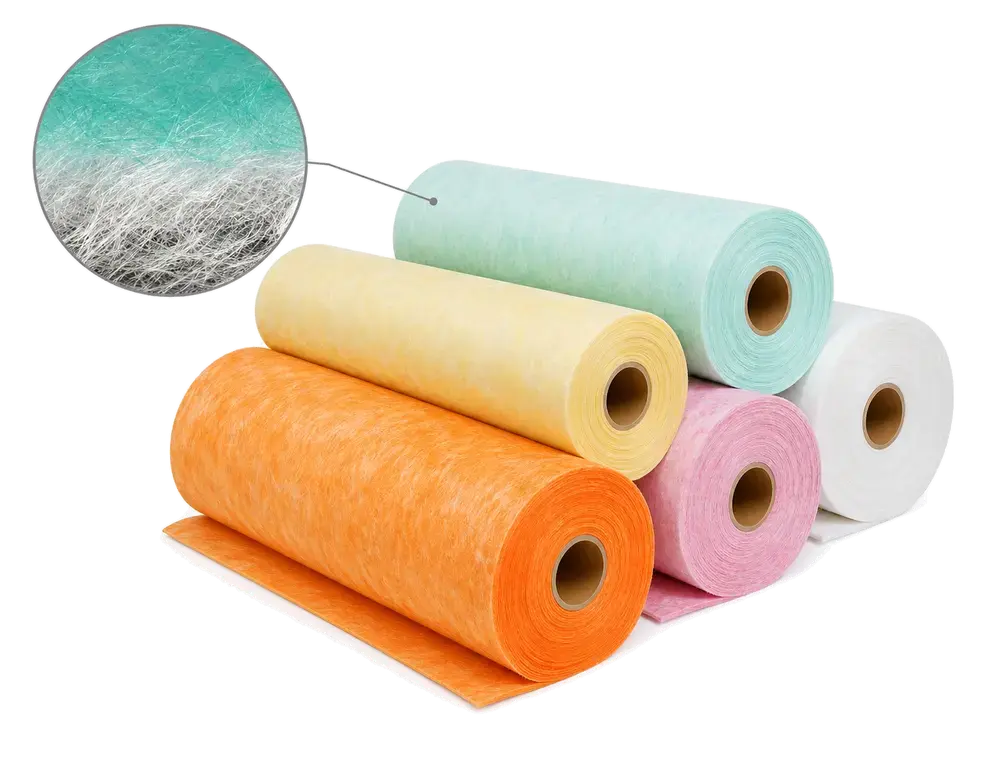
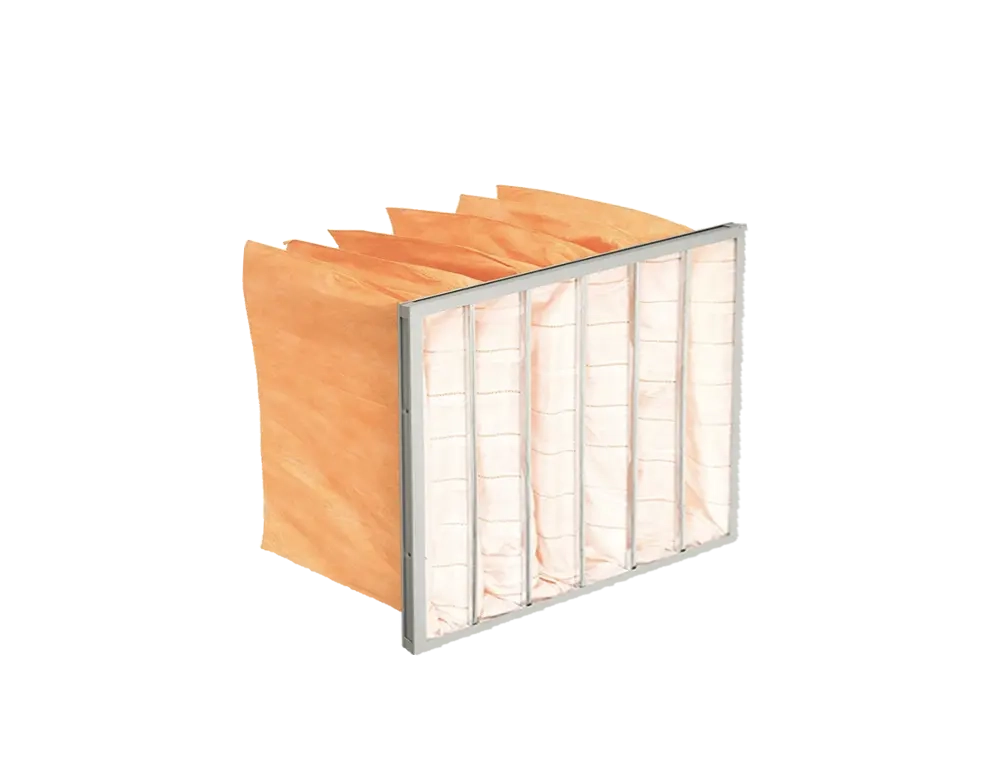
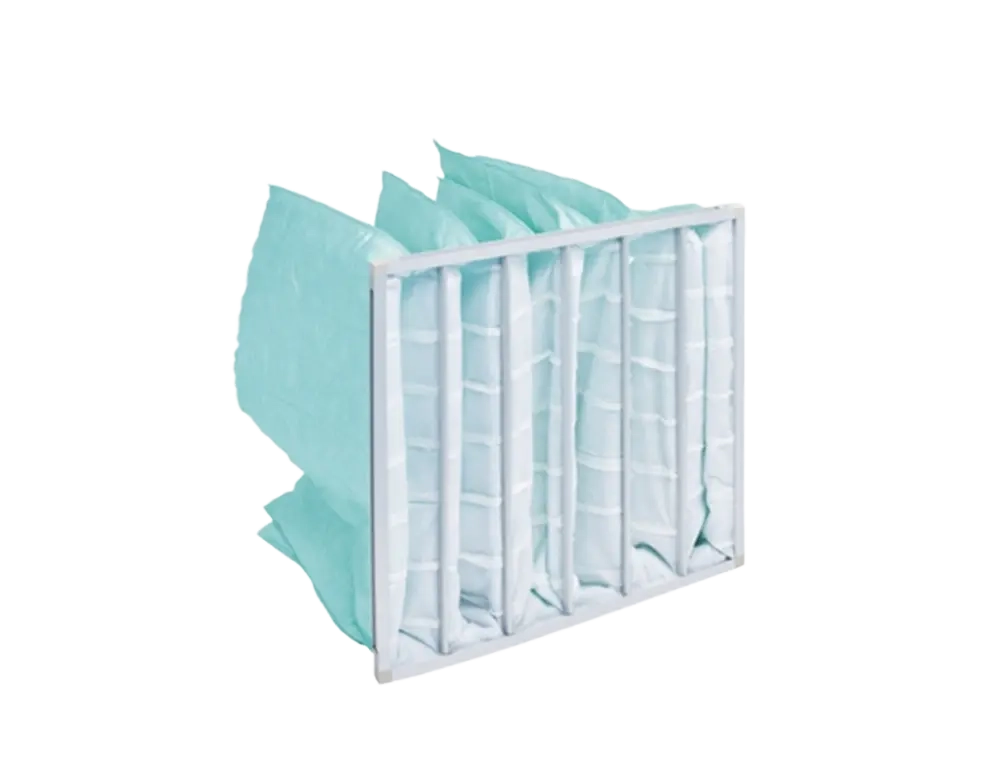
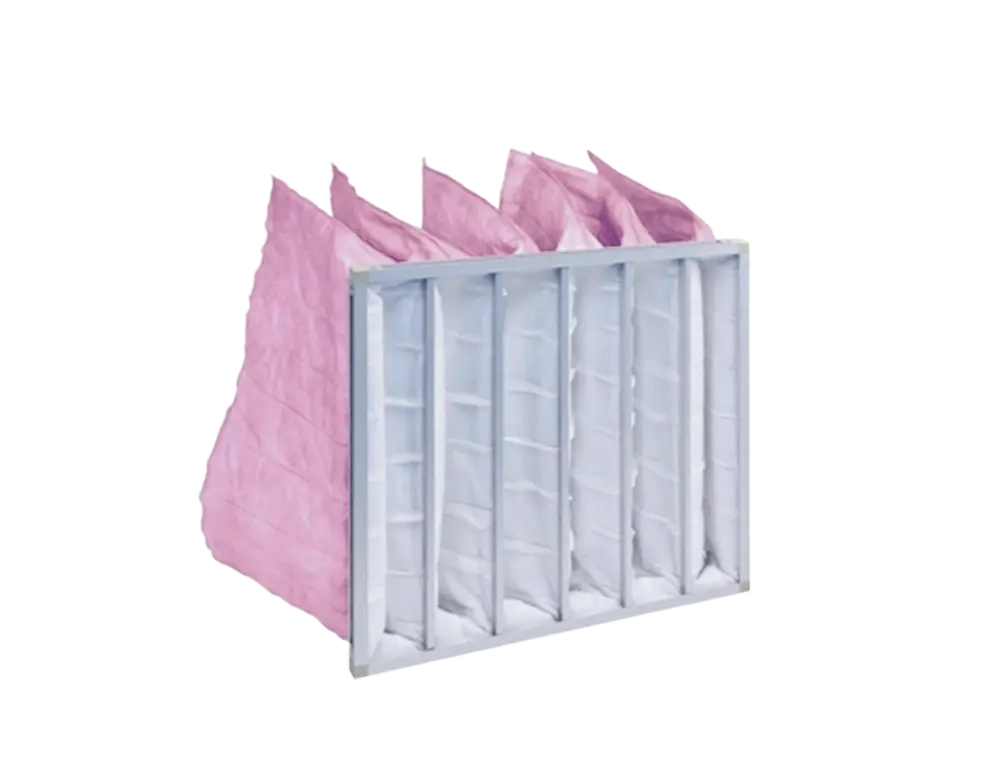
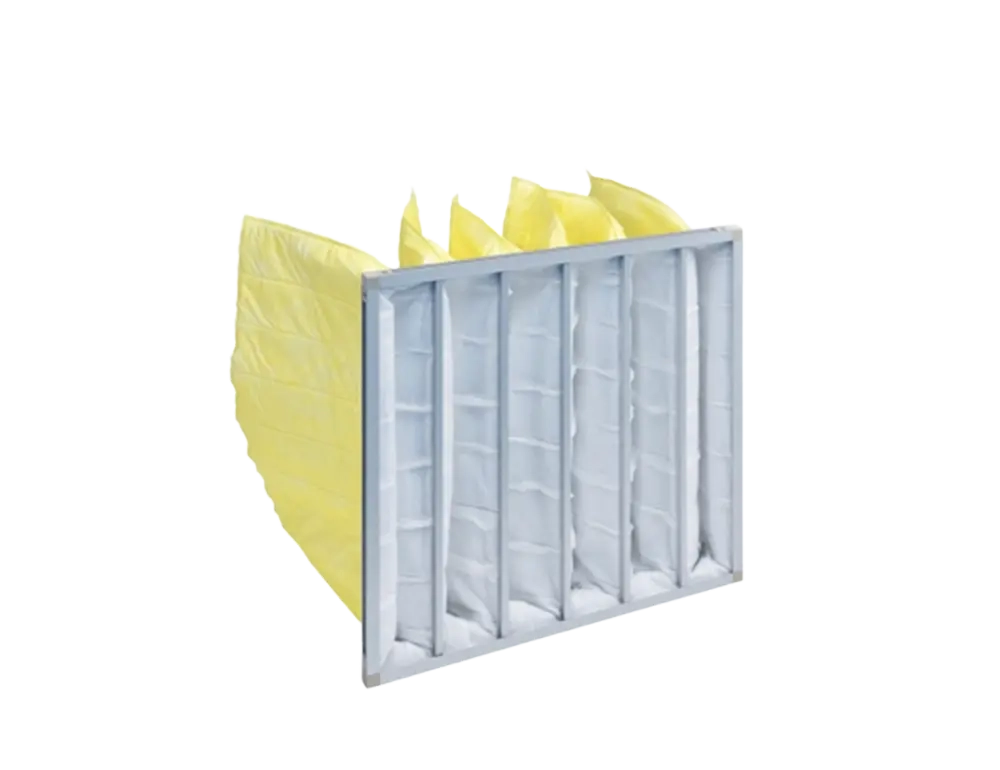
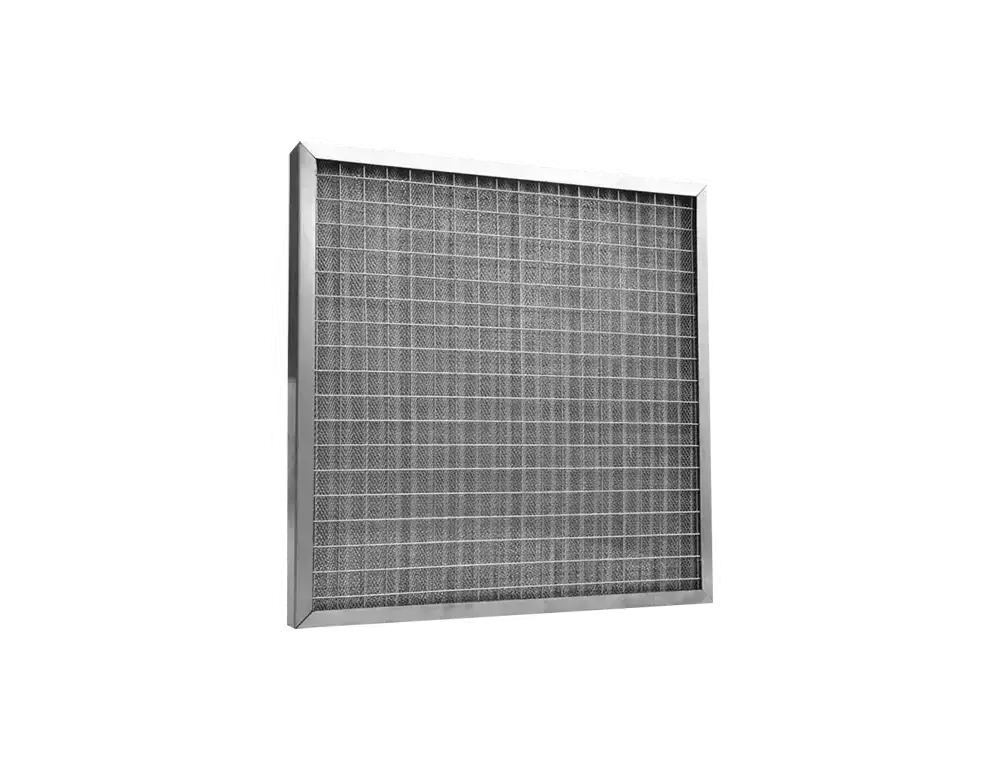
Pre-Filter (G1–G4)
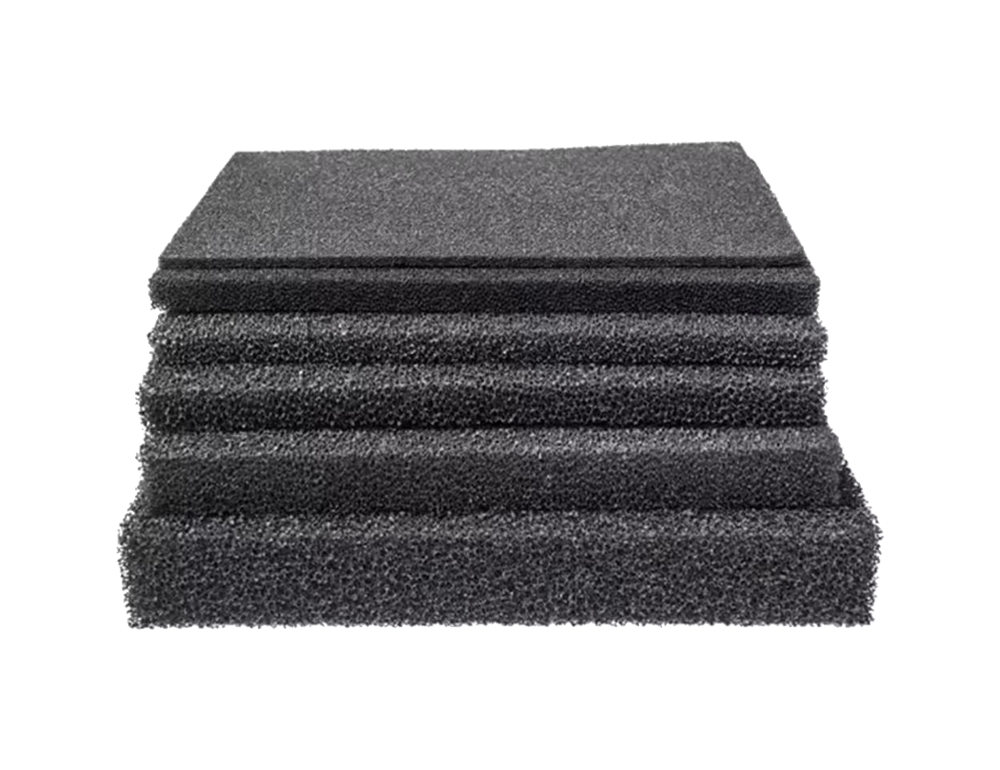
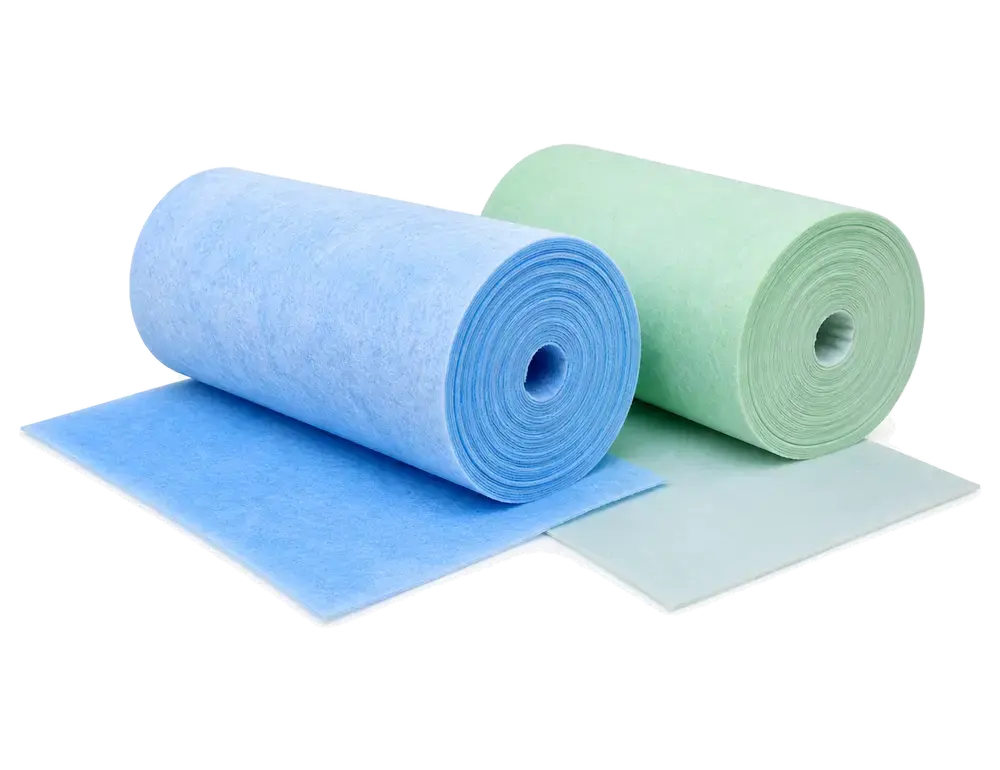
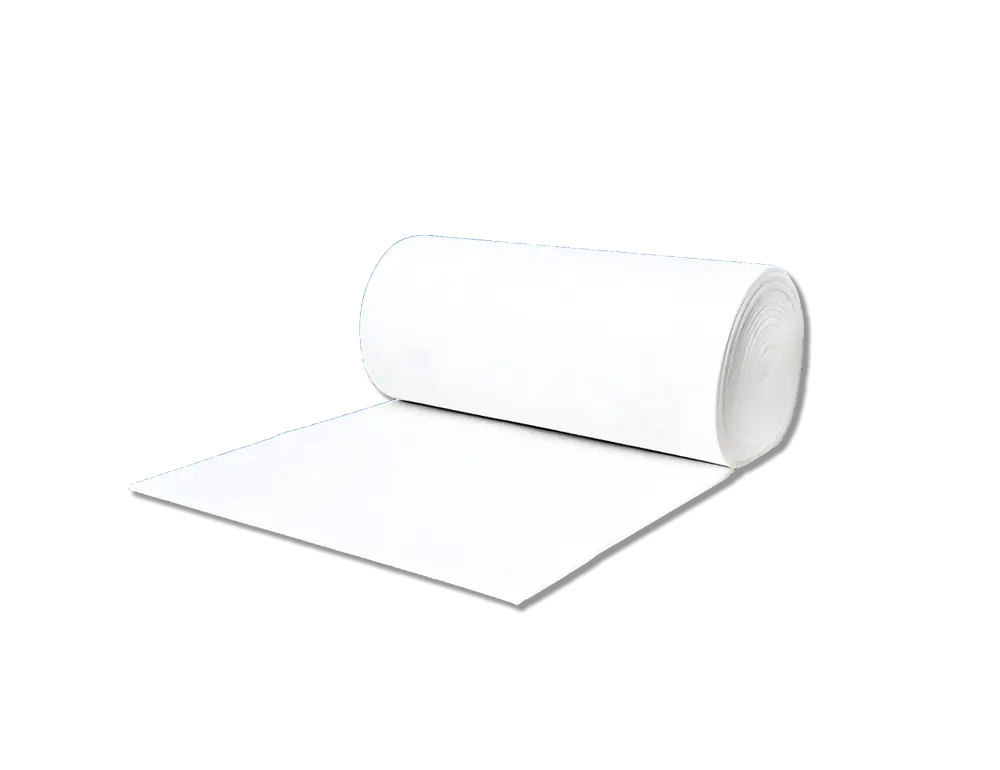
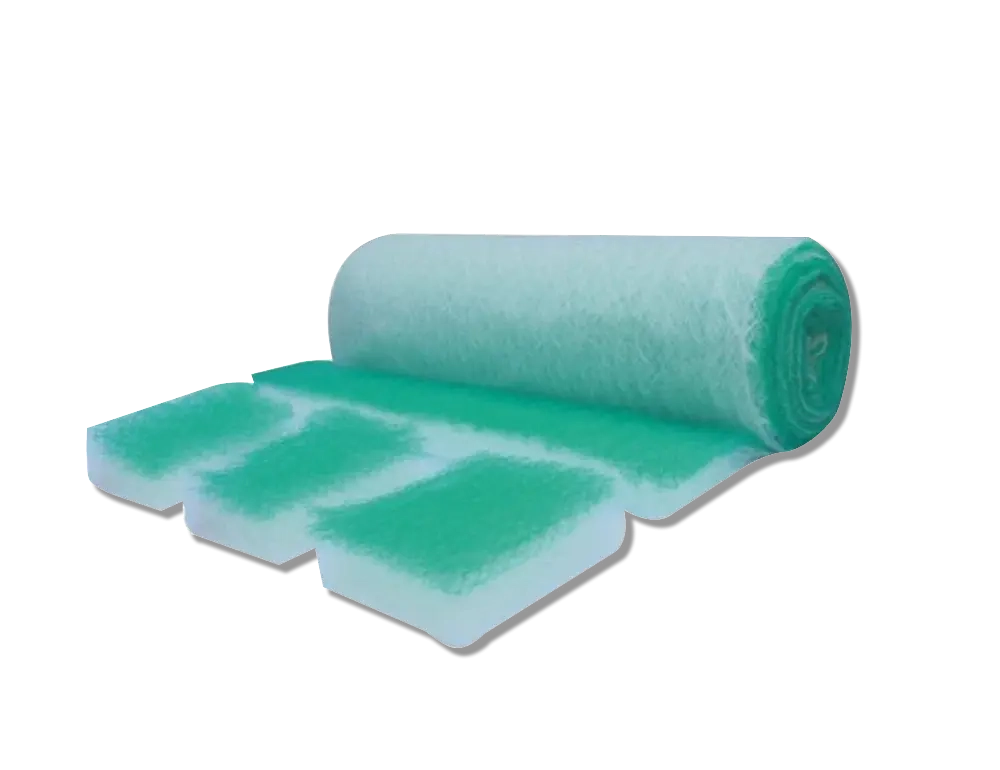
First-Stage Large-Particle Capture
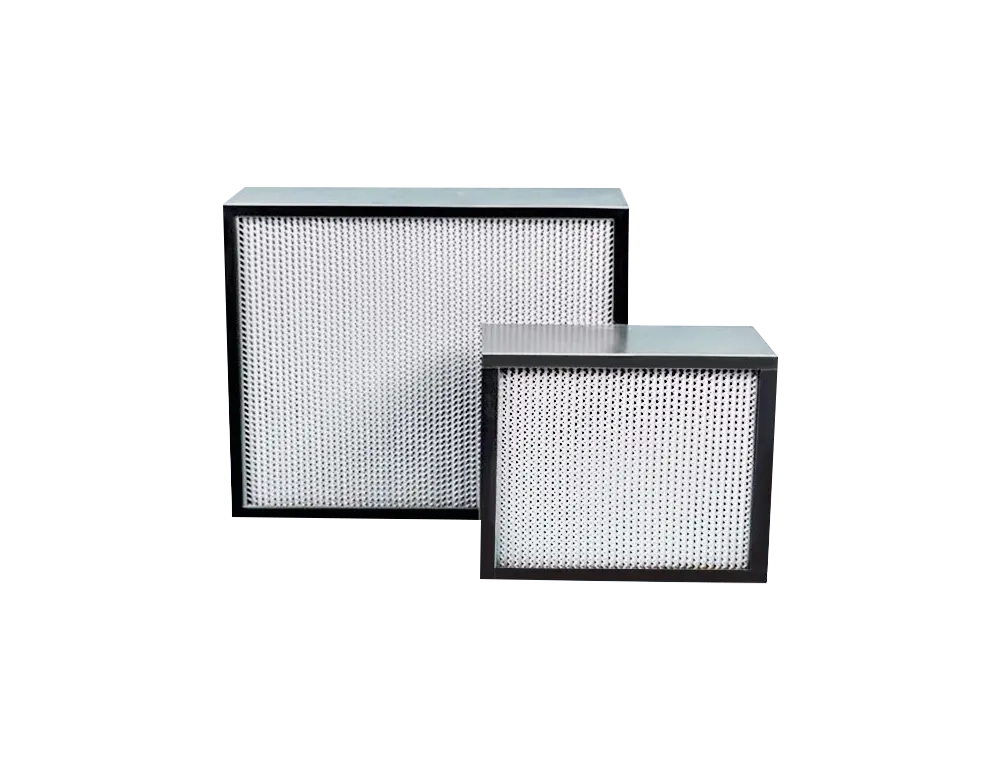
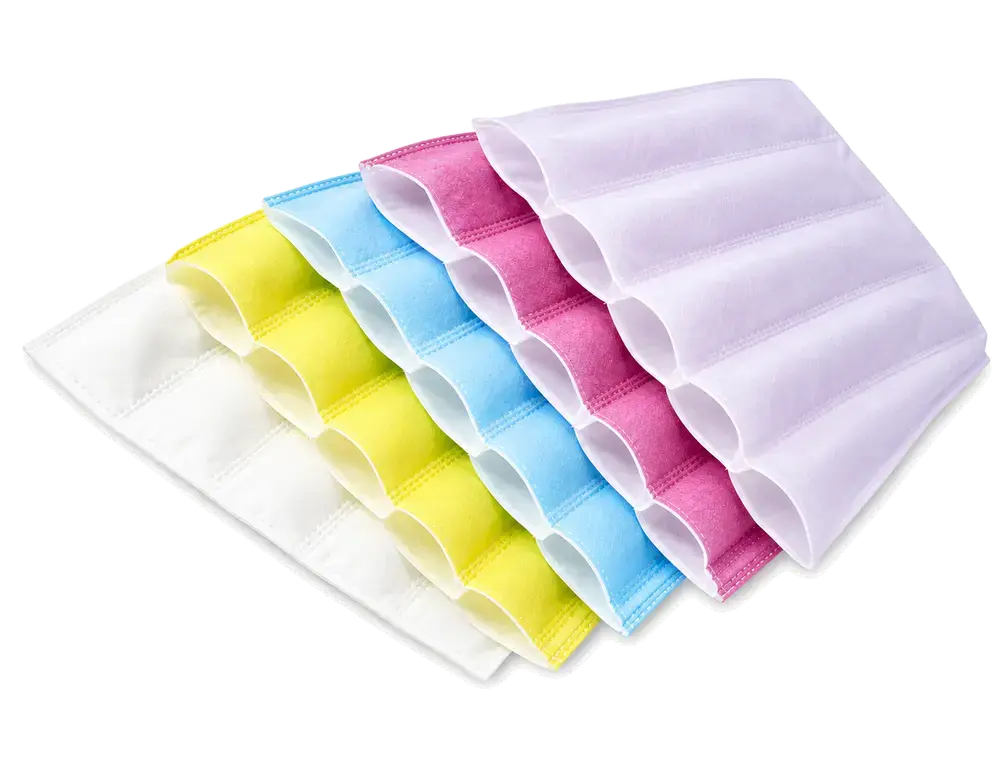
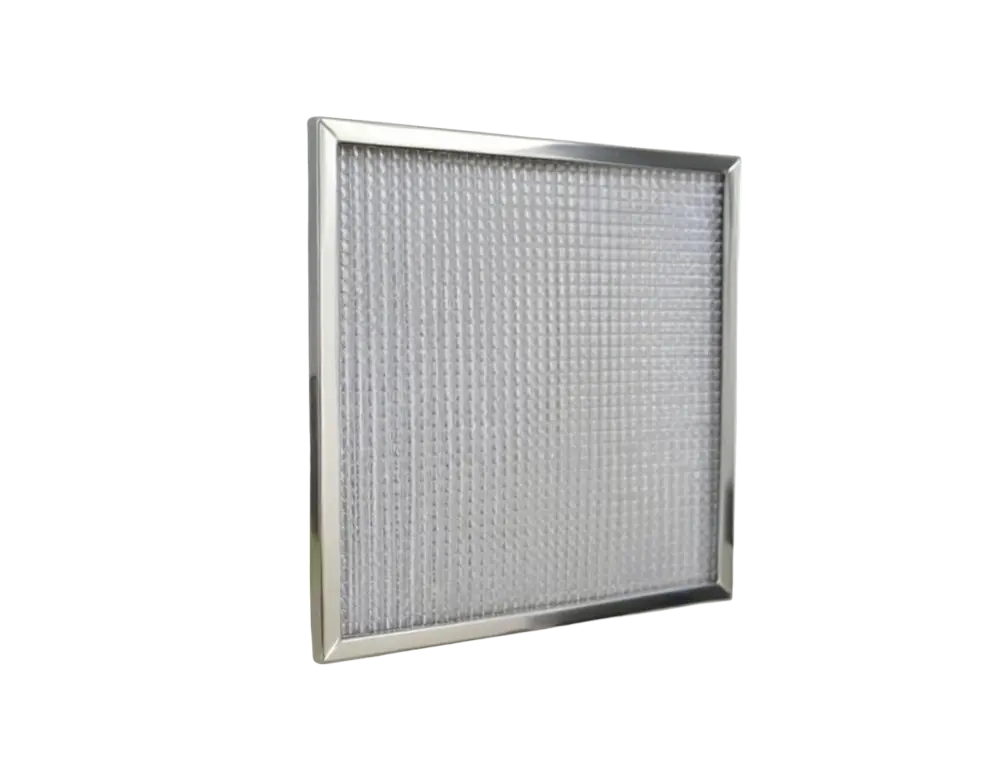
Medium-Efficiency Filter (F5–F9)
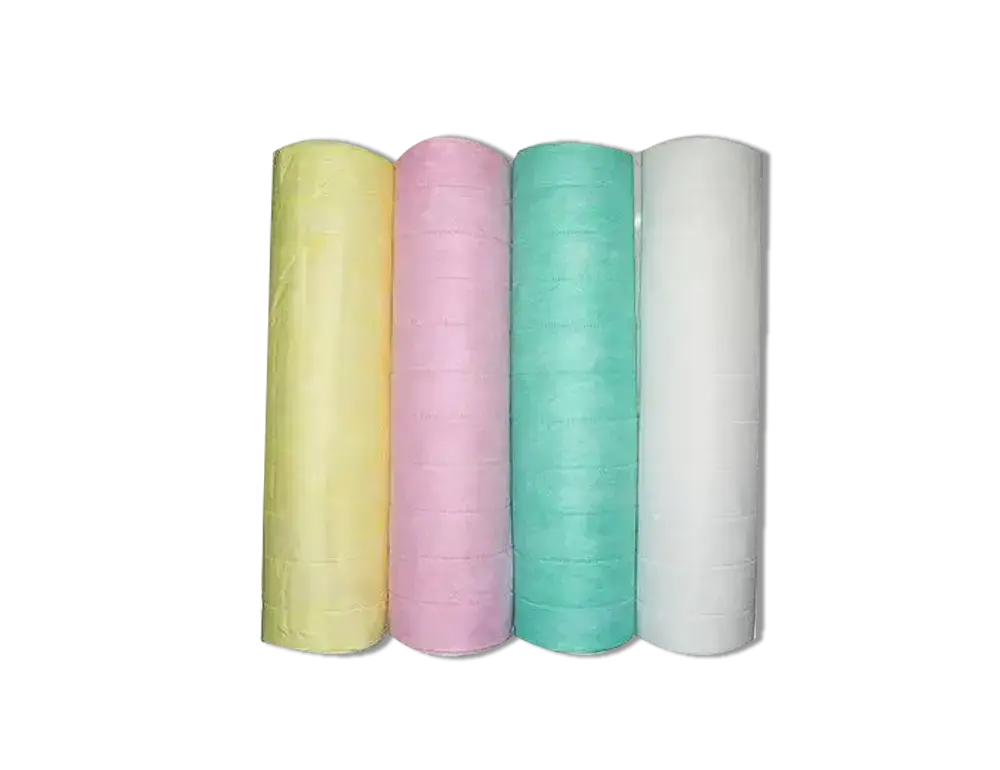
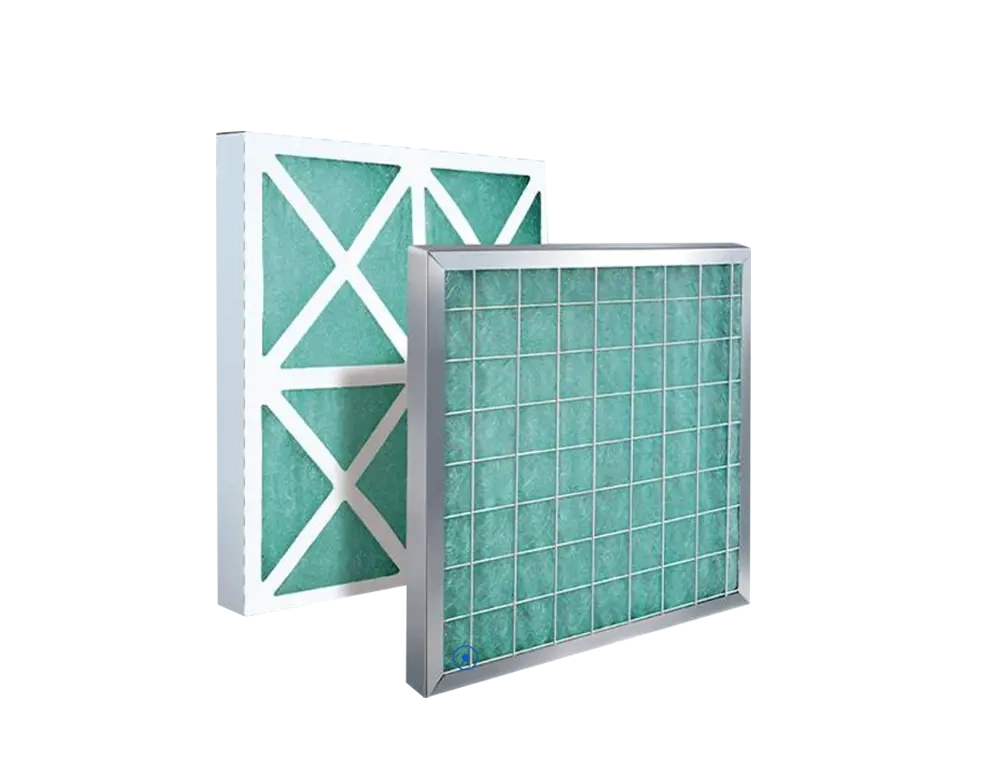
Precise PM2.5 Capture
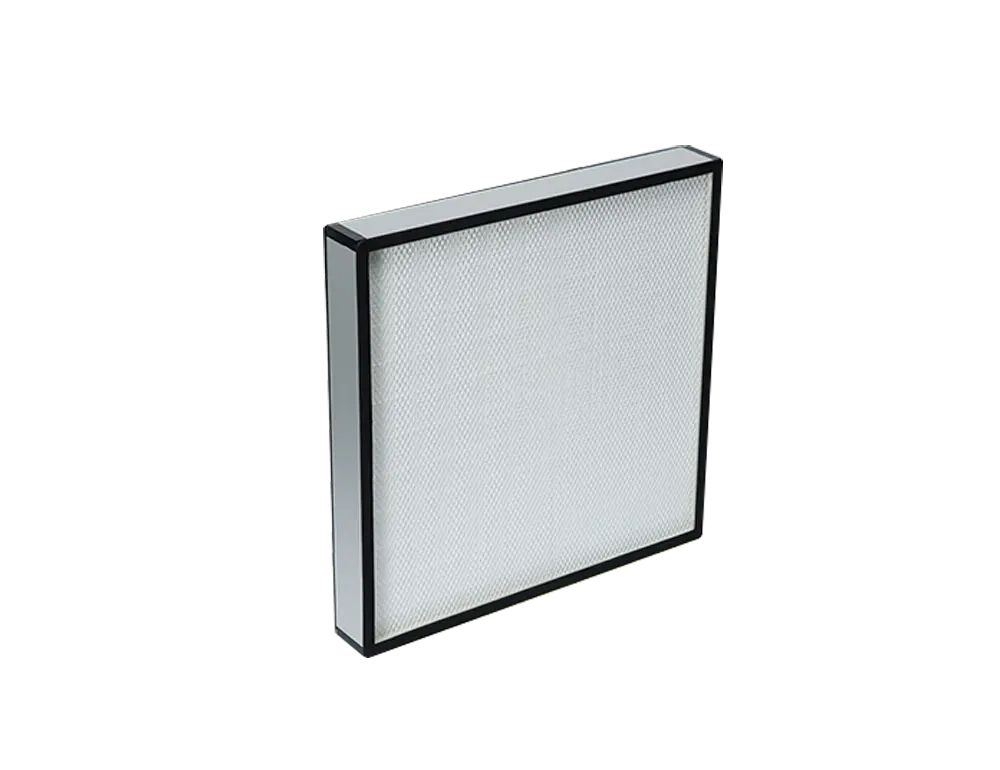
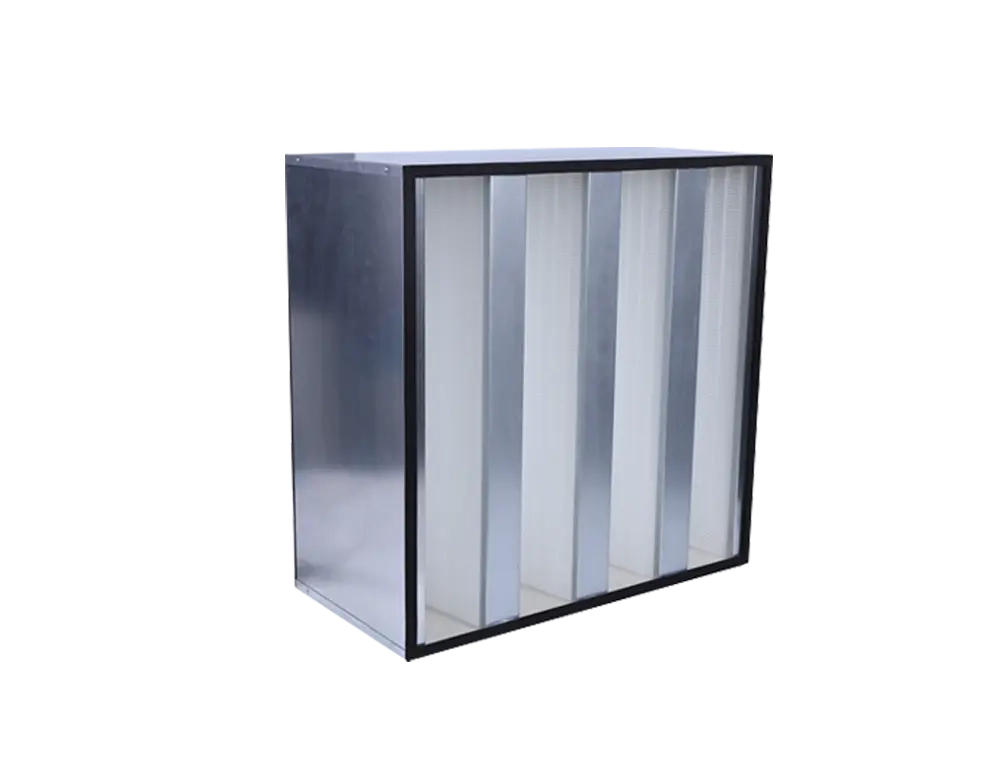
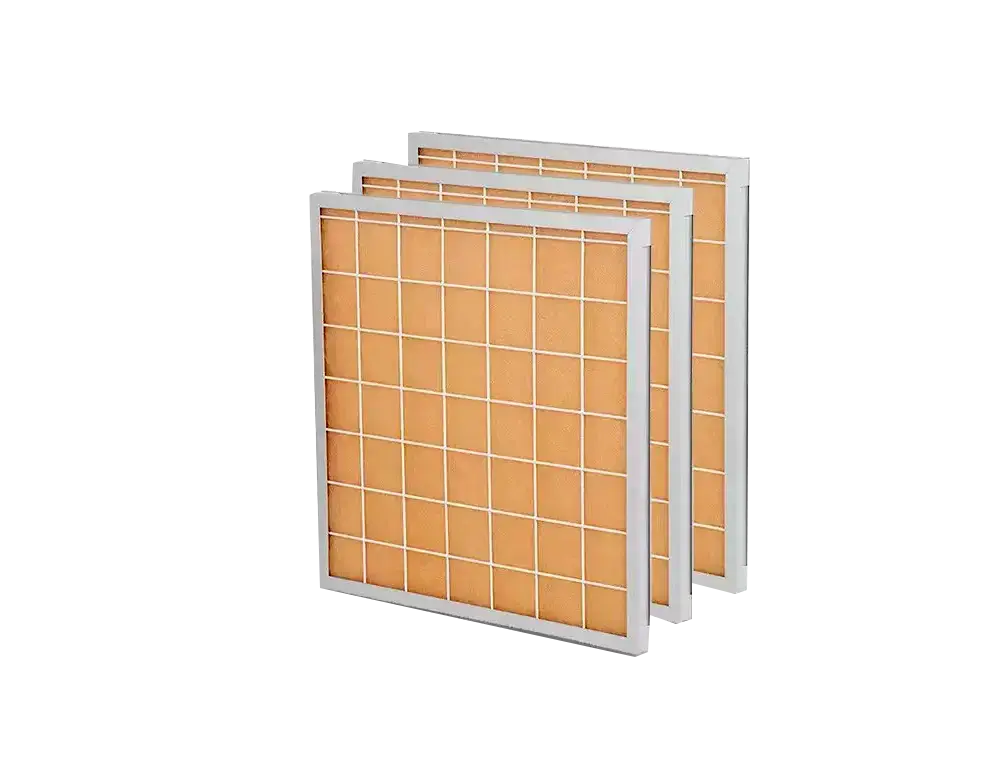
HEPA High-Efficiency Filter
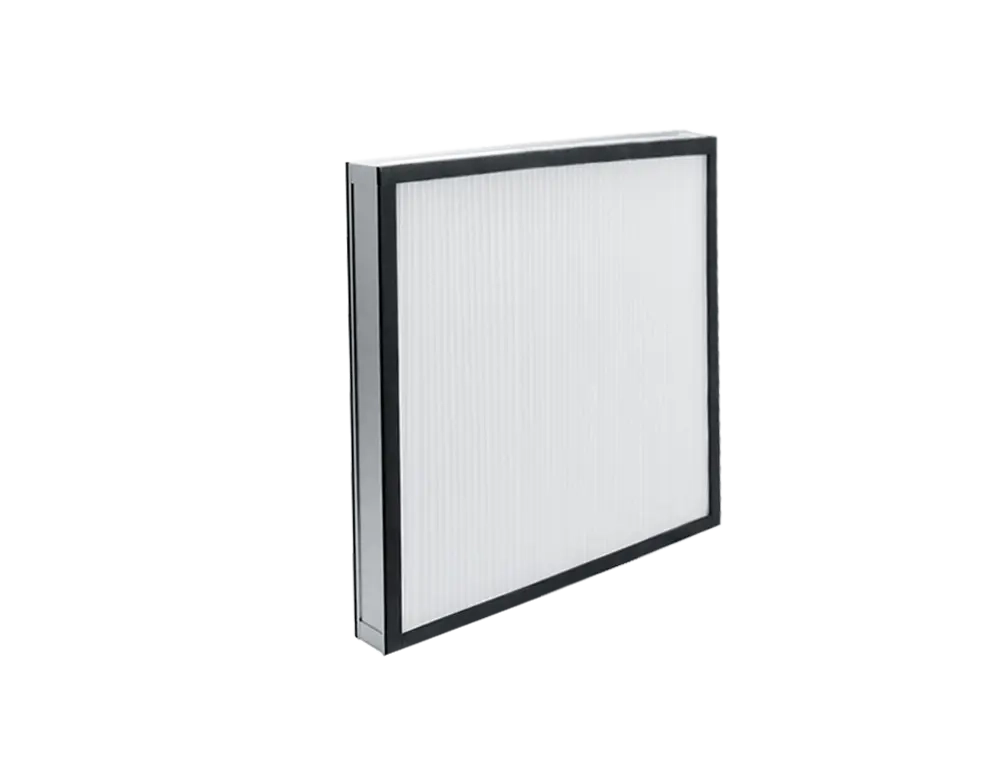
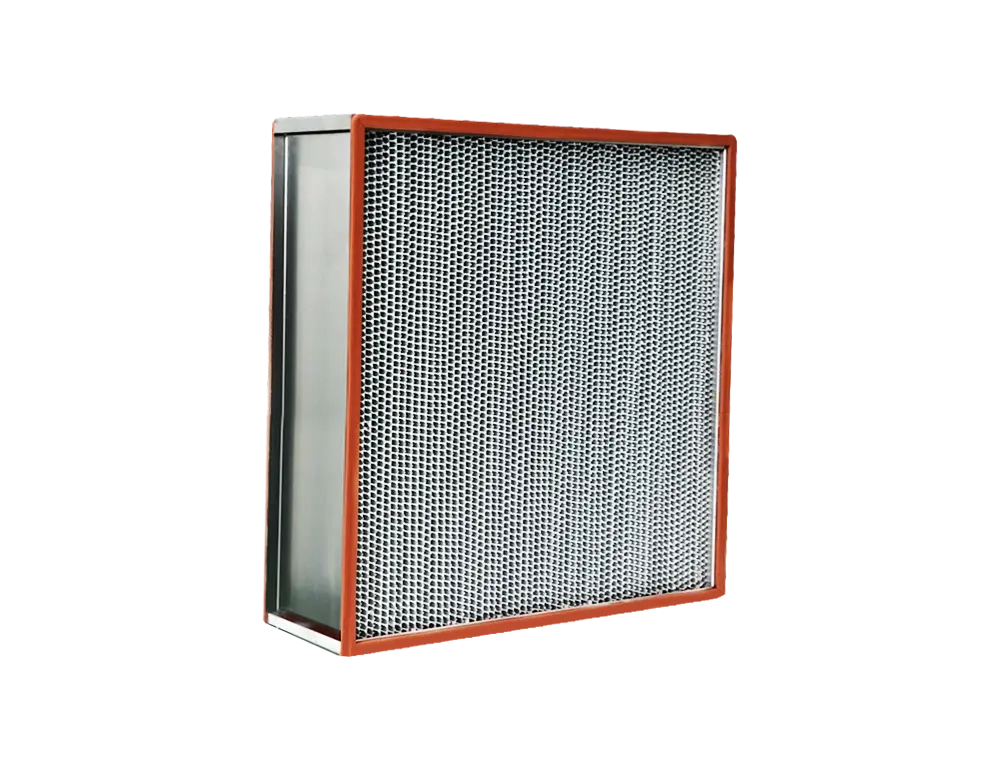
Sterile-Grade Purification
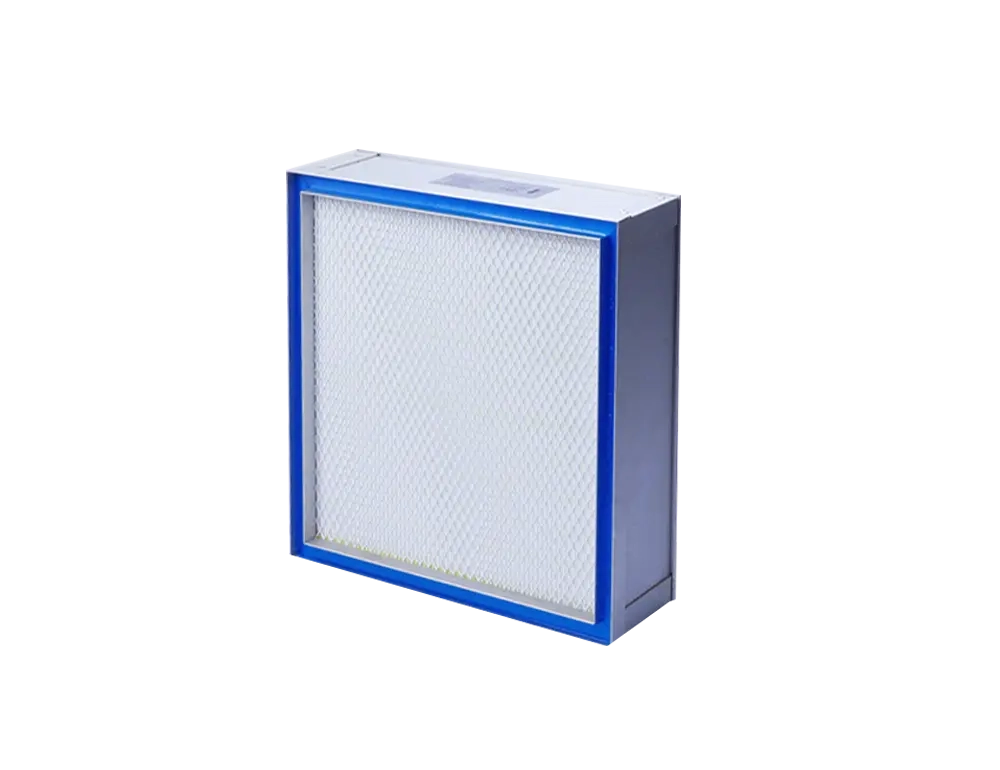
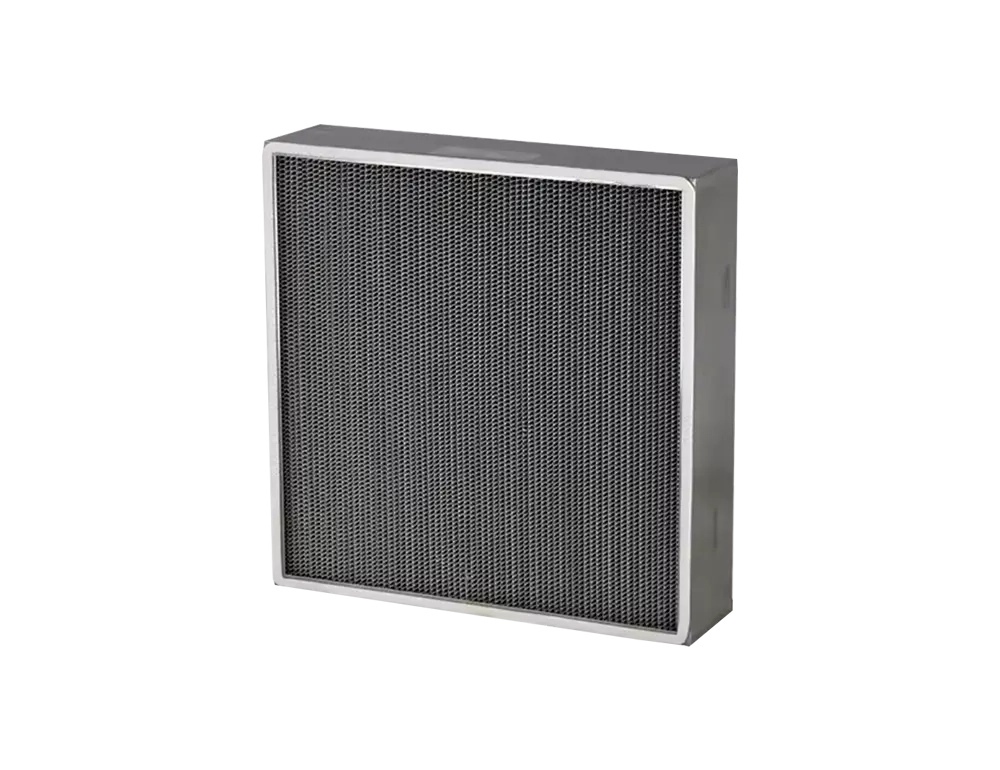
ULPA Ultra-High Efficiency Filter
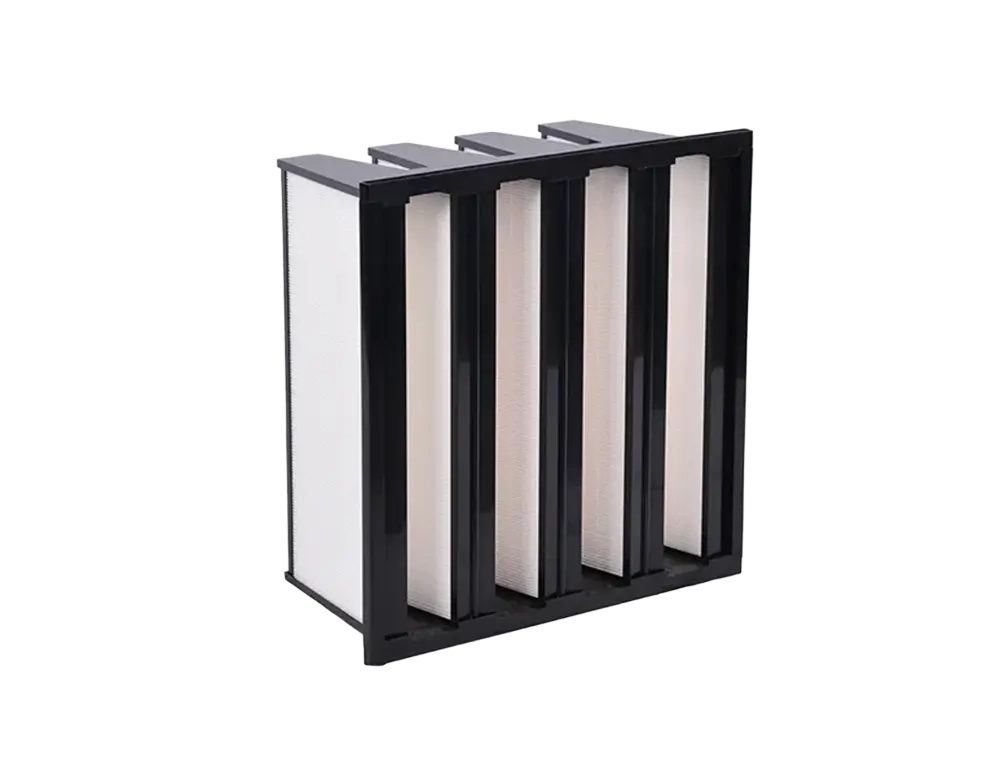
Sub-Micron Particle Capture
First-Stage Large-Particle Capture
The first line of defense, capturing particles ≥5 μm such as dust, hair, and fibers to protect downstream filters and extend overall system service life.
View Related Products →Precise PM2.5 Capture
Captures fine particles of 1–5 μm including PM2.5, pollen, and mold spores, significantly improving indoor air quality for commercial HVAC and ventilation systems.
View Related Products →Sterile-Grade Purification
≥99.97% filtration efficiency for particles ≥0.3 μm, delivering sterile-grade clean air widely used in medical, pharmaceutical, and electronics manufacturing.
View Related Products →Sub-Micron Particle Capture
≥99.9995% efficiency for particles ≥0.12 μm, meeting the extreme cleanliness demands of semiconductor fabs, aerospace, and other ultra-precision applications.
View Related Products →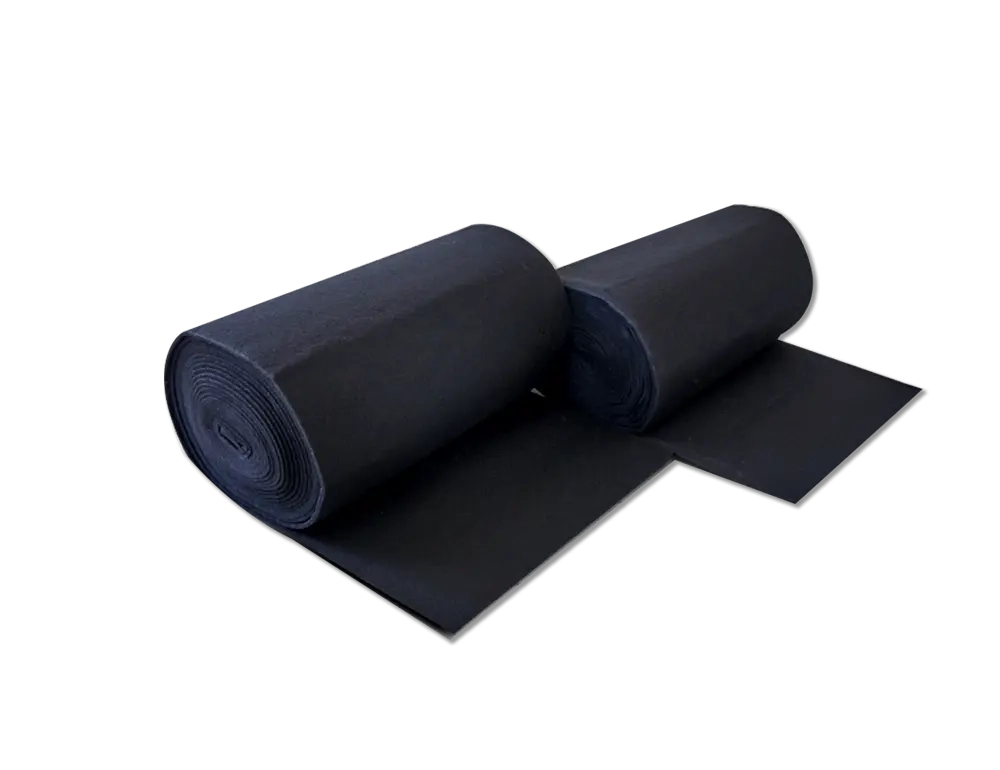
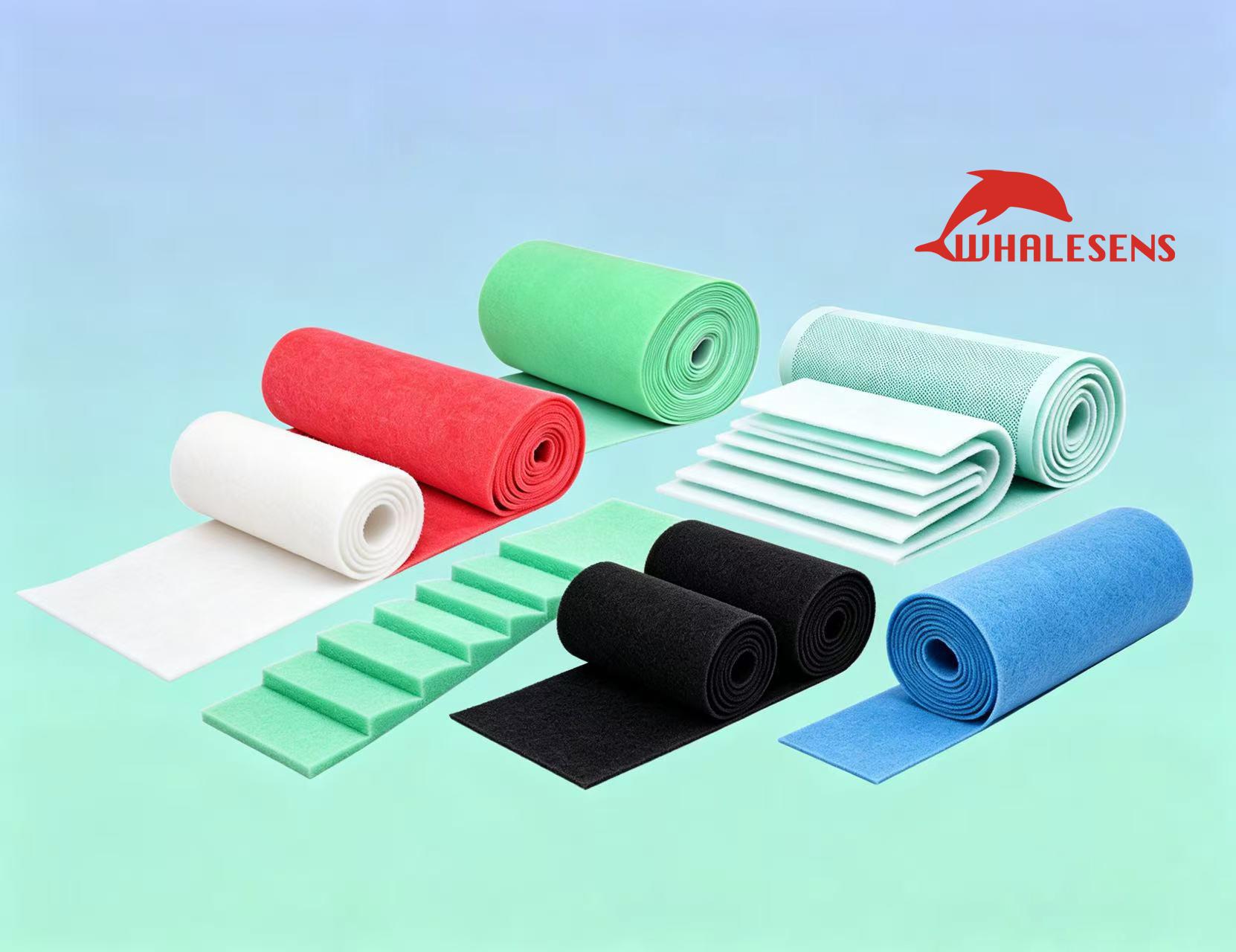
High-Temperature Resistant
Industrial-Grade Heat Tolerance
Washable & Reusable
Cut Costs, Reduce Waste
Activated Carbon
Odor & Harmful Gas Removal
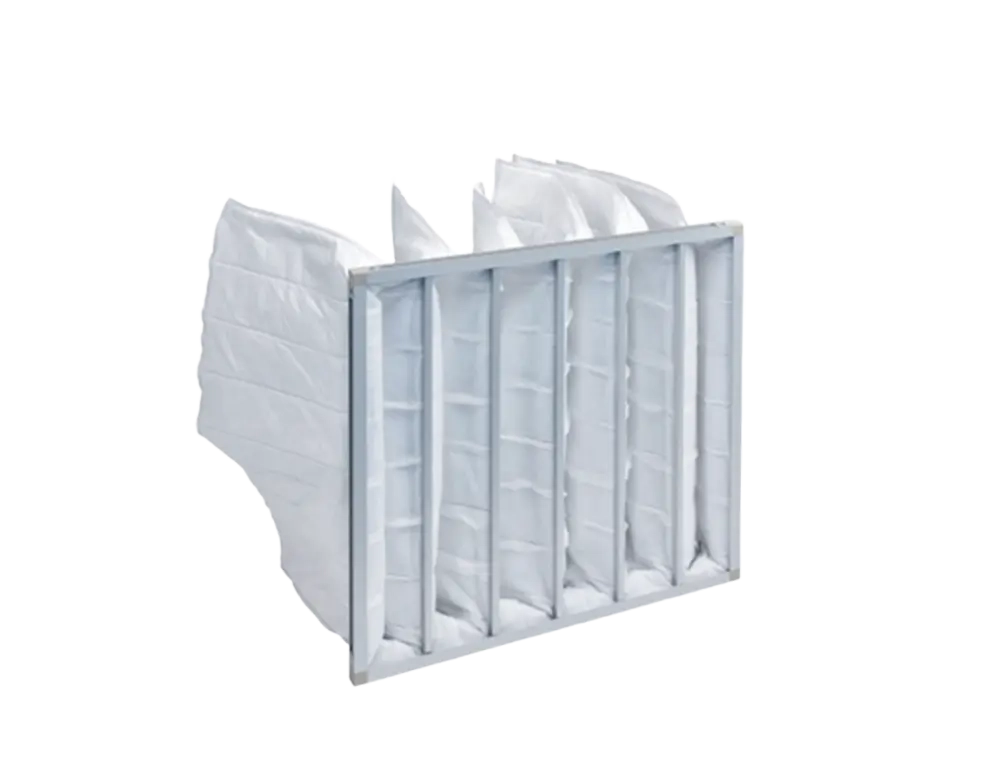
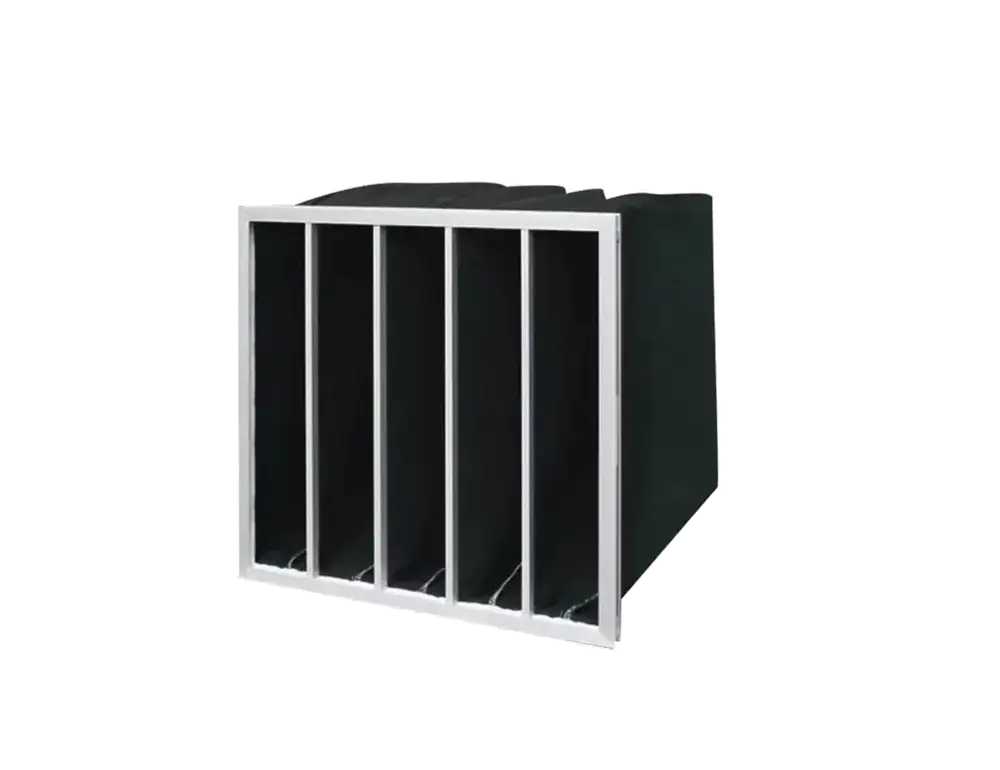
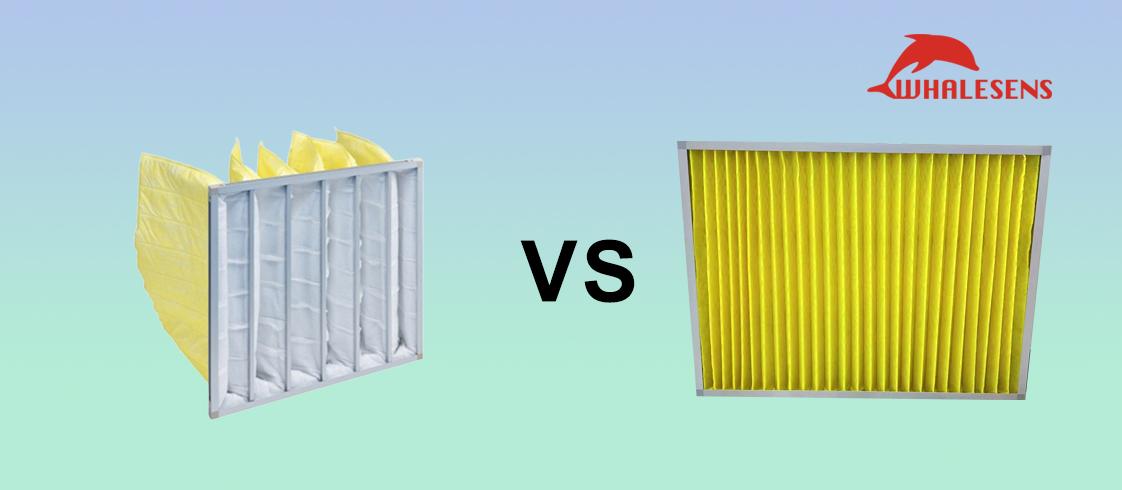
Bag Filter
High Dust-Holding, Long Life
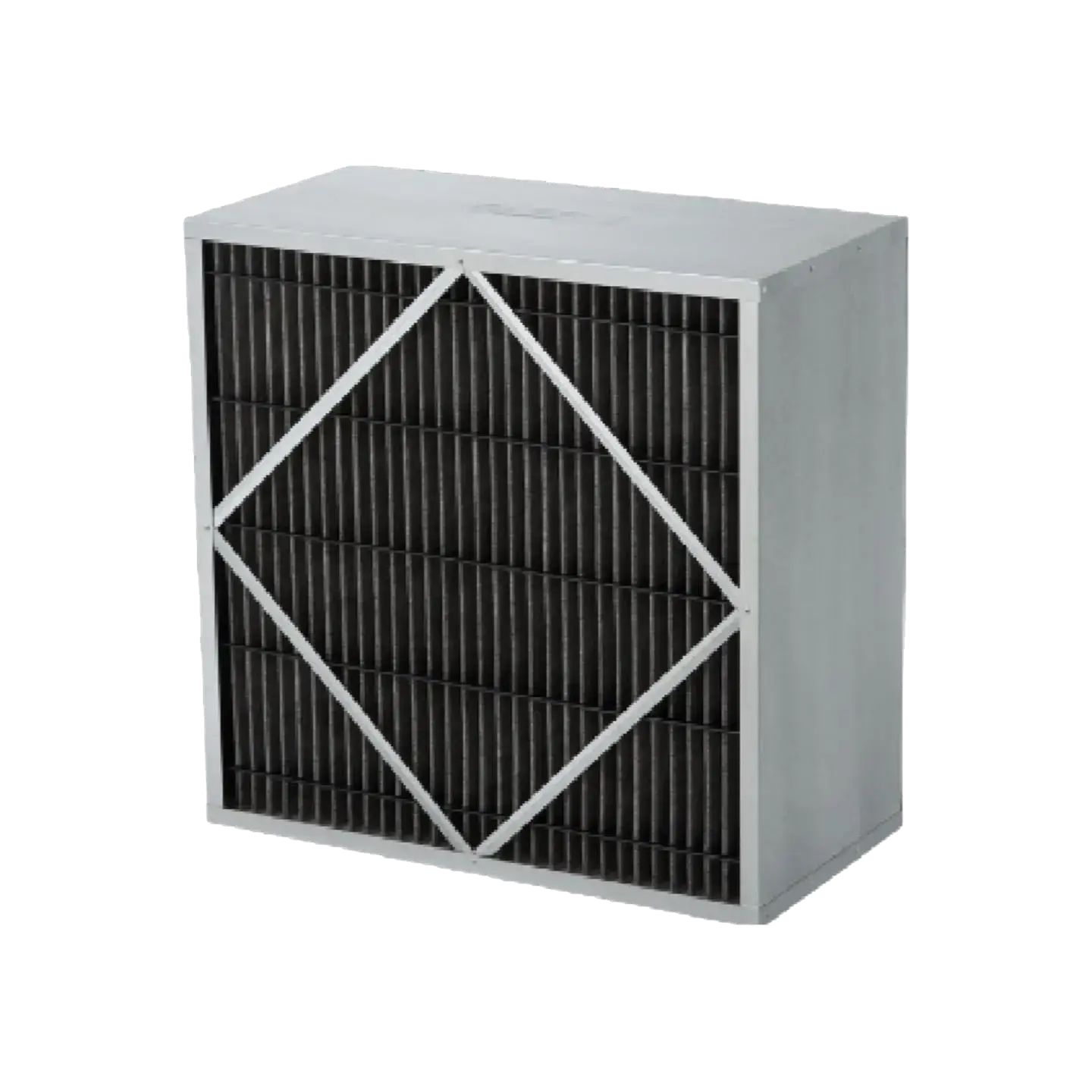
Panel / Pleated Filter
Compact Space-Saving Design
Low-Resistance Airflow
Energy-Saving Operation
Industrial-Grade Heat Tolerance
Built with specialized heat-resistant materials, operating stably up to 250°C for paint ovens, industrial dryers, and high-temperature process environments.
View Related Products →Cut Costs, Reduce Waste
Cleanable by water washing or air blowing, reusable multiple times to significantly reduce replacement frequency and O&M costs — an economical, eco-friendly choice.
View Related Products →Odor & Harmful Gas Removal
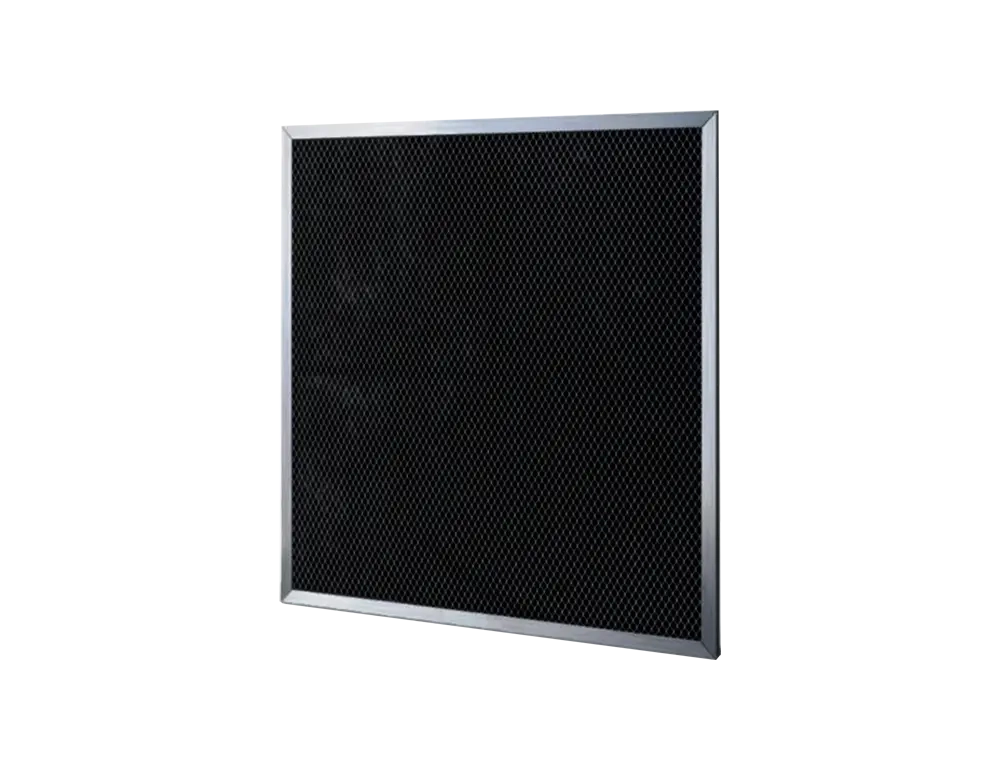
Leverages activated carbon's high adsorption capacity to eliminate odors, VOCs, and formaldehyde, ideal for newly renovated spaces and industrial exhaust treatment.
View Related Products →High Dust-Holding, Long Life
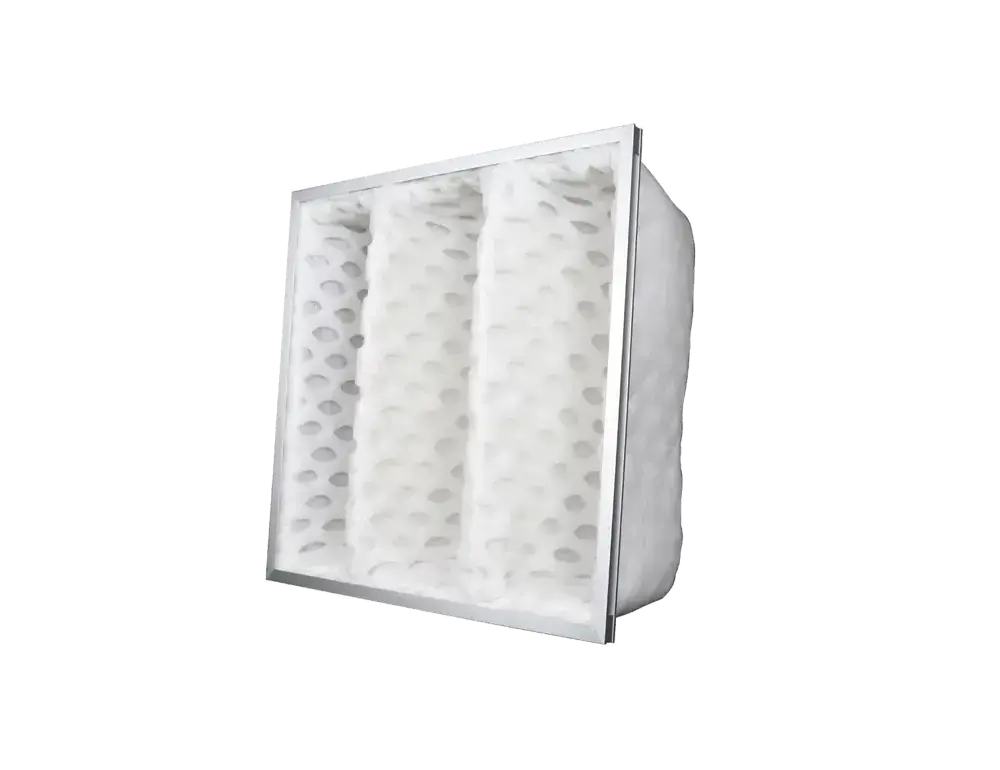
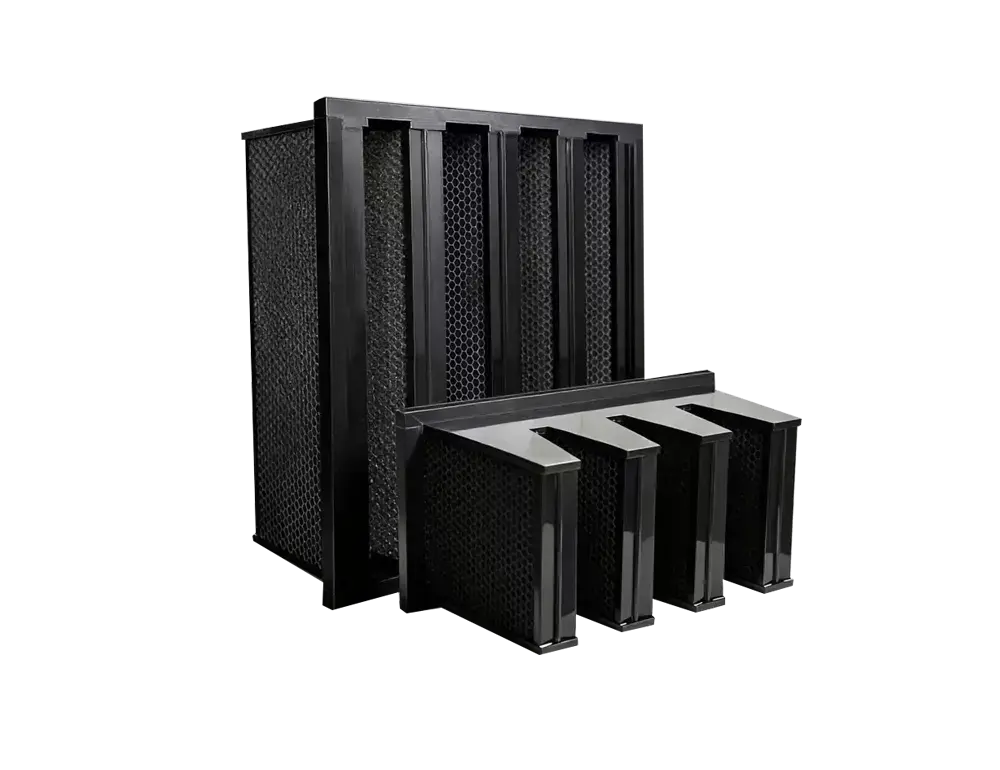
Bag-style construction delivers a larger filtration area, high dust-holding capacity, and extended service life — ideal for high-dust environments with reduced replacement frequency.
View Related Products →Compact Space-Saving Design
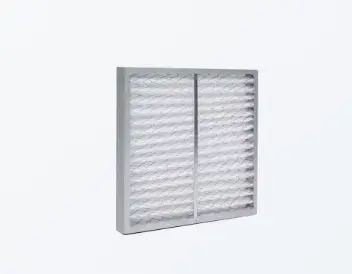
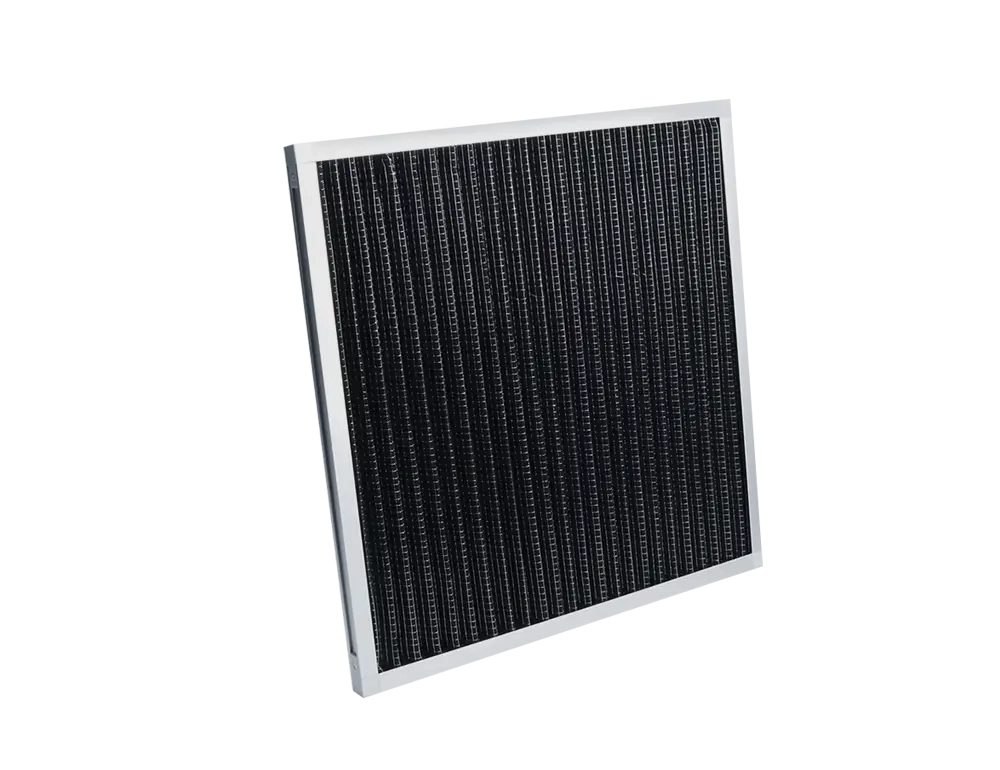
Compact form factor for easy installation and replacement; pleated structure maximizes filtration area within a small footprint for higher efficiency.
View Related Products →Energy-Saving Operation
Low-resistance design minimizes pressure drop while maintaining filtration performance, reducing fan energy consumption for cost-effective, eco-friendly operation.
View Related Products →
















 English(Global)
 简体中文
简体中文 Language




Cleanroom ISO 1–9 and V-Bank HEPA Filter Selection
When selecting V-Bank HEPA Filter, there are several key factors to keep in mind.
Cleanroom Isn’t “Very Clean” — It’s Particles Under Control
A cleanroom is not a room that got a deep clean. In semiconductor manufacturing, a cleanroom is a controlled environment where airborne particle concentration, size, temperature, humidity, and pressure differential are managed continuously.
The final line of defense in that environment is usually a HEPA filter. More specifically, a V-Bank HEPA filter often handles the terminal stage because it packs more media area into the same ceiling footprint.
Select the wrong cleanroom class or filter spec, and one 0.3 µm particle can kill a wafer.
That’s not hyperbole. A particle that small can bridge two circuit lines during lithography or settle into a gate oxide, creating a defect that fails final test. Cleanroom classification is a hard particle budget, not a marketing label.
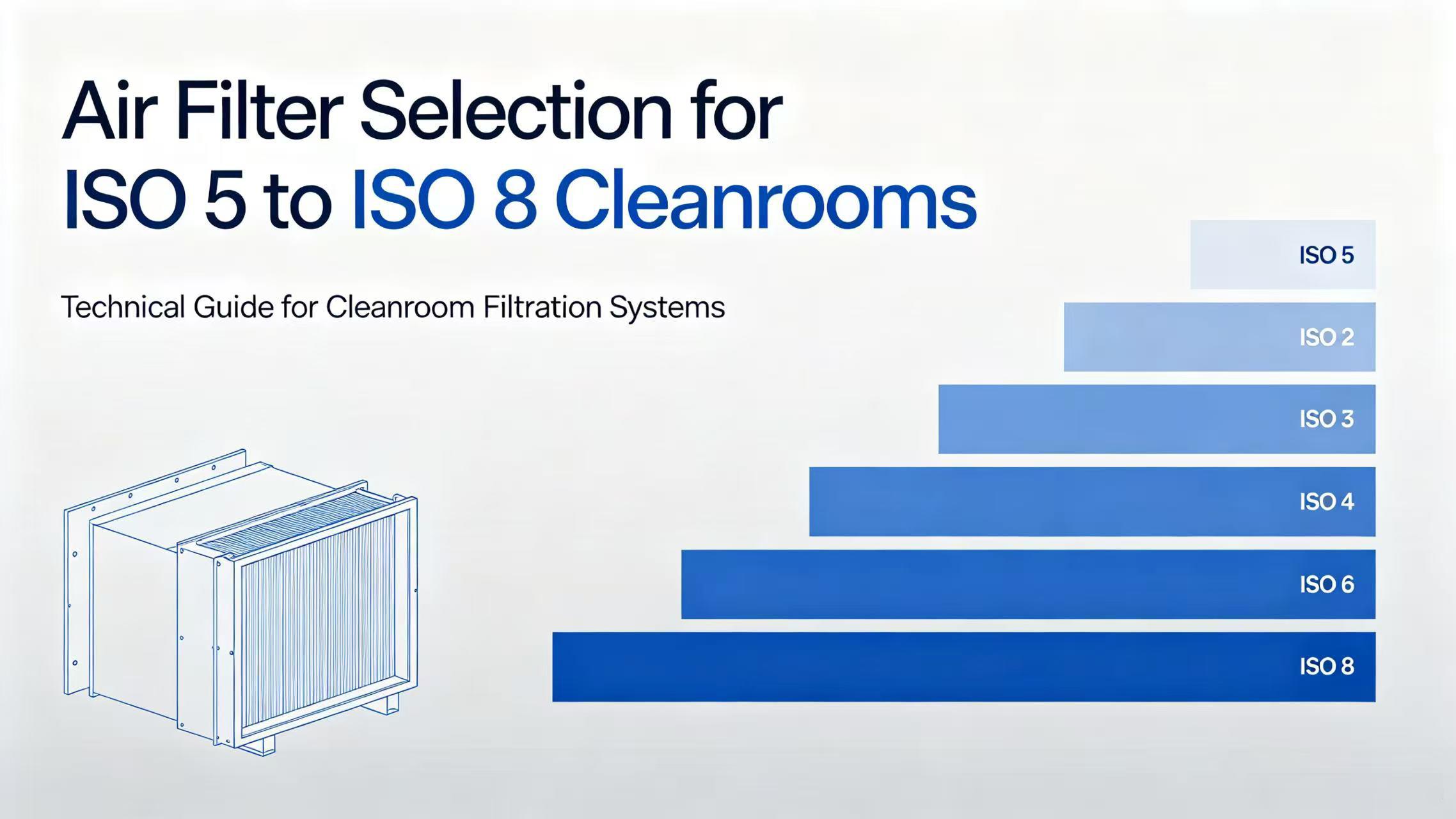
The governing standard, ISO 14644-1, defines ISO 1 through ISO 9 by the maximum number of particles allowed per cubic meter of air at several reference sizes: ≥0.1 µm, ≥0.2 µm, ≥0.3 µm, ≥0.5 µm, ≥1 µm, and ≥5 µm.
Smaller class numbers mean tighter limits. ISO 1 is near the detection limit of current particle counters. ISO 9 is roughly an ordinary air-conditioned room with basic filtration.
For semiconductor fabs, the interesting range is usually ISO 2 to ISO 7. Front-end wafer processing often runs at ISO 3 or ISO 4. Back-end assembly and test may accept ISO 6 or ISO 7. Each jump in class changes your HEPA filter efficiency, airflow, and sealing requirements.
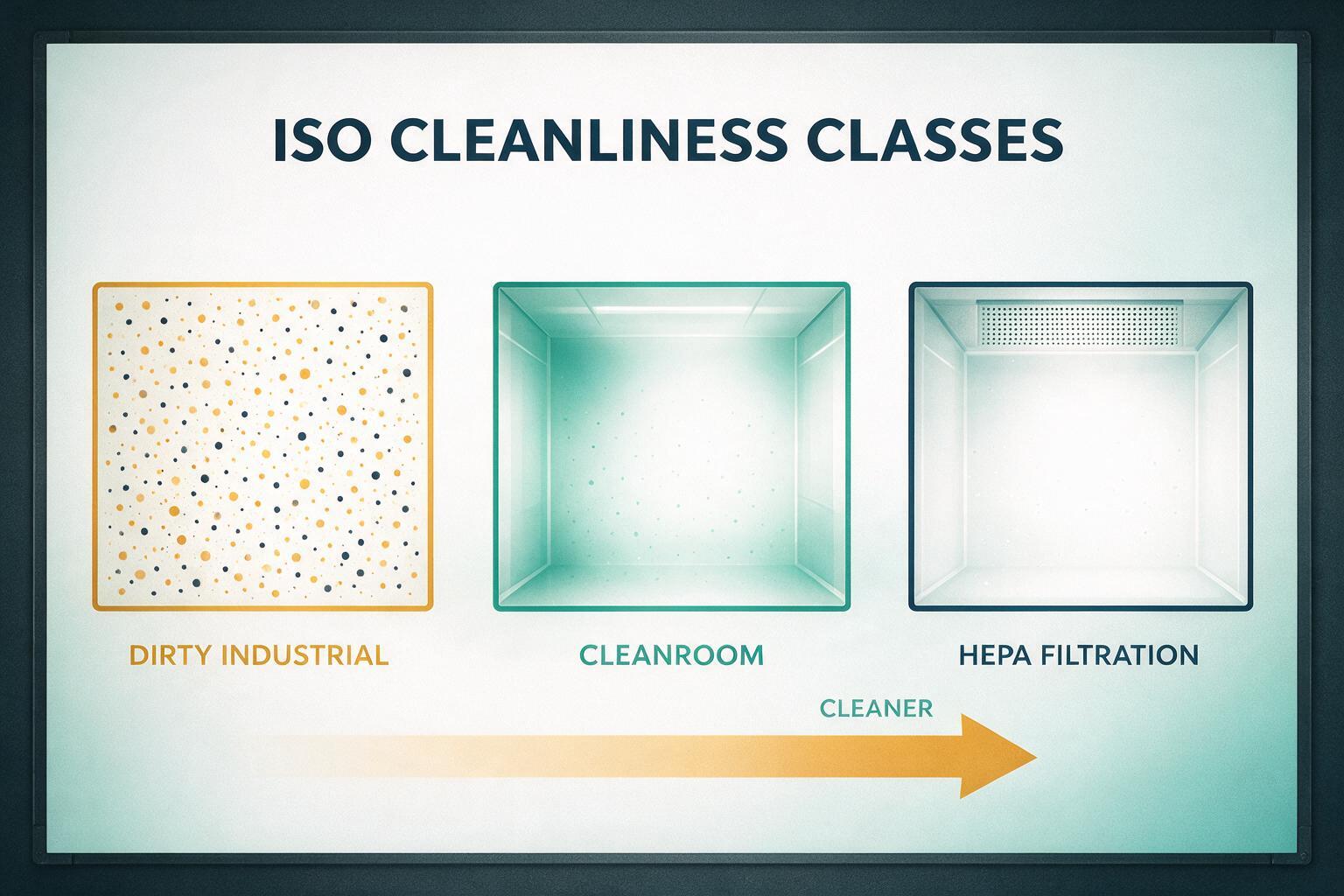
That image is worth printing next to your specification sheet. It shows why a filter that holds ISO 7 may not even come close to holding ISO 5. The gaps are not linear; they are orders of magnitude.
ISO 1–9 Cleanroom Classes: Reading the Concentration Table
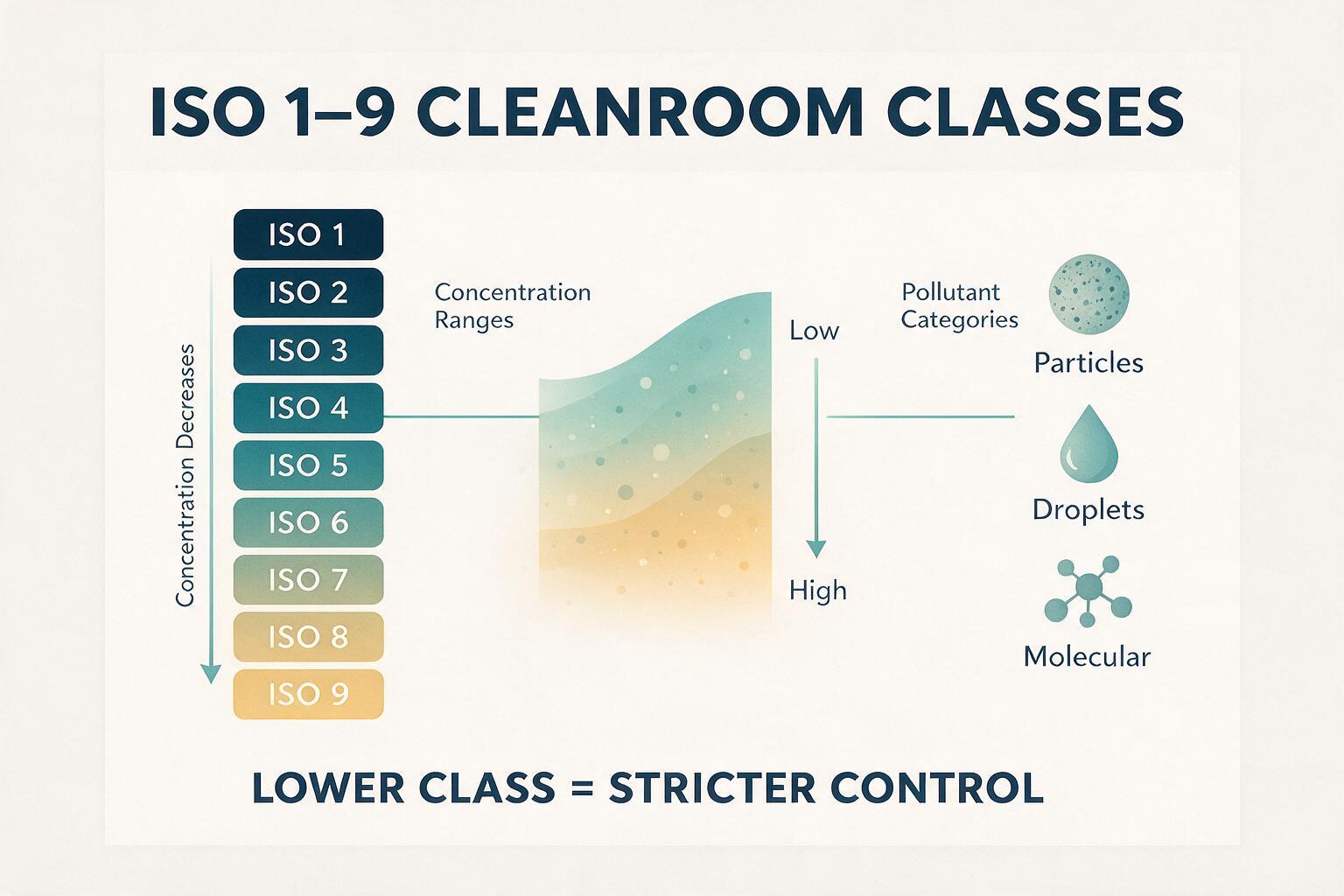
ISO 14644-1 does not use subjective words like “very clean” or “ultra clean.” It uses numbers.
For each class, the standard lists the maximum allowable particle count at each reference size. In practice, facility engineers simplify to the most common trigger size: ≥0.5 µm for ISO 5 through ISO 9, and ≥0.1 µm for ISO 1 through ISO 4.
The gap between ISO 5 and ISO 7 is exactly 100 times for ≥0.5 µm particles. That sounds large, but in a cleanroom, a single leaky HEPA filter frame can push a local zone from ISO 5 to ISO 7 overnight.
Classification is only as good as the sealing and installation.
A common misconception is that ISO 9 means “no filtration.” It doesn’t. ISO 9 still has particle limits, but they are much looser than ISO 8. Think of it as a room with a basic MERV 6 or MERV 8 filter, not a controlled clean environment.
Semiconductor fabs rarely run at ISO 9 except for non-critical offices or corridors. The production cleanroom typically sits between ISO 2 and ISO 7, depending on the process step.
For advanced nodes, ISO 2 or ISO 3 is required in photolithography and etch areas. For packaging, ISO 6 or ISO 7 may be enough. The more critical the process, the lower the class number.
If you are sizing a V-Bank HEPA filter for a cleanroom, start with the required ISO class and then work backward to particle count, airflow, and filter efficiency. That backwards logic avoids overspending on filters you don’t need or underspending on filters that can’t hold class.
Here’s where many projects go sideways: someone selects a filter based on a catalog efficiency number, without checking the particle size that matters for the cleanroom class. A filter rated H13 at 0.3 µm may still let too many 0.1 µm particles through for an ISO 3 zone. You need the full particle-size efficiency curve, not just the HEPA grade.
Why Semiconductor Cleanrooms Need Precise HEPA Filter Specifications
Cleanrooms maintain their class through airflow and filtration. The terminal stage, the last filter before air enters the cleanroom, is almost always a HEPA or ULPA filter.
In semiconductor fabs, that filter usually sits in a ceiling grid or fan filter unit, and the spec sheet matters more than most buyers realize.
Three-stage filtration is typical: a coarse pre-filter, an intermediate bag or panel filter, and the final HEPA or ULPA. The V-Bank HEPA filter is a common terminal choice because its pleated V-shaped media packs more area into the same face dimension.
More media area means lower pressure drop at a given airflow, which cuts fan energy and extends media life.
Pre-filter: G4 grade, captures 5–10 µm particles
Intermediate filter: F7 or MERV 13, removes smaller dust and extends HEPA life
Terminal filter: H13 or H14 V-Bank HEPA, controls 0.3 µm particles at point of supply
Optional chemical filter: activated carbon or AMC media, handles molecular contamination
For a deeper look at terminal cassette options, see the HEPA filter cassette guide. Cassettes reduce bypass leakage and speed up replacement, which matters when certification windows are tight.
The two efficiency grades that matter most are H13 and H14. H13 removes at least 99.97% of particles at 0.3 µm. H14 removes at least 99.995% at the same size.
That 0.025 percentage point difference can decide whether a zone holds ISO 4 or drifts toward ISO 5.
H13 HEPA Filter
- 99.97% at 0.3 µm
- Lower initial cost
- Suitable for ISO 6–7 zones
H14 HEPA Filter
- 99.995% at 0.3 µm
- Higher initial cost
- Required for critical ISO 5 and below
Before you default to H13 to save money, think about long-term efficiency loss. HEPA filters do not degrade exactly like a cliff; they can develop pinholes, frame leaks, or media fatigue.
In an ISO 5 semiconductor exposure area, a few leaked particles can become yield loss. I’ll be upfront: if you run ISO 5 or tighter, go with H14. The small cost difference is cheaper than a single wafer scrap event.
For a full H13 spec breakdown, see the H13 Hepa Filter guide.
One often-overlooked spec is rated airflow. A HEPA filter is tested at a specific face velocity. If you run a V-Bank HEPA filter above its rated airflow, pressure drop rises non-linearly and efficiency can drop at the smallest particle sizes. If you run it too low, the cleanroom may not get enough air changes to dilute contaminants.
For cleanrooms, the air change rate typically ranges from 20 to over 600 per hour, depending on class. That airflow drives the number of terminal filters and the size of the air handling unit. Under-sizing the filter bank will either force higher pressure drop or fail to deliver the required clean air volume.
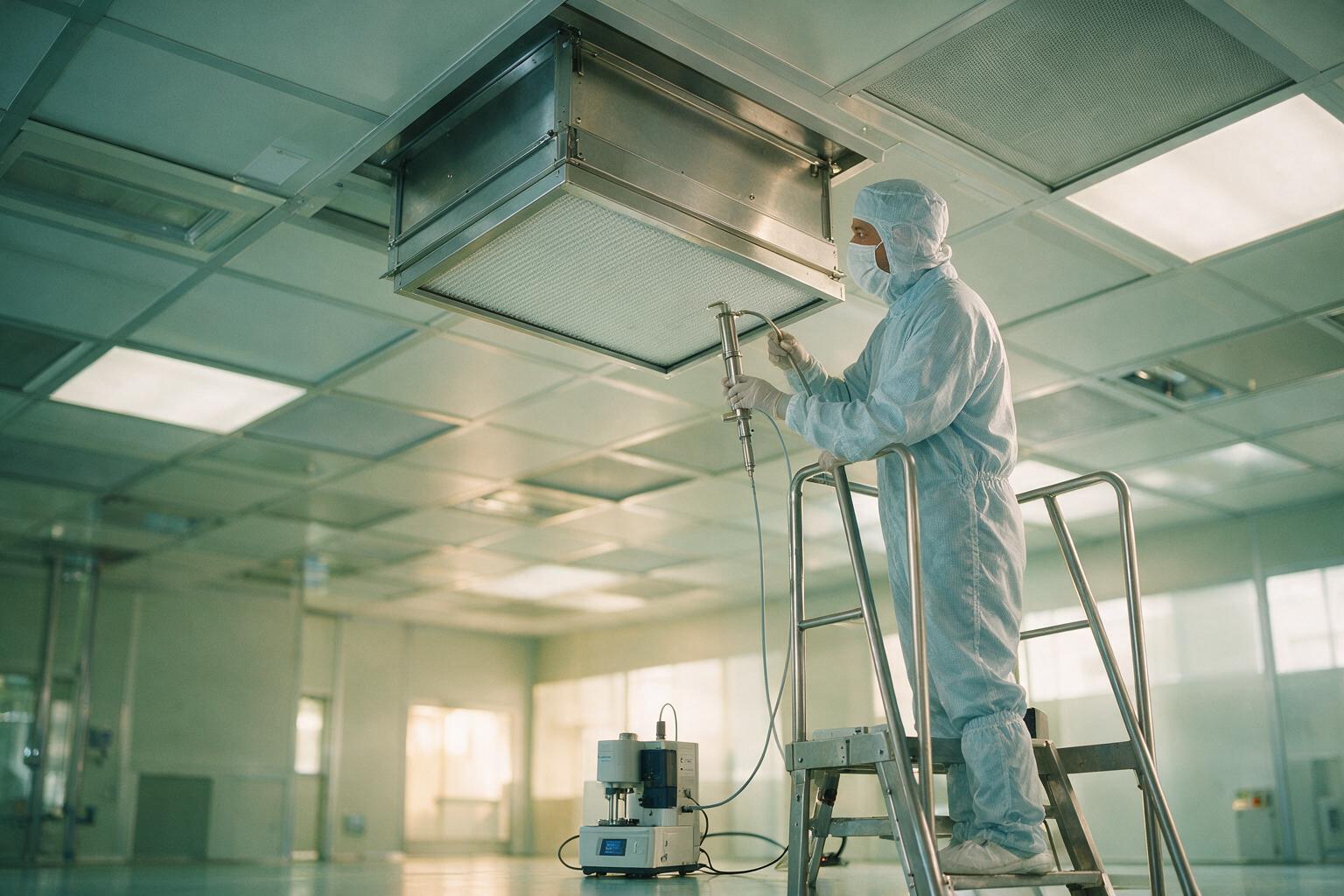
The physical fit also matters. Standard cleanroom HEPA filters often come in 610 × 610 mm modules, but many semiconductor tools require custom dimensions. The V-Bank design helps by offering more media area in a compact depth. If your ceiling grid or fan filter unit has limited depth, a V-Bank HEPA filter can deliver lower pressure drop than a flat panel at the same airflow.
Pressure drop is not a constant. It rises as the filter loads with particles. A filter that starts at 250 Pa may hit 450 Pa after 18 months. If the fan was not sized for that rise, your cleanroom loses air changes and the particle count climbs. That’s why filter media area and initial pressure drop are lifecycle parameters, not just first-cost parameters.
Frame, Seal, and Airflow: Where HEPA Filter Efficiency Gets Lost
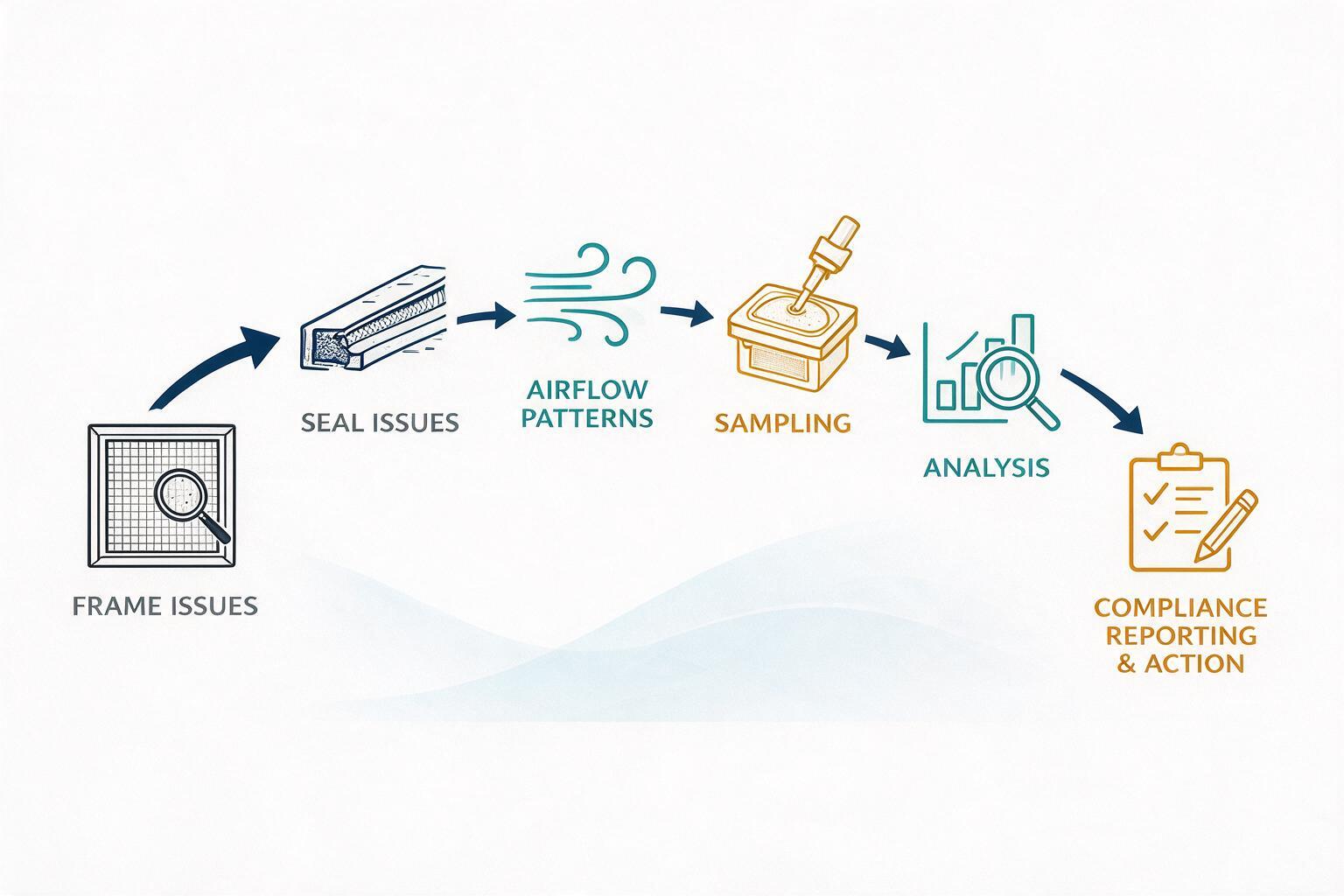
Here’s the thing: a filter can test at 99.995% efficiency on the bench and still fail in the cleanroom.
We’ve seen it too many times. The media is fine, the airflow is right, but the cleanroom particle count spikes because the frame or seal leaks. A bypass path around the filter lets unfiltered air enter through the gap between filter frame and housing.
In a semiconductor cleanroom, that leak is counted against the particle budget, and the room fails ISO certification.
Frame material is the first variable. Common options include aluminum, galvanized steel, stainless steel, and plastic. Aluminum is light and resists most cleanroom environments. Galvanized steel is cheaper but can rust in high-humidity or chemically aggressive areas. Stainless steel handles corrosive acids and solvents but costs more. Plastic frames are sometimes used for single-use or lightweight retrofit filters.
Sealing method is equally important. Gel seal (liquid gasket) works well with aluminum or stainless frames. Mechanical clamping is more common in industrial facilities. Gasket or neoprene seals are typical for plastic frames. The frame and seal must match the cleanroom’s pressure differential, airflow, and chemical exposure.
Frame and Sealing Verification
- Confirm frame material matches cleanroom humidity and chemical exposure
- Match sealing method to frame type: gel seal, gasket, or mechanical clamping
- Check gasket compression after filter drop-in; re-torque if needed
- Run PAO or DOP leak scan along every frame edge and filter pack edge
One pattern we’ve noticed: the more expensive equipment doesn’t always mean higher total filtration cost. A stainless steel V-Bank HEPA filter may cost 20% more than a galvanized one, but if the galvanized frame rusts and leaks after two years, the replacement and downtime cost more than the initial saving.
Factor lifecycle cost into frame selection. The same goes for seal type. A gel seal may require more careful installation, but it can provide a more reliable bypass seal than a dry gasket over multiple filter changes. For ISO 5 and below, I’d lean toward gel seal with an aluminum or stainless frame.
Before the terminal HEPA filter, most cleanroom systems use a bag filter for intermediate filtration. A bag filter with the right efficiency can extend HEPA life by capturing larger particles that would otherwise load the final filter. Choose it based on dust load and initial pressure drop, not just price.
For a broader view of industrial air filtration economics and media choices, the Industrial Air Filter Ultimate Guide covers the trade-offs across pre-filters, bag filters, and final stages.
Leak testing is not optional. After every HEPA filter installation, you should run a PAO or DOP challenge test. The test introduces an aerosol upstream and scans the downstream face and frame with a photometer. Any leak above 0.01% of the upstream concentration, depending on the specification, means repair or replacement.
For semiconductor cleanrooms, the leak scan is part of ISO 14644-3 certification. Some facilities also require a particle count test under dynamic conditions. The filter spec should include the required leak test method and acceptance criteria before installation.
Working Backwards from ISO Class to V-Bank HEPA Filter Selection
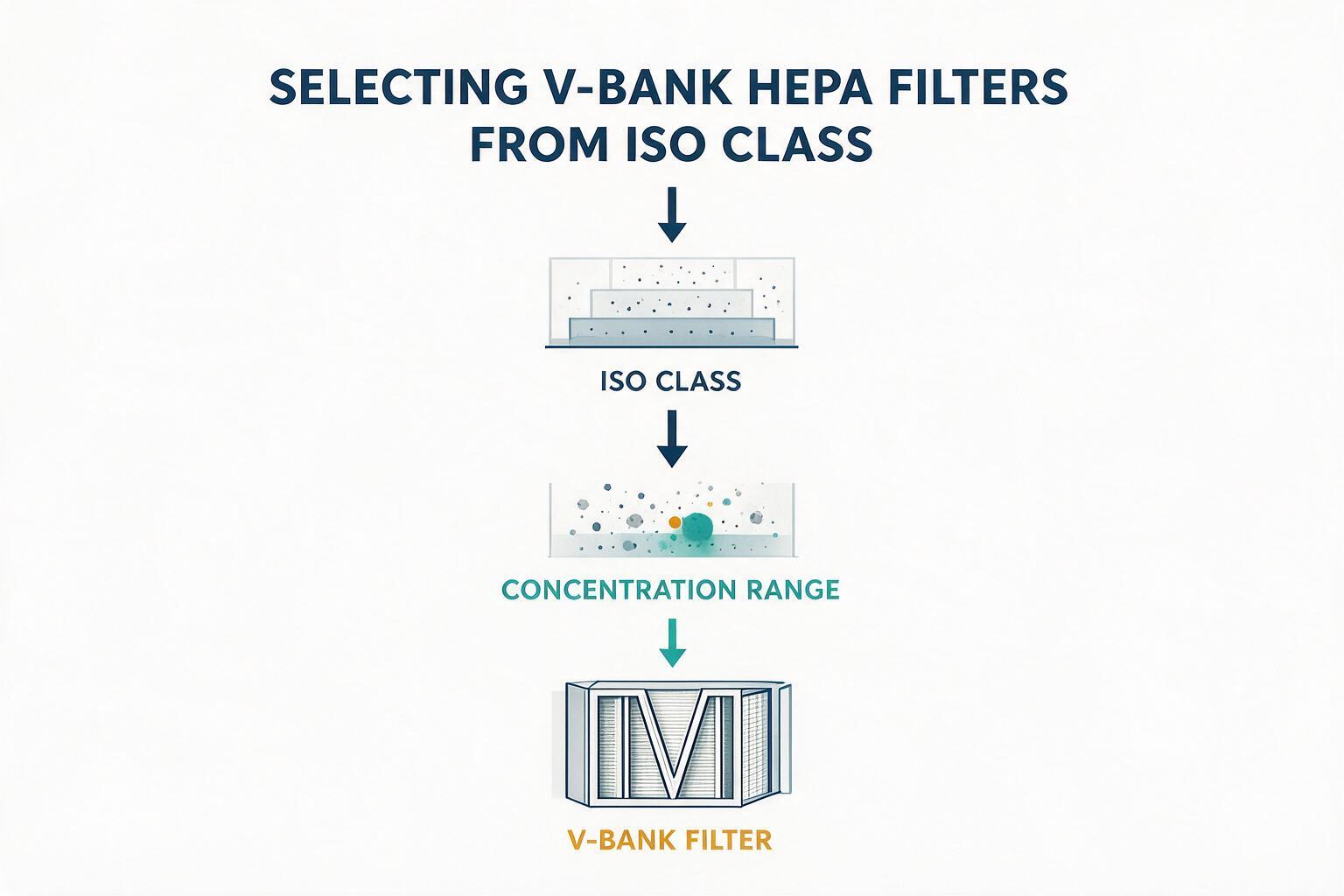
Selection is not a guessing game. You start with the cleanroom class and work backward. I’ve used this sequence for years in semiconductor and pharmaceutical projects.
Every step has a hidden pitfall. Dust load shifts over time. A filter that starts at 250 Pa may rise to 450 Pa within 18 months. If the air handling unit was not sized for that rise, airflow drops and cleanroom class drifts.
That’s why you should specify a V-Bank HEPA filter with enough media area to keep pressure drop low and stable. More media area spreads the airflow over a larger surface, lowering face velocity and slowing pressure drop rise.
Not every controlled environment needs ISO class control. Wind turbine nacelles, for example, have different dust and airflow profiles than a cleanroom. If you are spec’ing filters outside semiconductor fabs, the wind turbine filter selection guide explains those duty cycles.
One more thing to remember: a V-Bank HEPA filter is not a stand-alone component. It only holds class if the air handling unit, ductwork, pressurization cascade, and pre-filtration are designed together.
Isolating the filter spec from the cleanroom airflow design leads to filters that look good on paper but fail after installation. Honestly, the industrial filtration business has more marketing fluff than most; many specs look great on paper but don’t deliver. That’s why the backwards selection method matters.
You can use the same logic for any particle-sensitive process: medical device assembly, pharmaceutical filling, or microelectronics. Start with the class and particle size, then work down to efficiency, airflow, frame, and seal. The V-Bank HEPA filter becomes a number in a controlled equation, not a catalog guess.
When you link cleanroom class to filter specification, the cost and performance trade-offs become clear. Pick the class first, then buy the filter that holds it.
Need a custom air filtration solution?
Contact the Whalesens engineering team for product selection and OEM/ODM support.
Email whalesens@gmail.com
