


EV Charging Stations
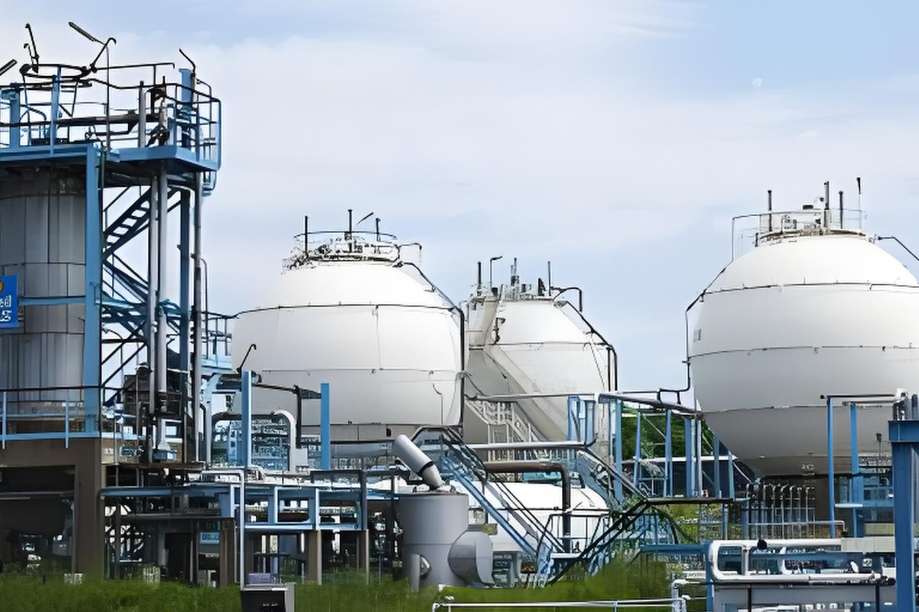
Filtration for Power Equipment
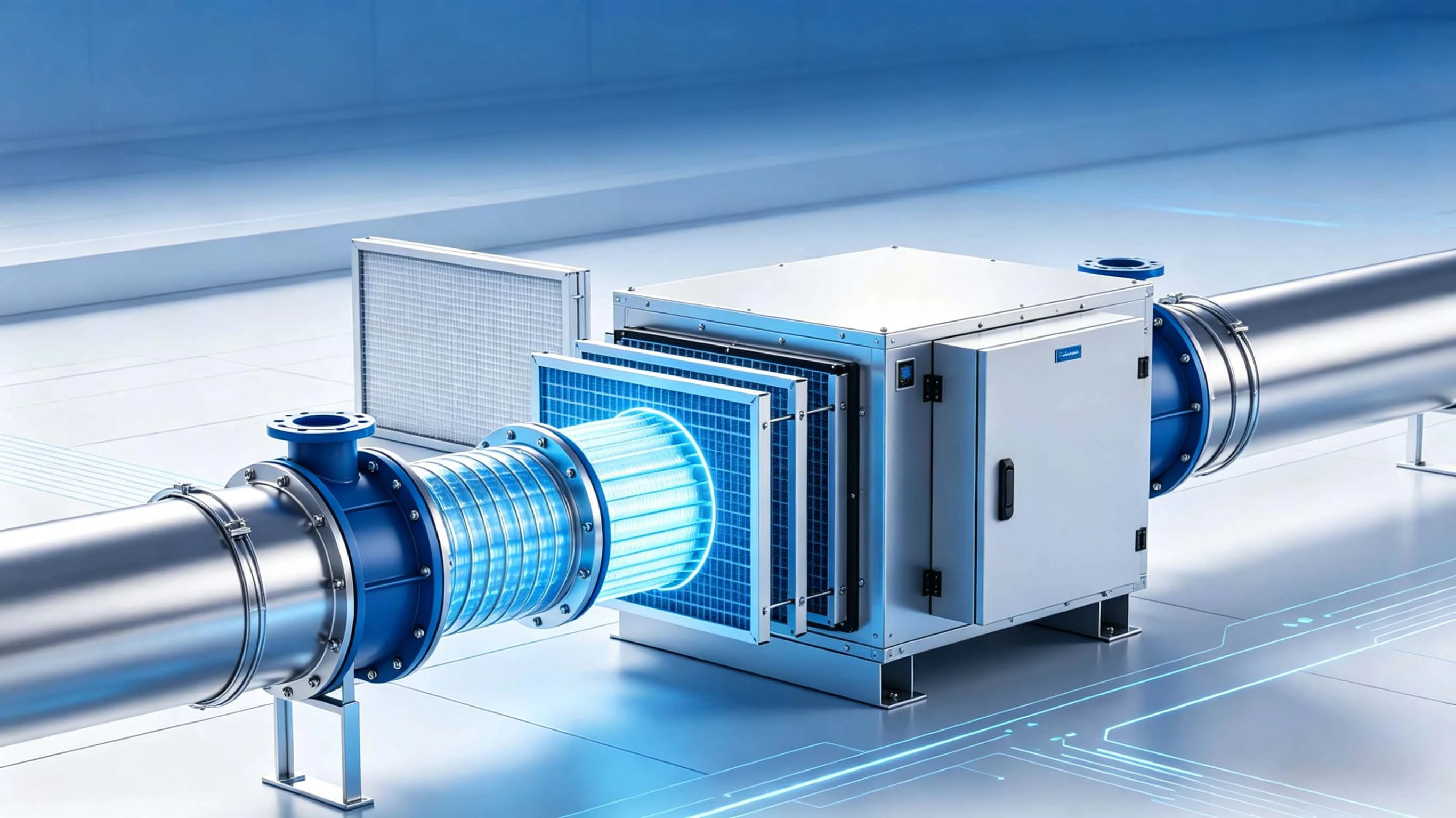
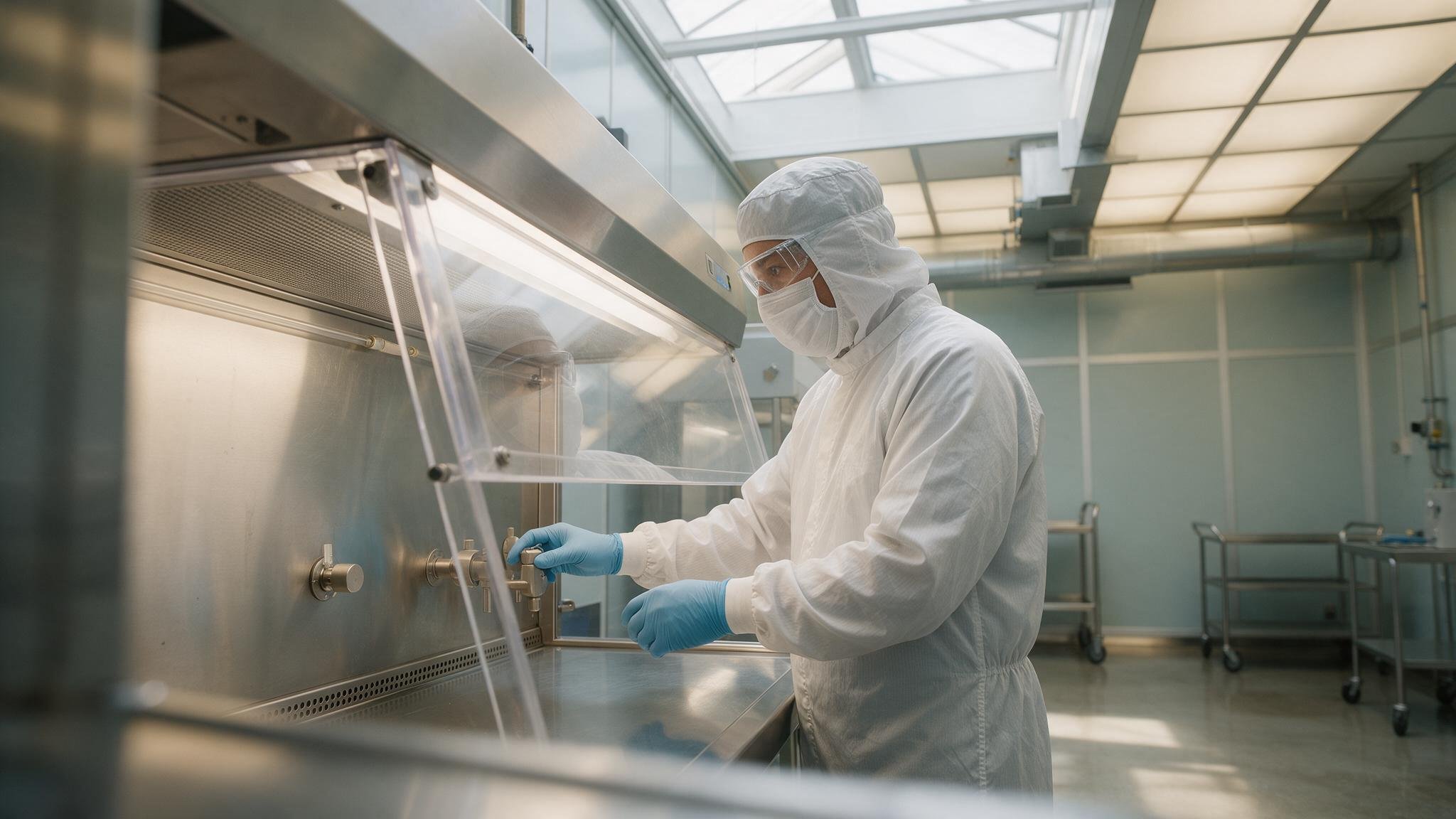
Cleanroom & Semiconductor
Ultra-High Cleanliness Filtration
Commercial HVAC
Central Air System Filtration
Data Centers
Precision Equipment Protection
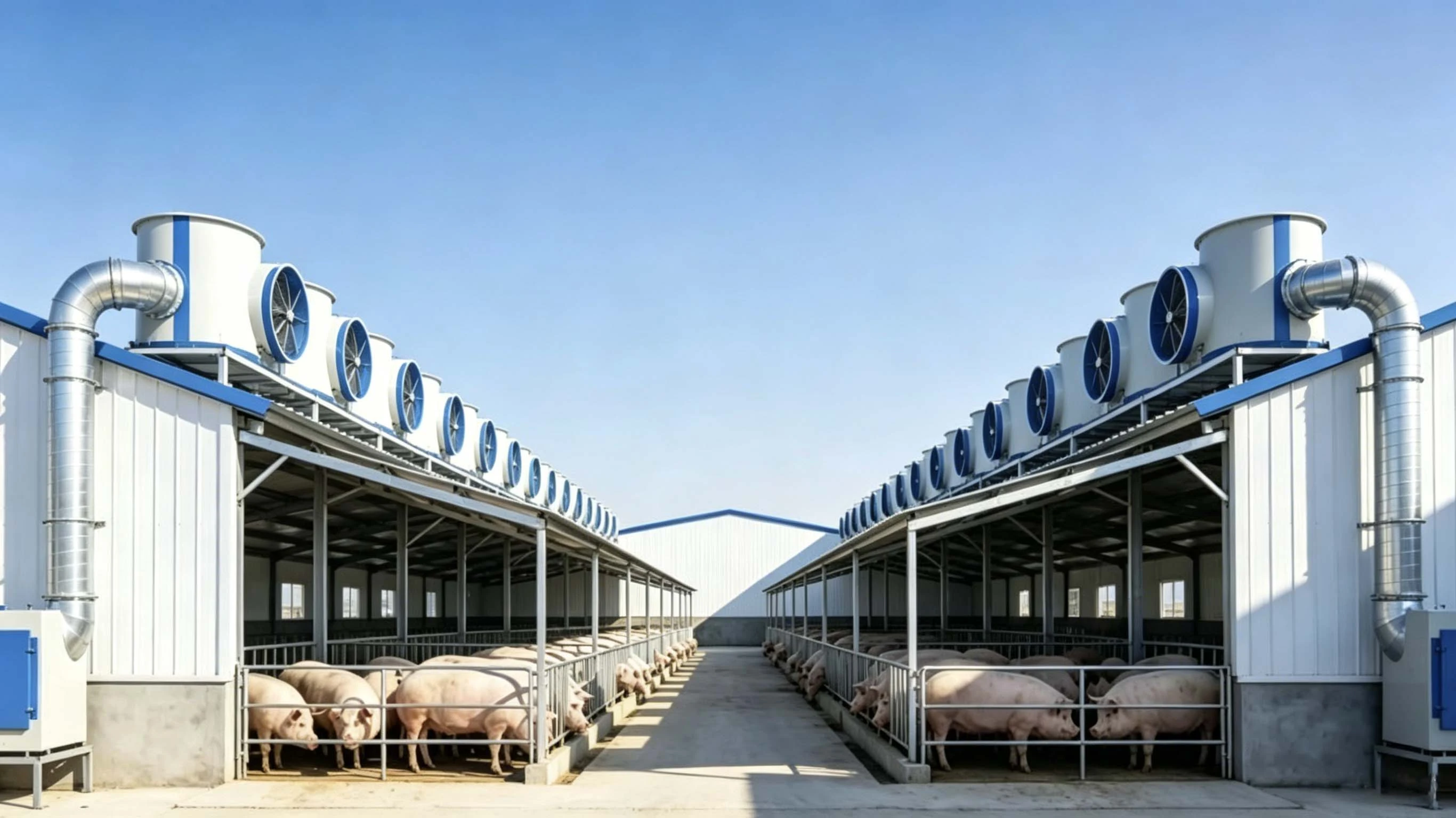
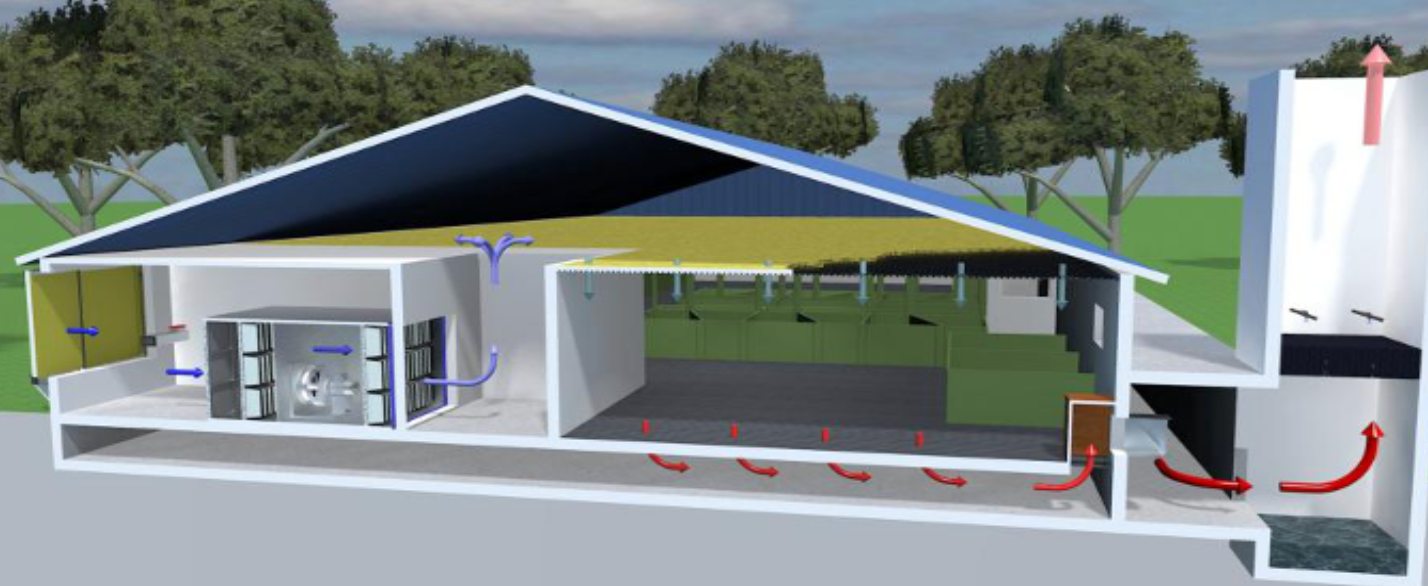
Livestock & Farming
Farming Environment Purification
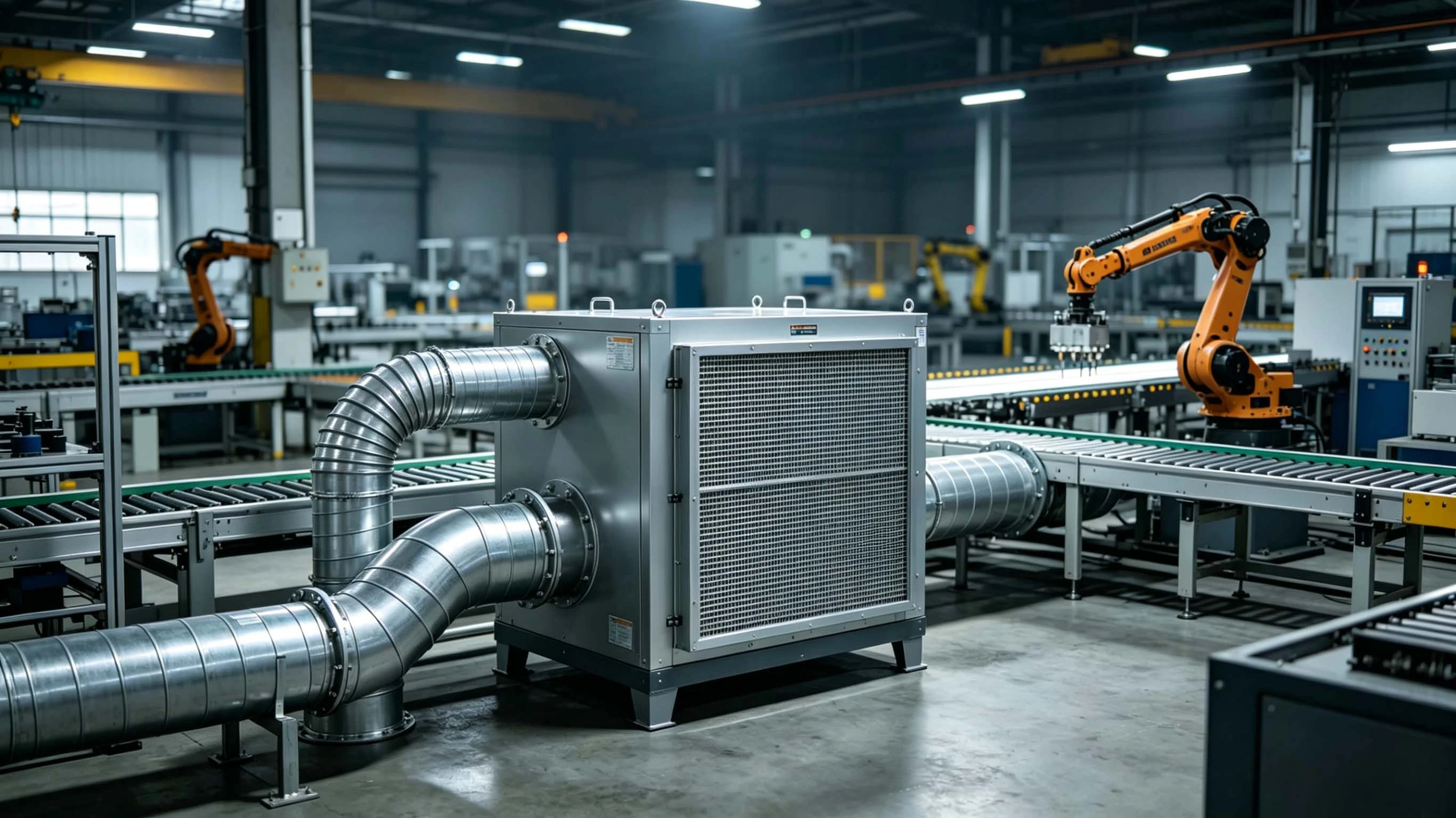
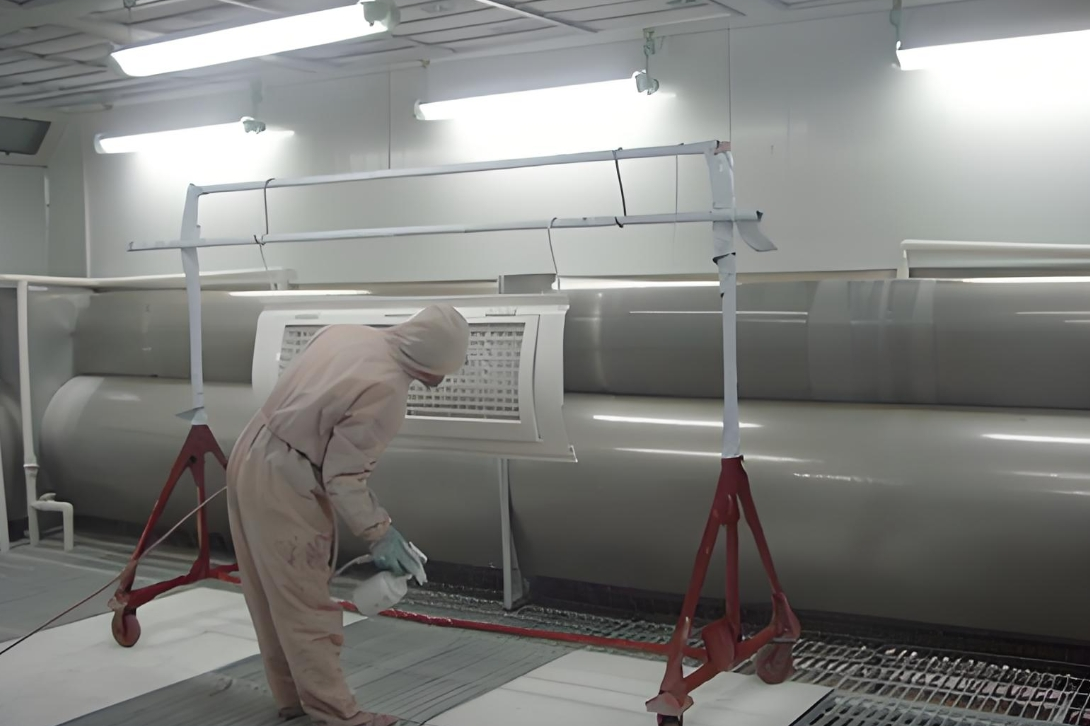
Spray Booths & Industrial Dust
Paint Mist & Dust Purification
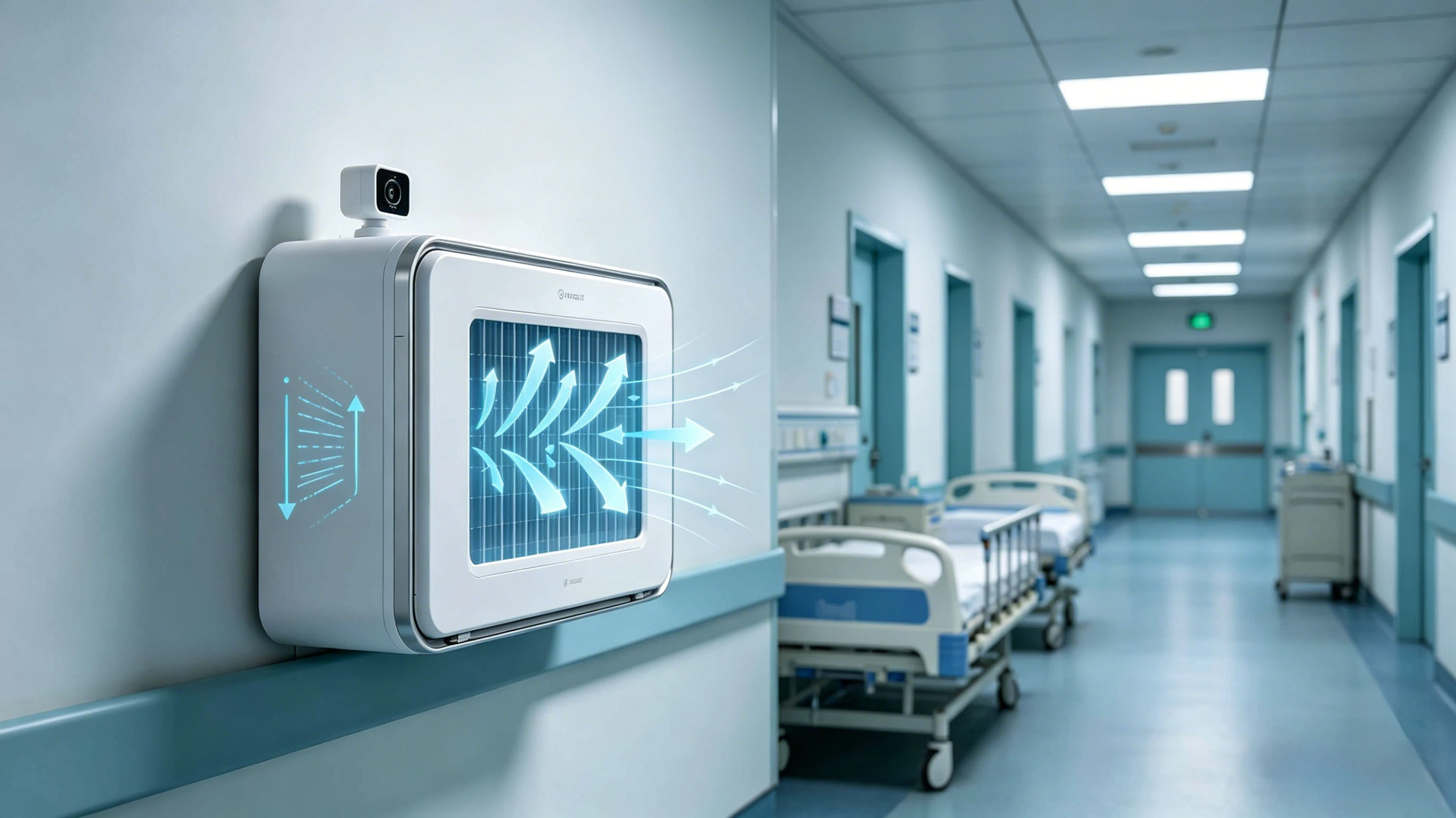
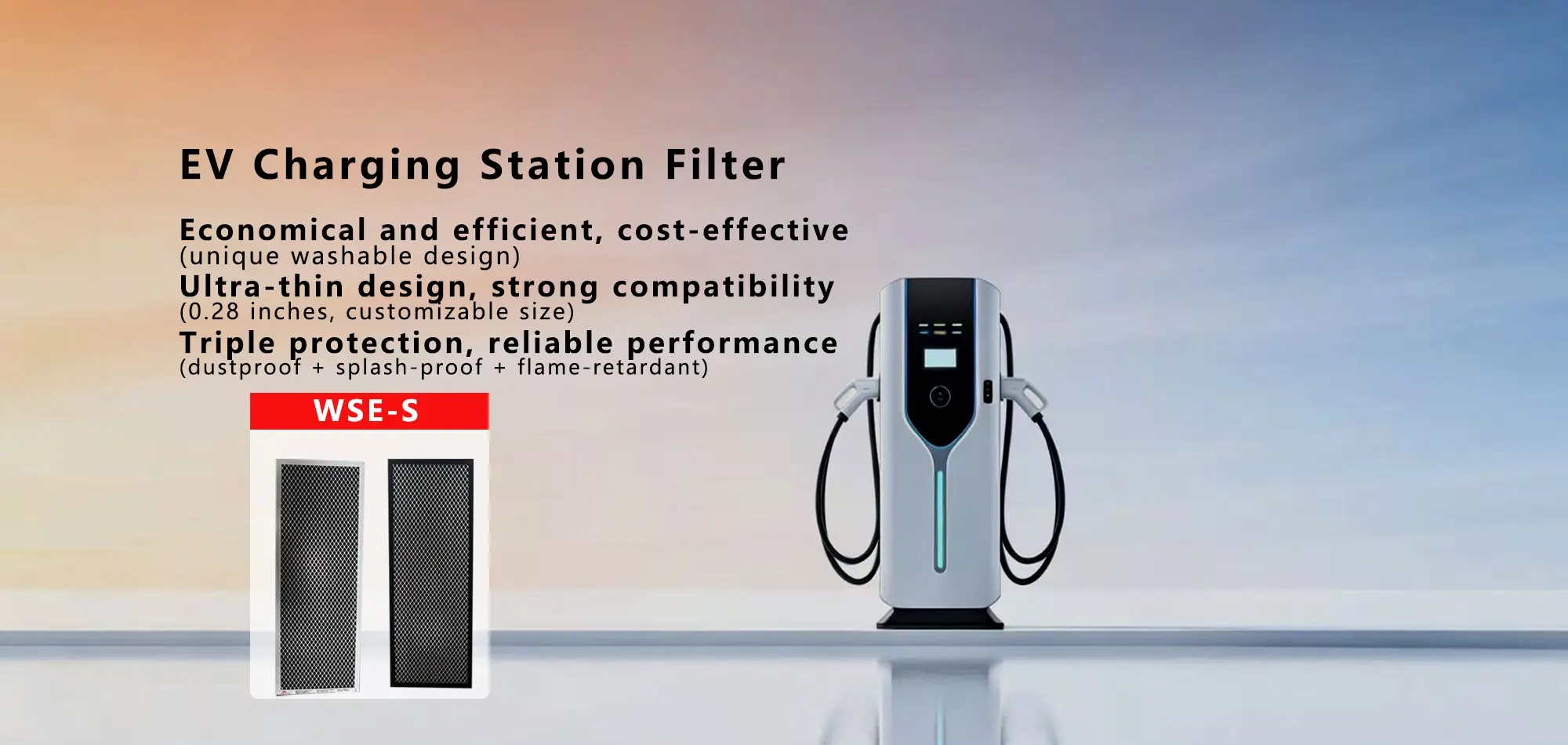
Filtration for Power Equipment
Professional air filtration for EV charging devices, protecting against dust and sand ingress to ensure stable, reliable operation of charging piles and station infrastructure.
View Related Products →Ultra-High Cleanliness Filtration
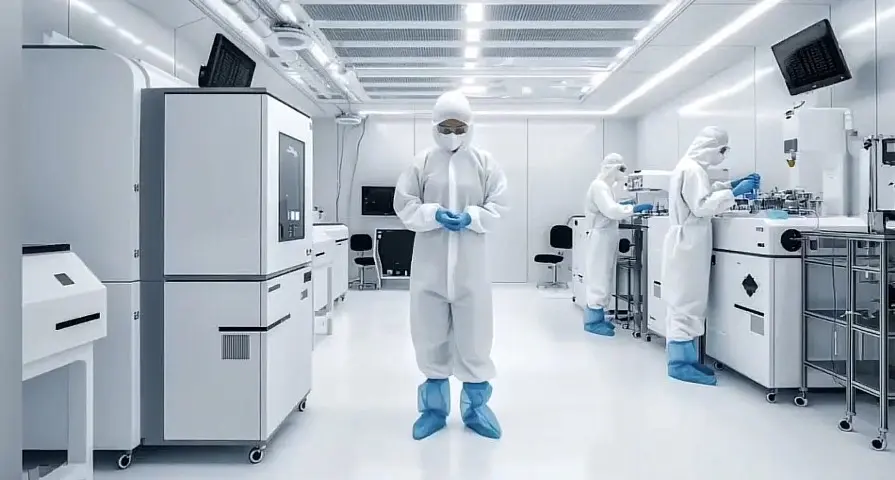
Ultra-high efficiency filtration for semiconductor wafer fabs and precision electronics cleanrooms, capturing nano-scale particles to meet ISO Class 1–3 standards and maximize product yield.
View Related Products →Central Air System Filtration
High-efficiency filtration for commercial building HVAC systems, improving indoor air quality, reducing energy consumption, and extending equipment service life.
View Related Products →Precision Equipment Protection
Precision air filtration for data centers, shielding servers and critical hardware from dust contamination to keep cooling systems running efficiently and reliably.
View Related Products →Farming Environment Purification
Dedicated filtration systems for farms and livestock facilities — capturing dust, adsorbing ammonia, and inhibiting pathogen spread to improve animal health and overall productivity.
View Related Products →Paint Mist & Dust Purification
Designed for spray booths and grinding workshops, efficiently capturing paint mist, metal dust, and wood chips to meet emission standards while protecting finished surface quality.
View Related Products →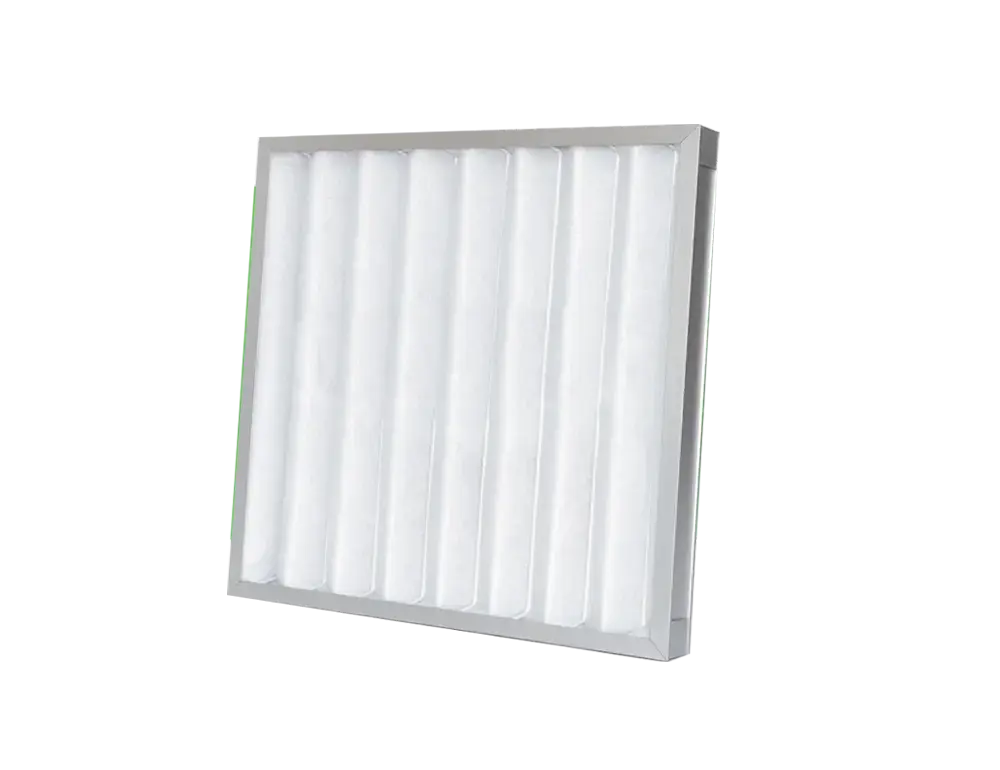
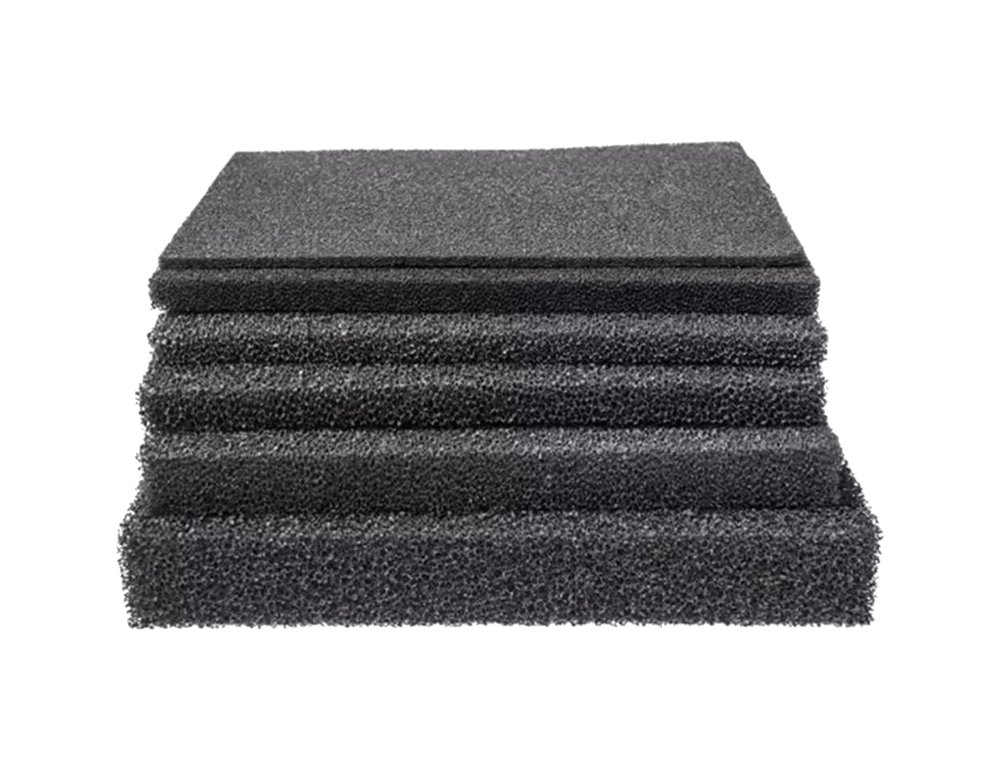
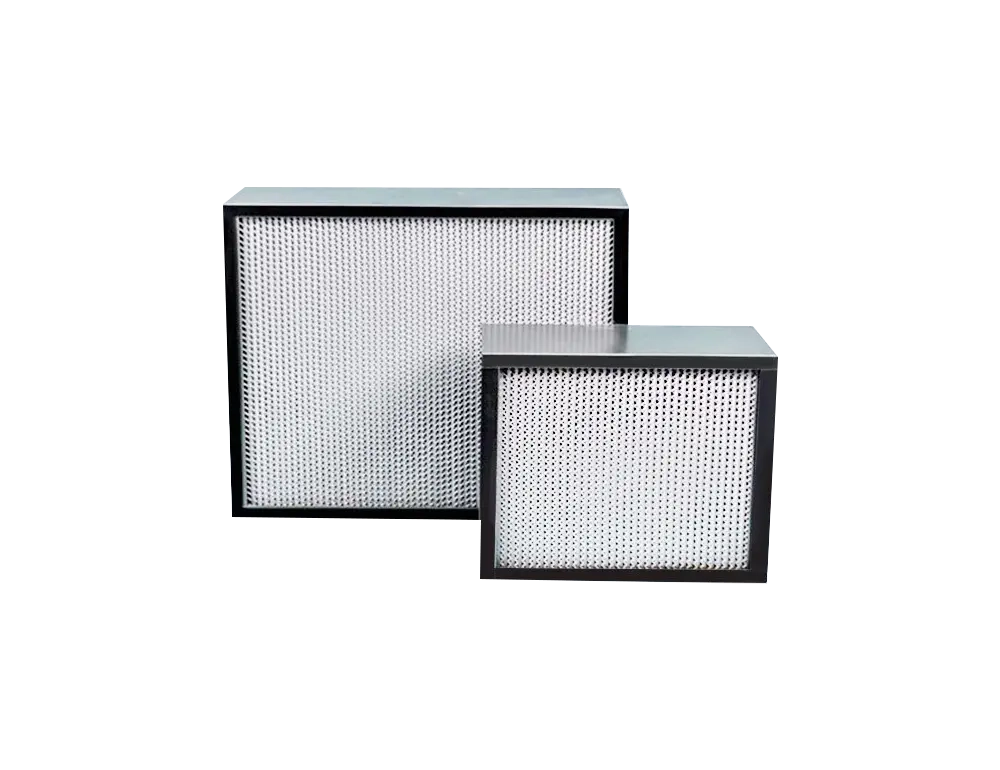
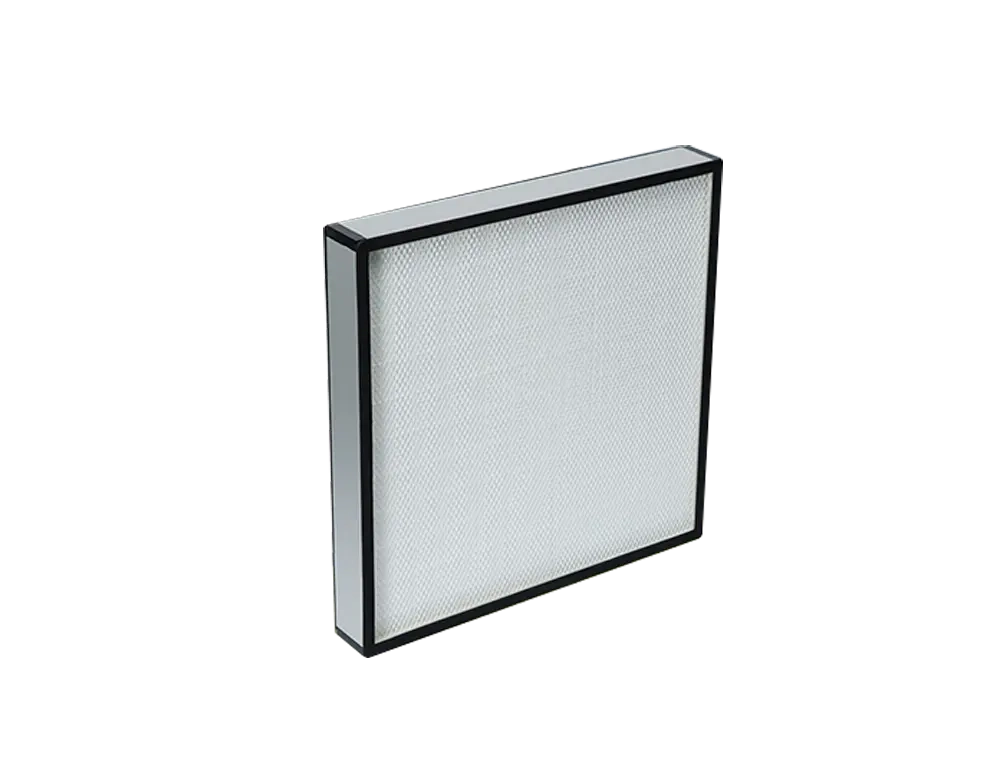
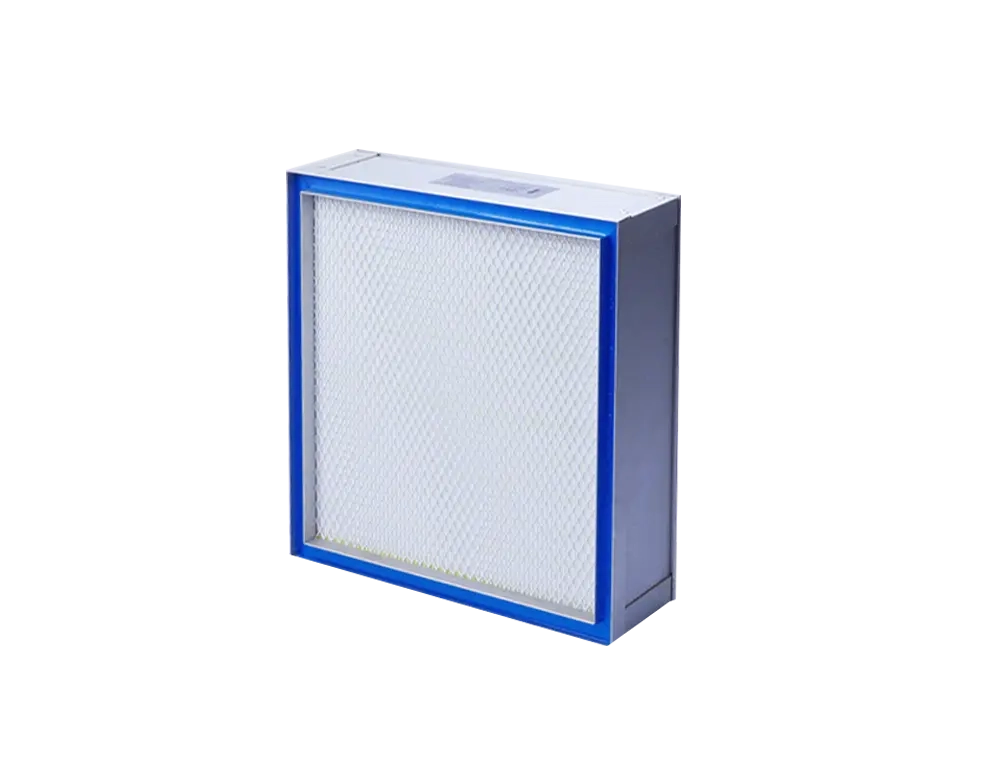


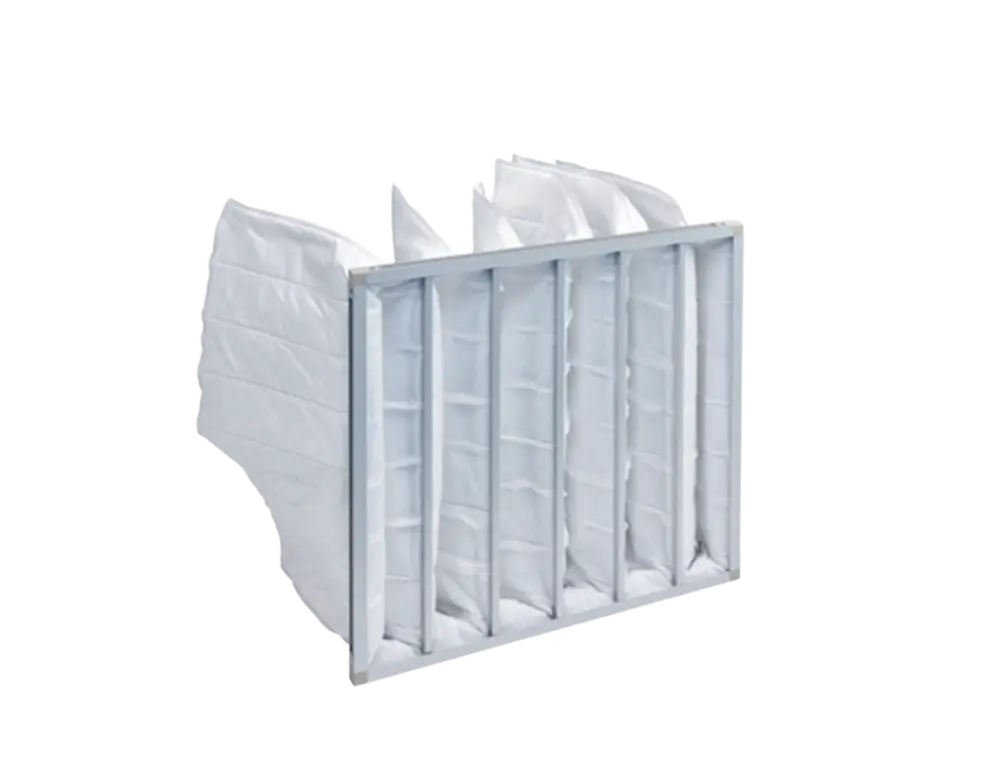
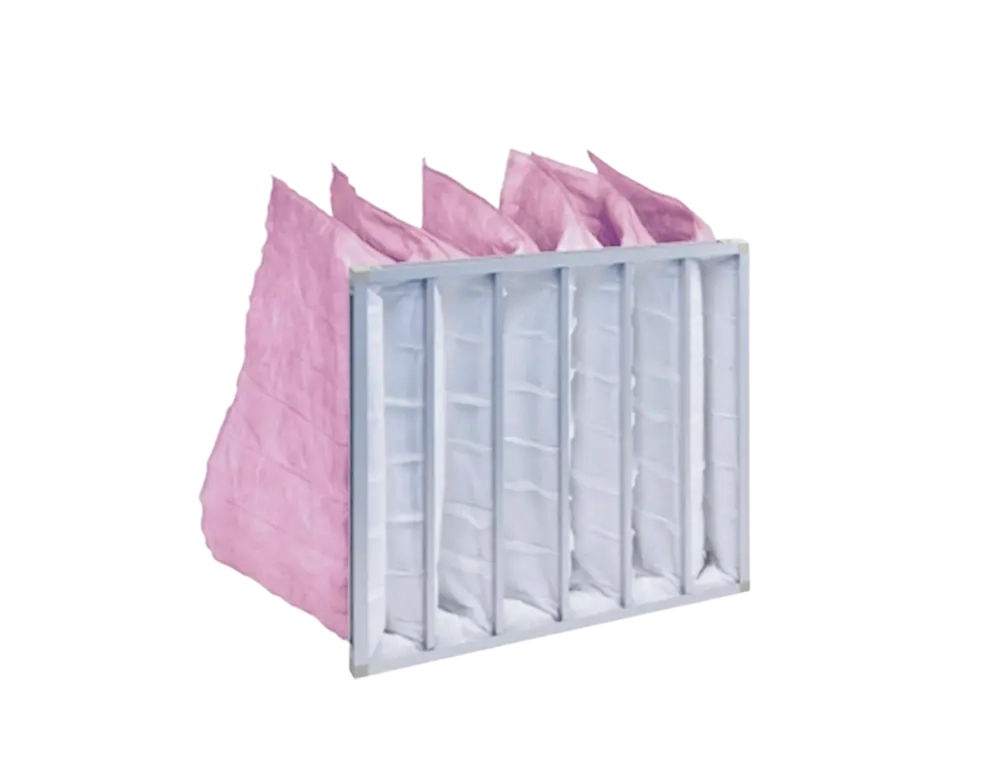
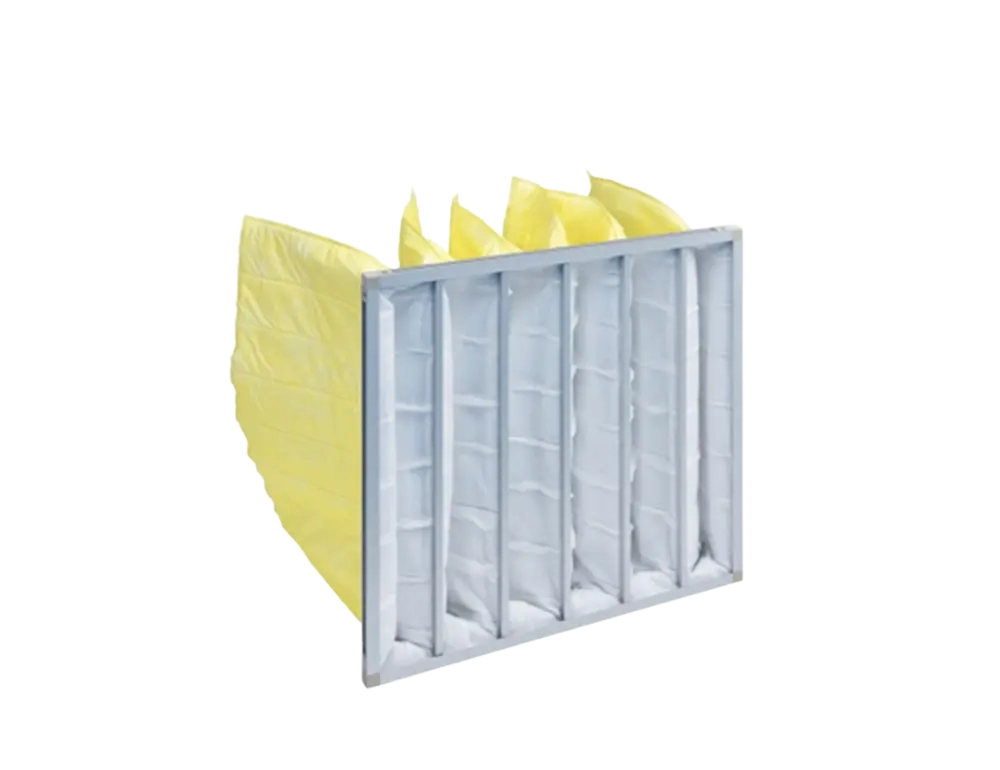
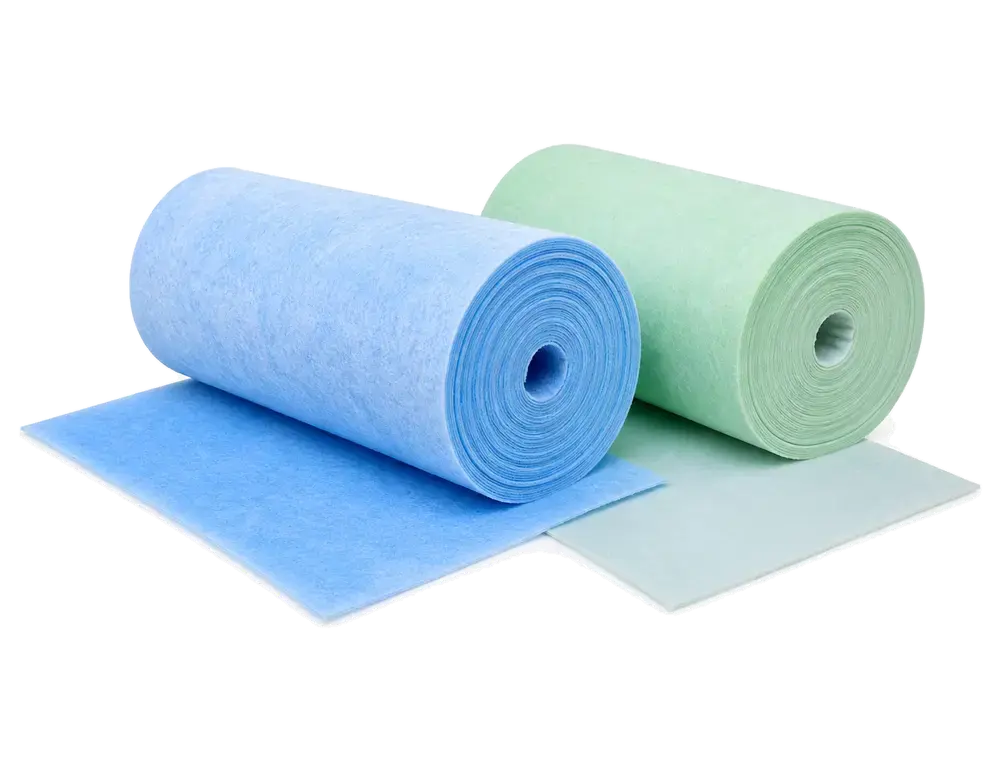
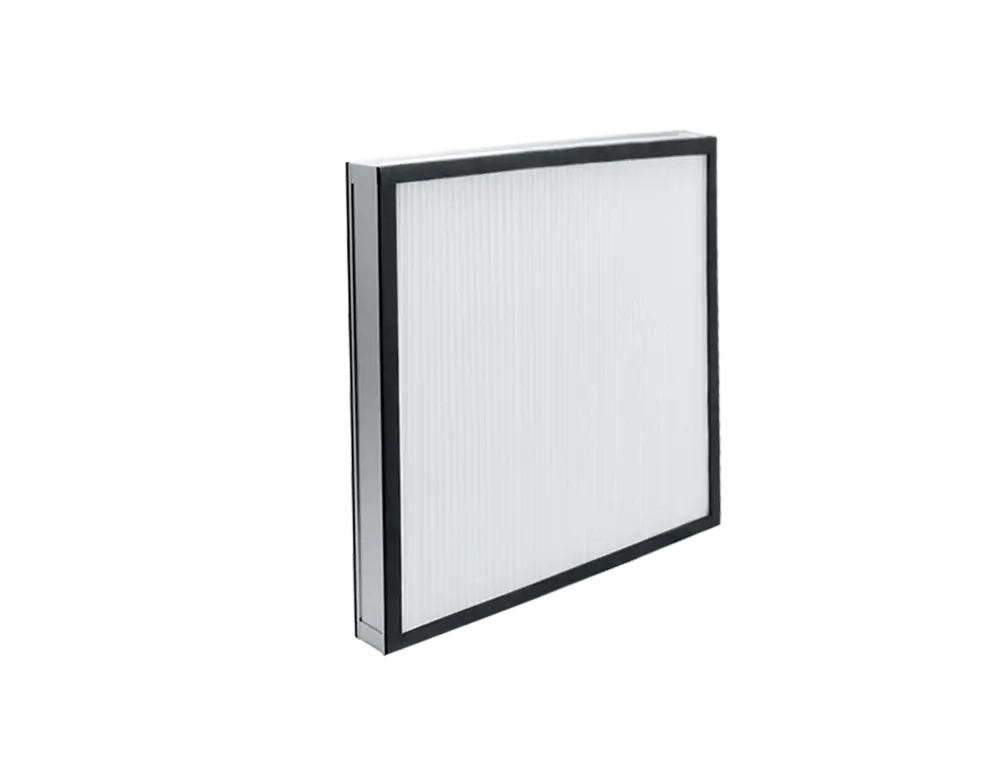
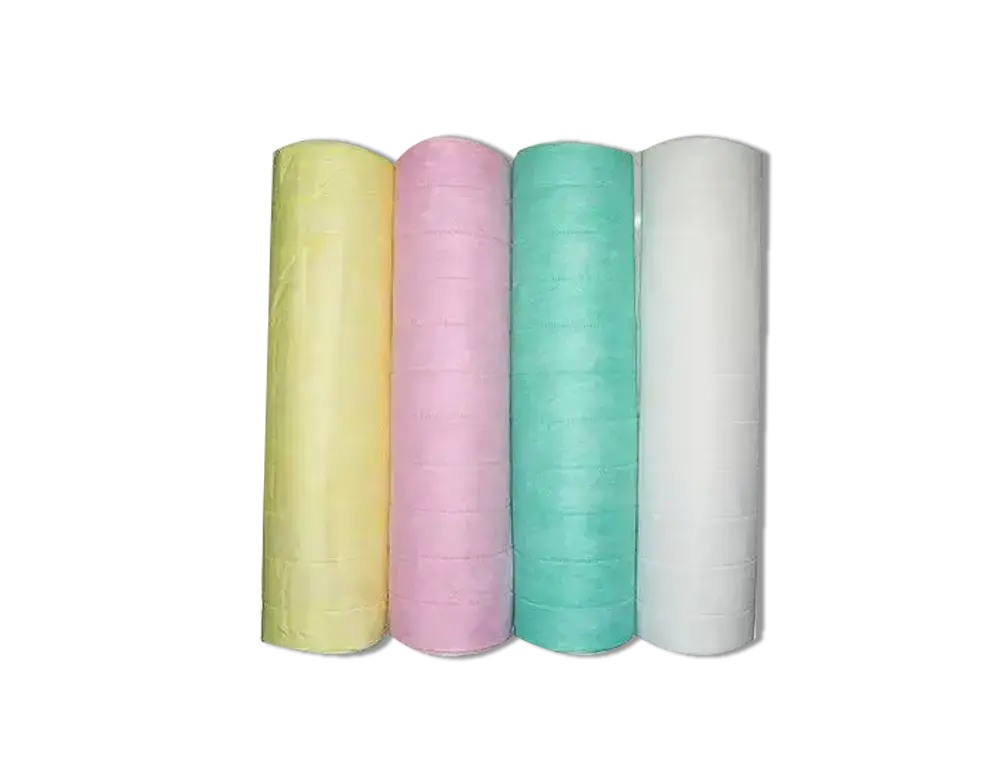
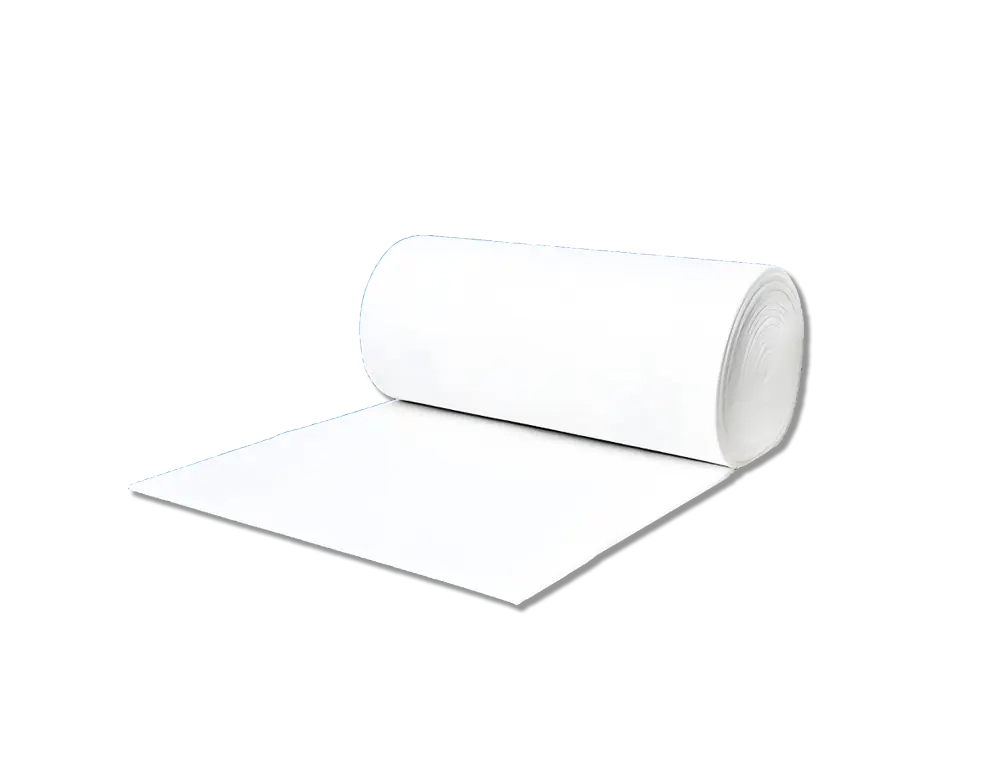
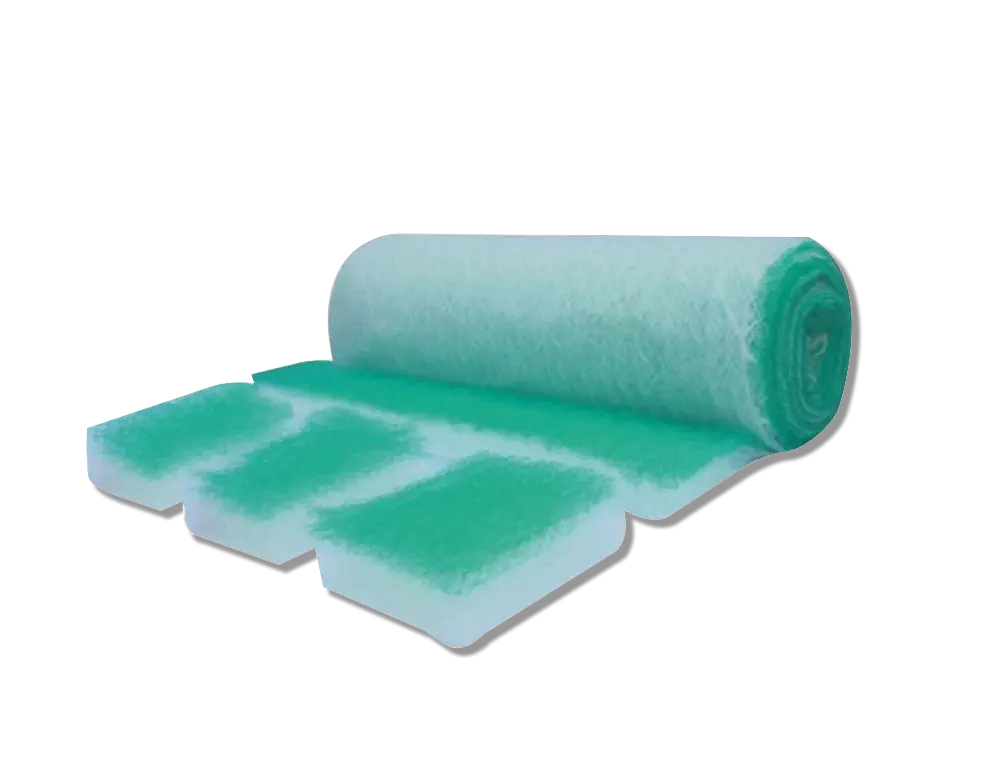
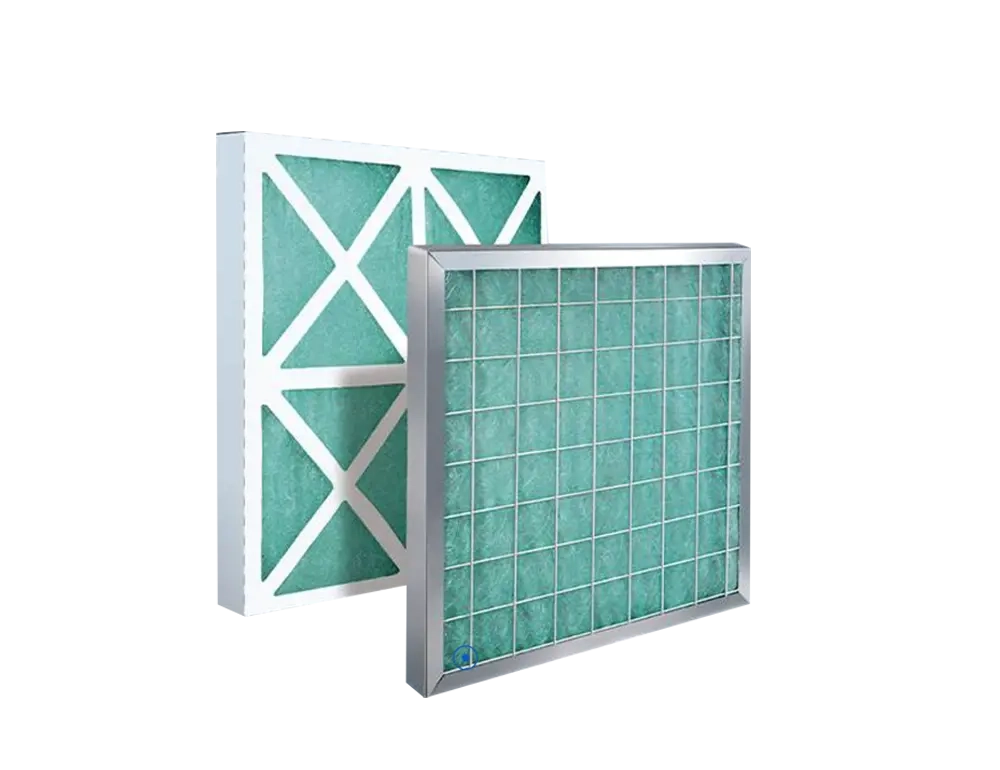
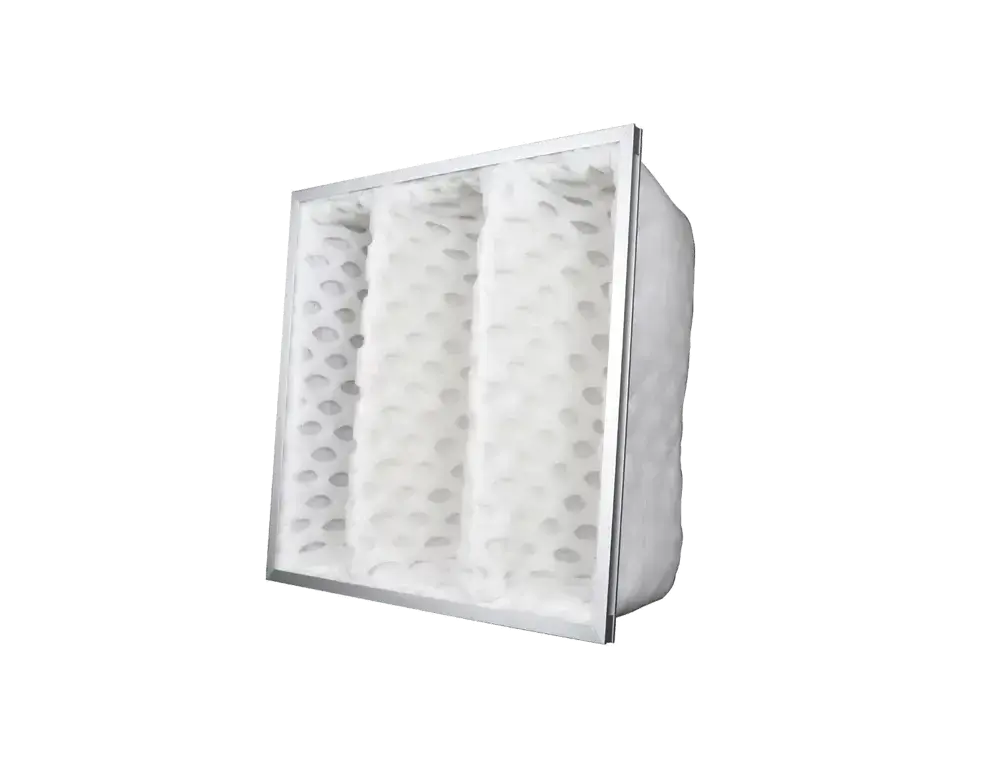
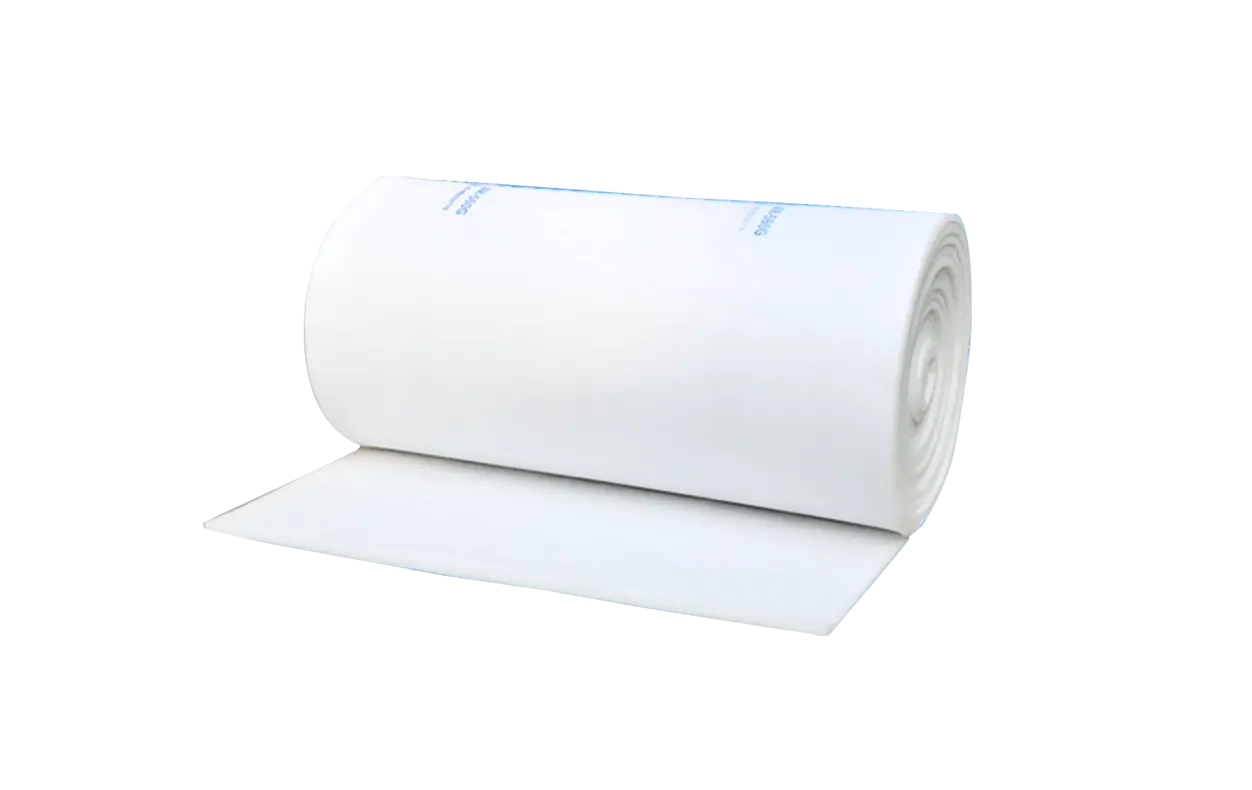
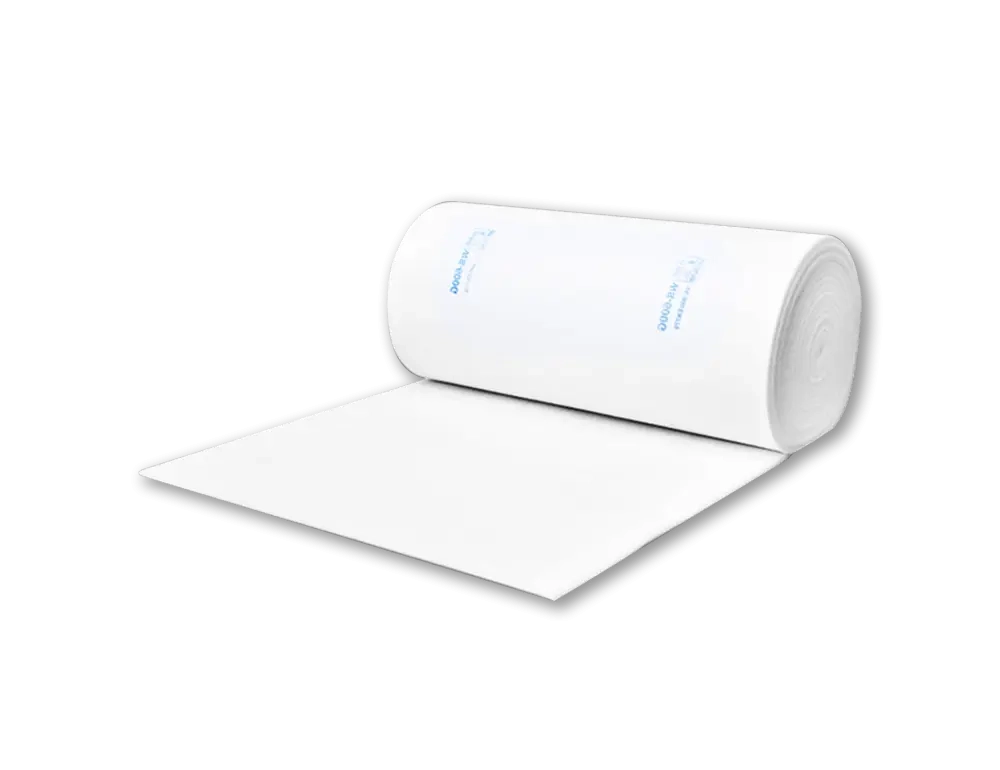
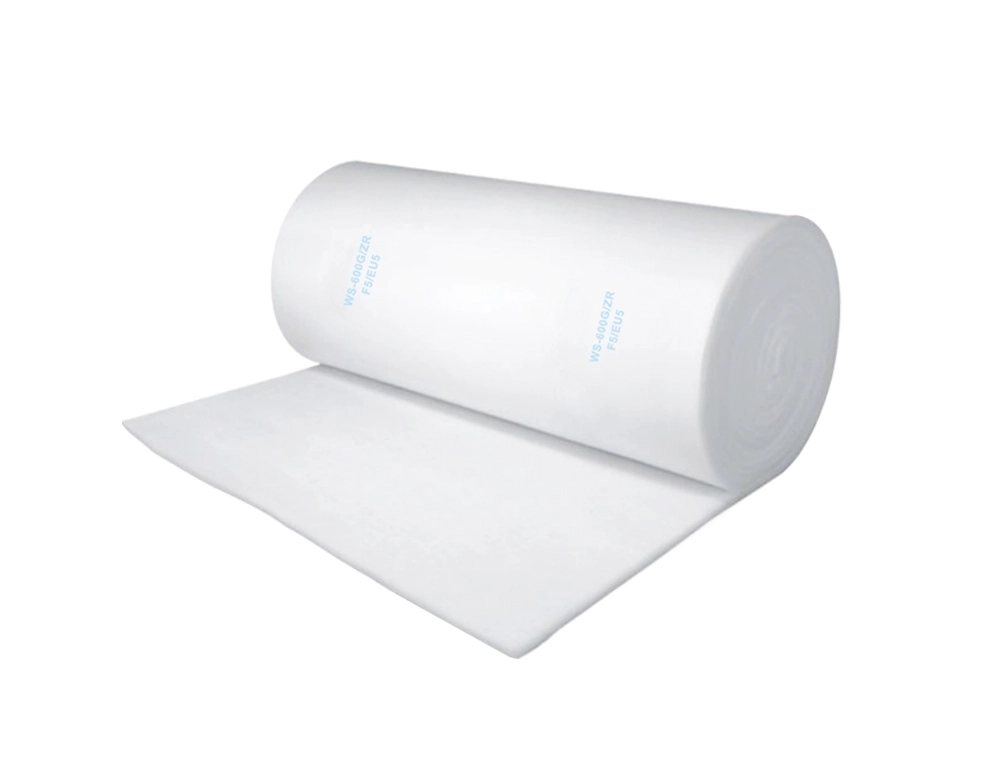
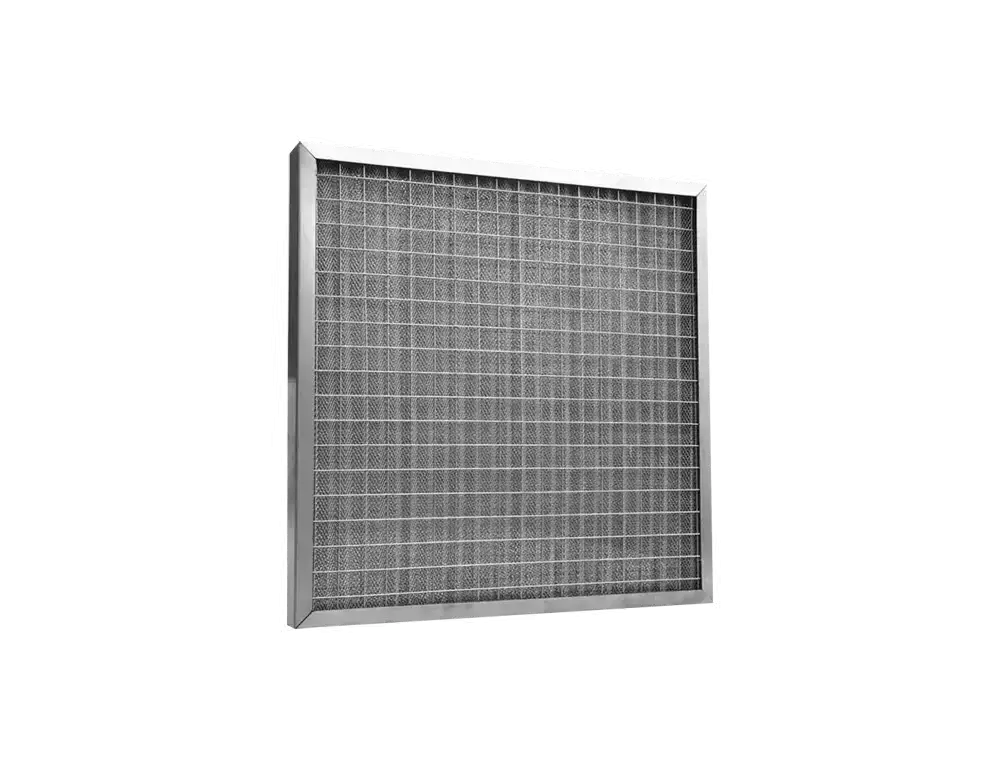
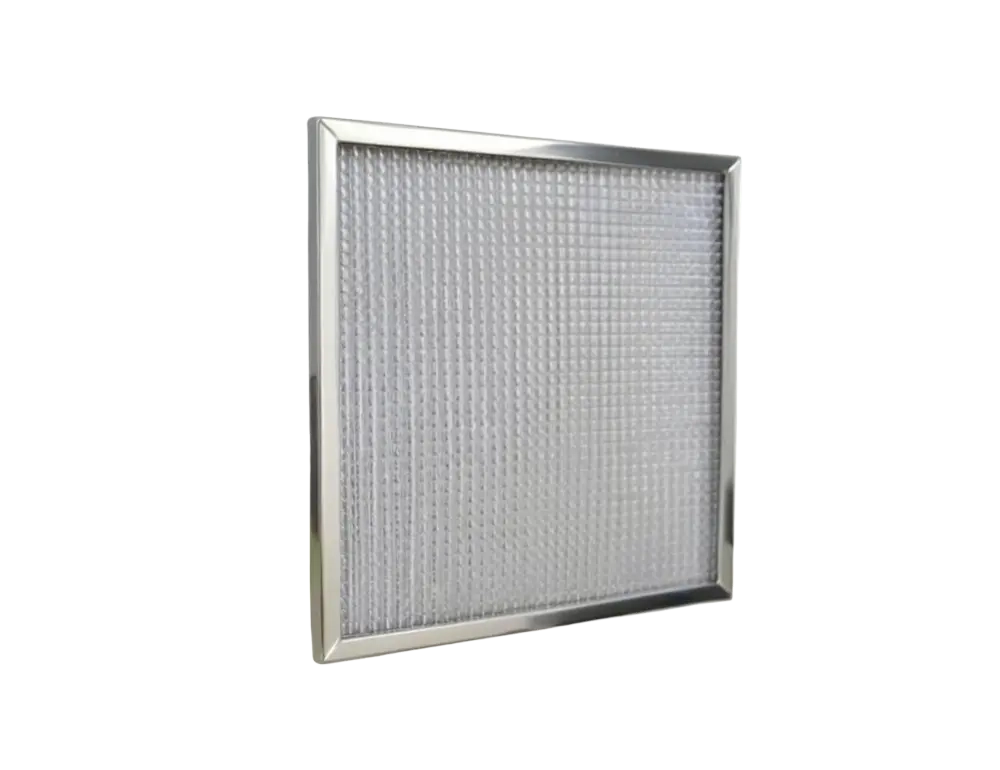
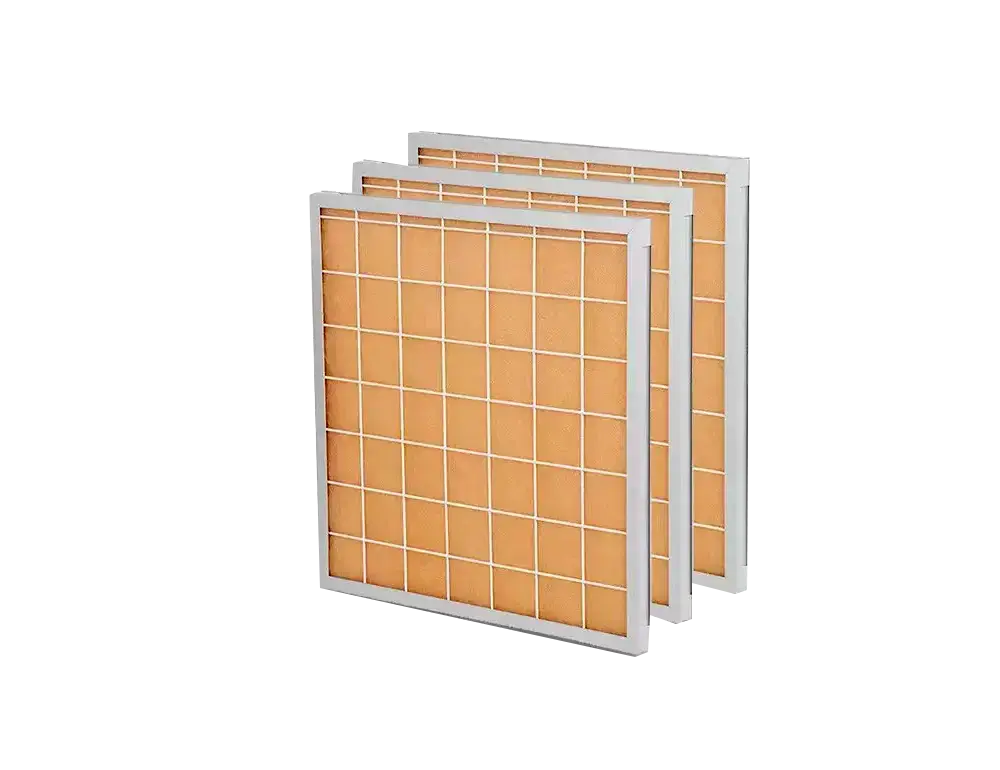
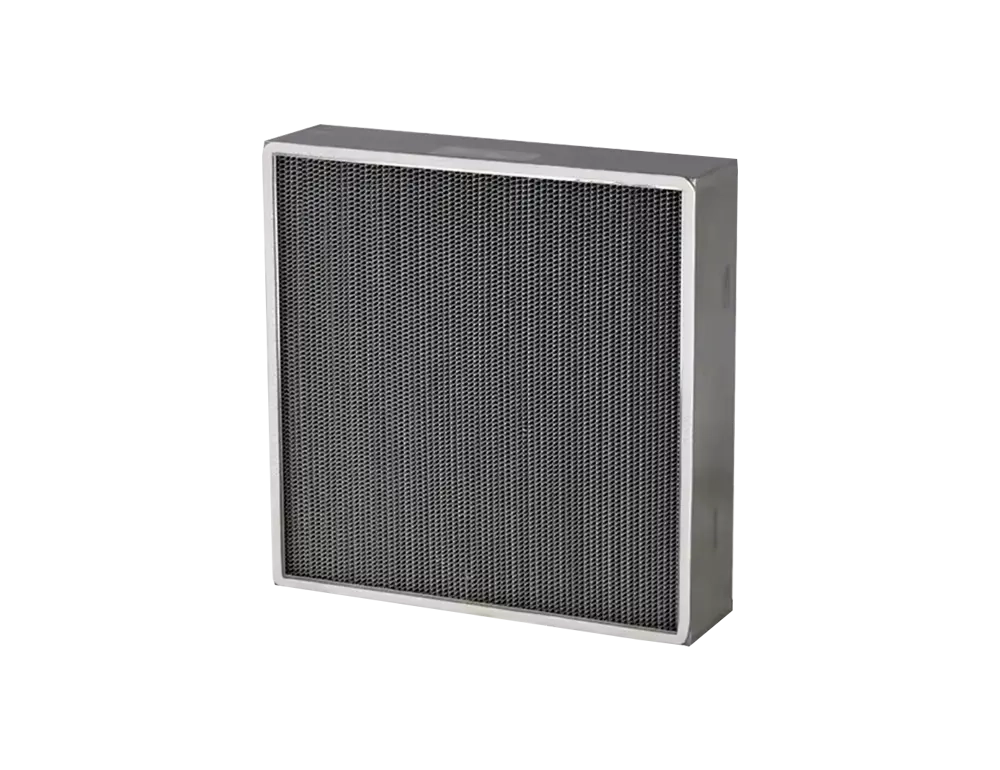
Pre-Filter (G1–G4)
First-Stage Large-Particle Capture
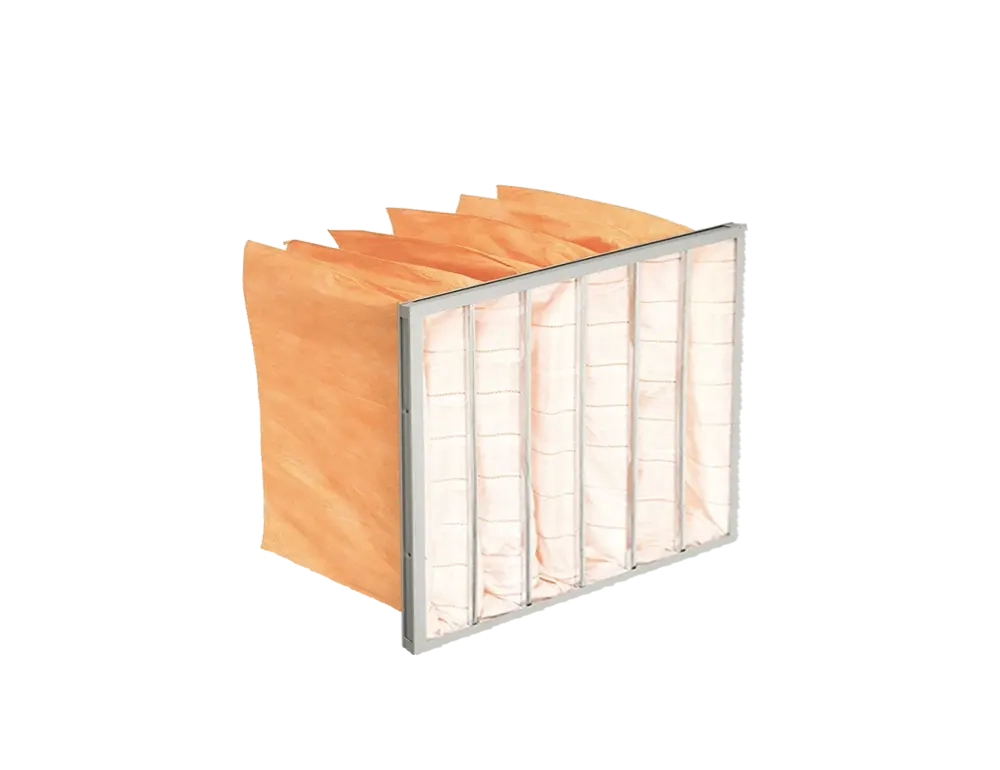
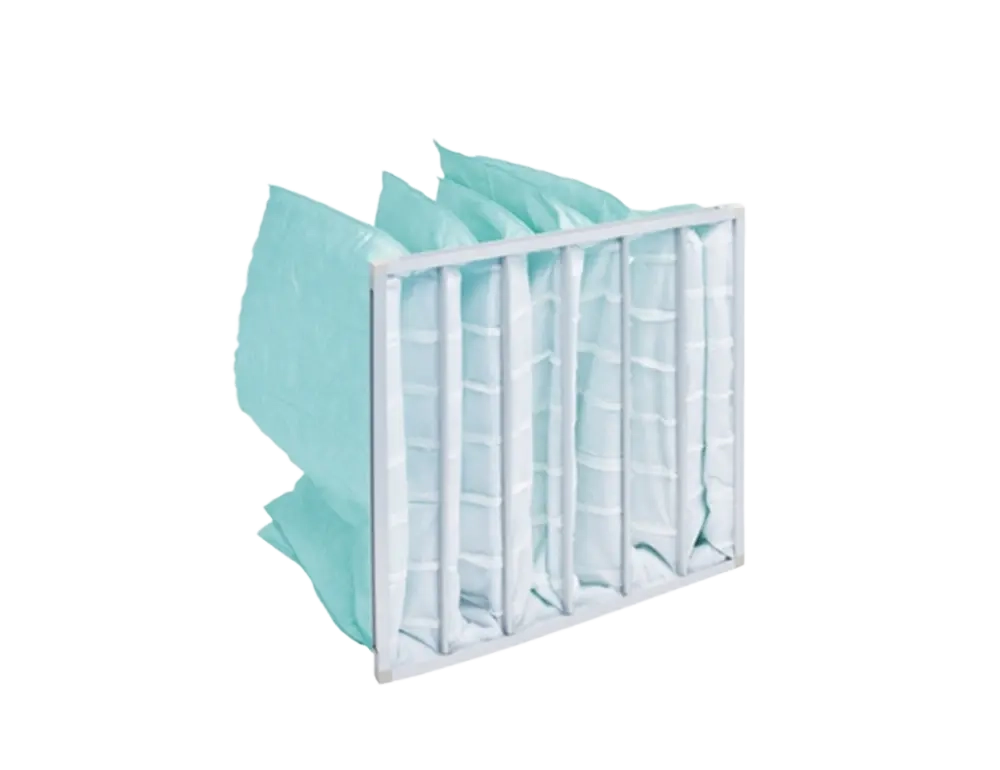
Medium-Efficiency Filter (F5–F9)
Precise PM2.5 Capture
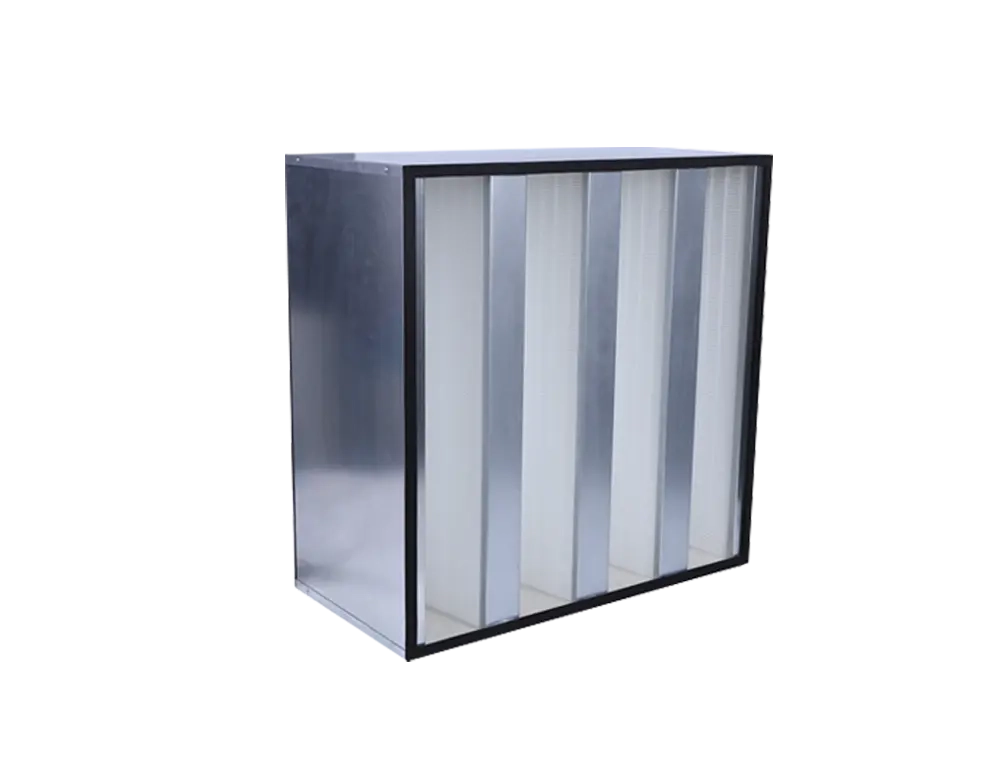
HEPA High-Efficiency Filter
Sterile-Grade Purification
ULPA Ultra-High Efficiency Filter
Sub-Micron Particle Capture
First-Stage Large-Particle Capture
The first line of defense, capturing particles ≥5 μm such as dust, hair, and fibers to protect downstream filters and extend overall system service life.
View Related Products →Precise PM2.5 Capture
Captures fine particles of 1–5 μm including PM2.5, pollen, and mold spores, significantly improving indoor air quality for commercial HVAC and ventilation systems.
View Related Products →Sterile-Grade Purification
≥99.97% filtration efficiency for particles ≥0.3 μm, delivering sterile-grade clean air widely used in medical, pharmaceutical, and electronics manufacturing.
View Related Products →Sub-Micron Particle Capture
≥99.9995% efficiency for particles ≥0.12 μm, meeting the extreme cleanliness demands of semiconductor fabs, aerospace, and other ultra-precision applications.
View Related Products →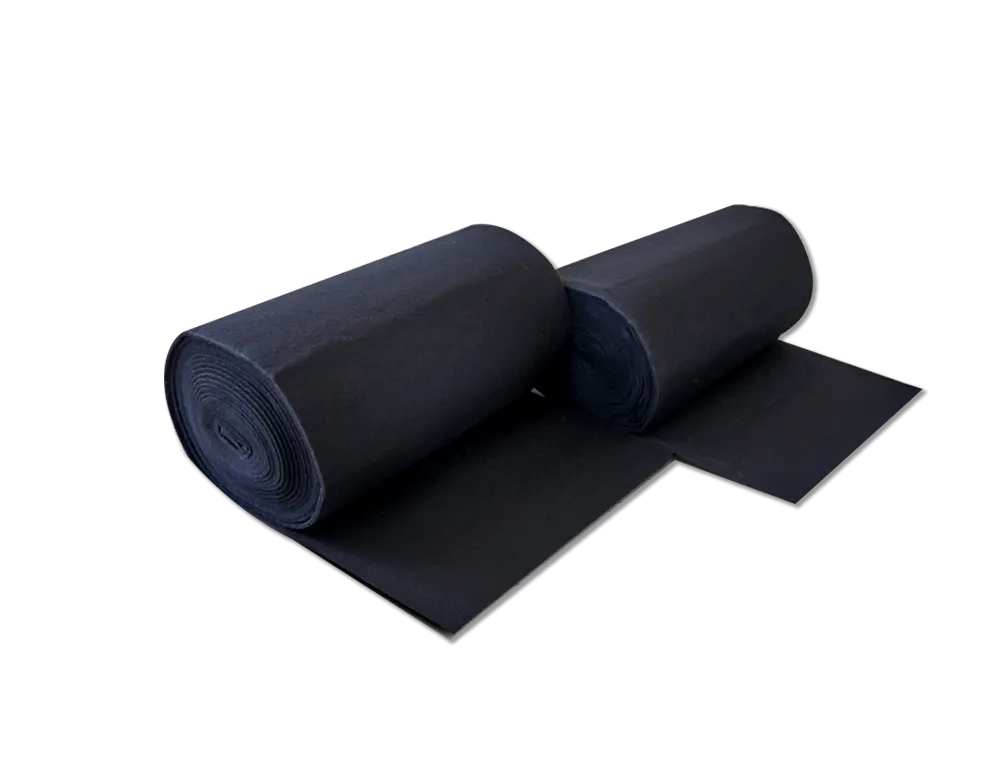
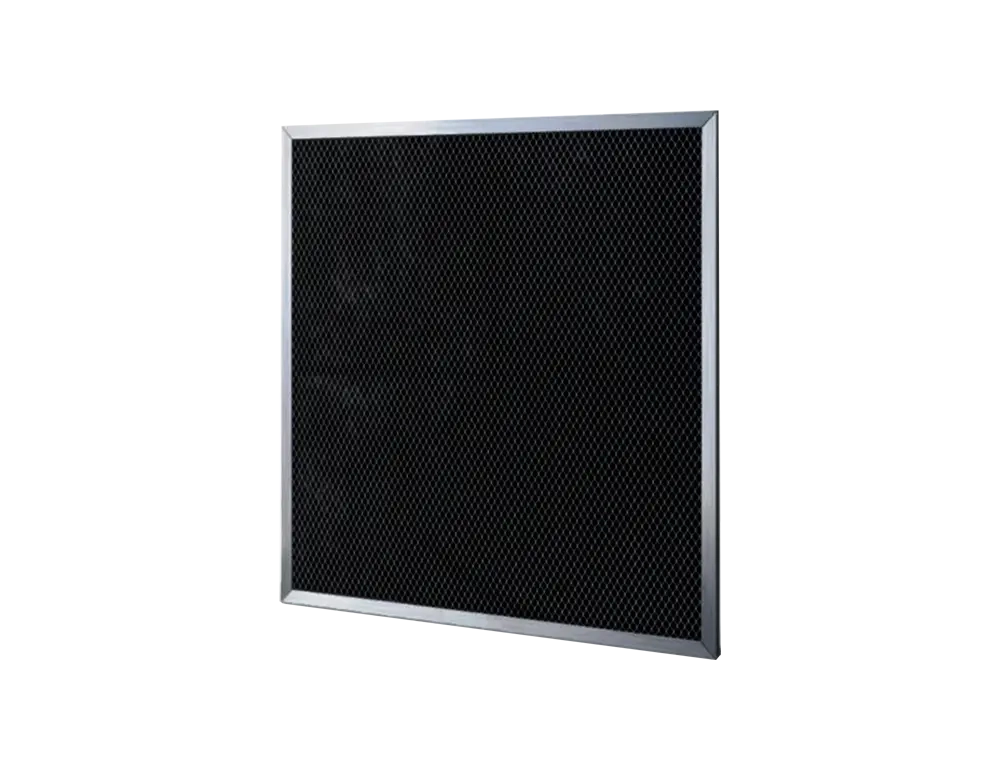
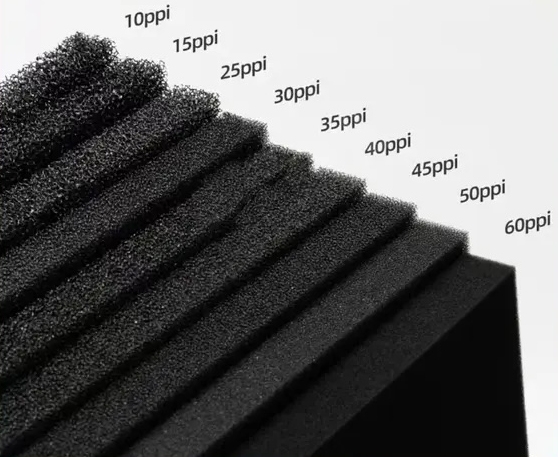
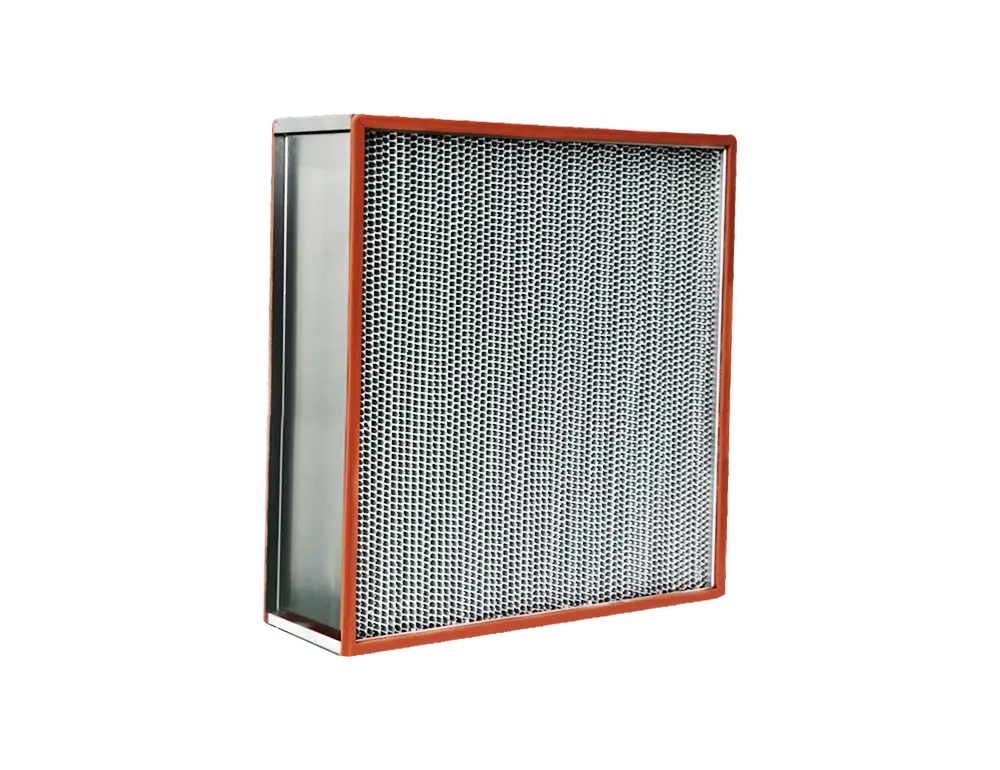
High-Temperature Resistant
Industrial-Grade Heat Tolerance
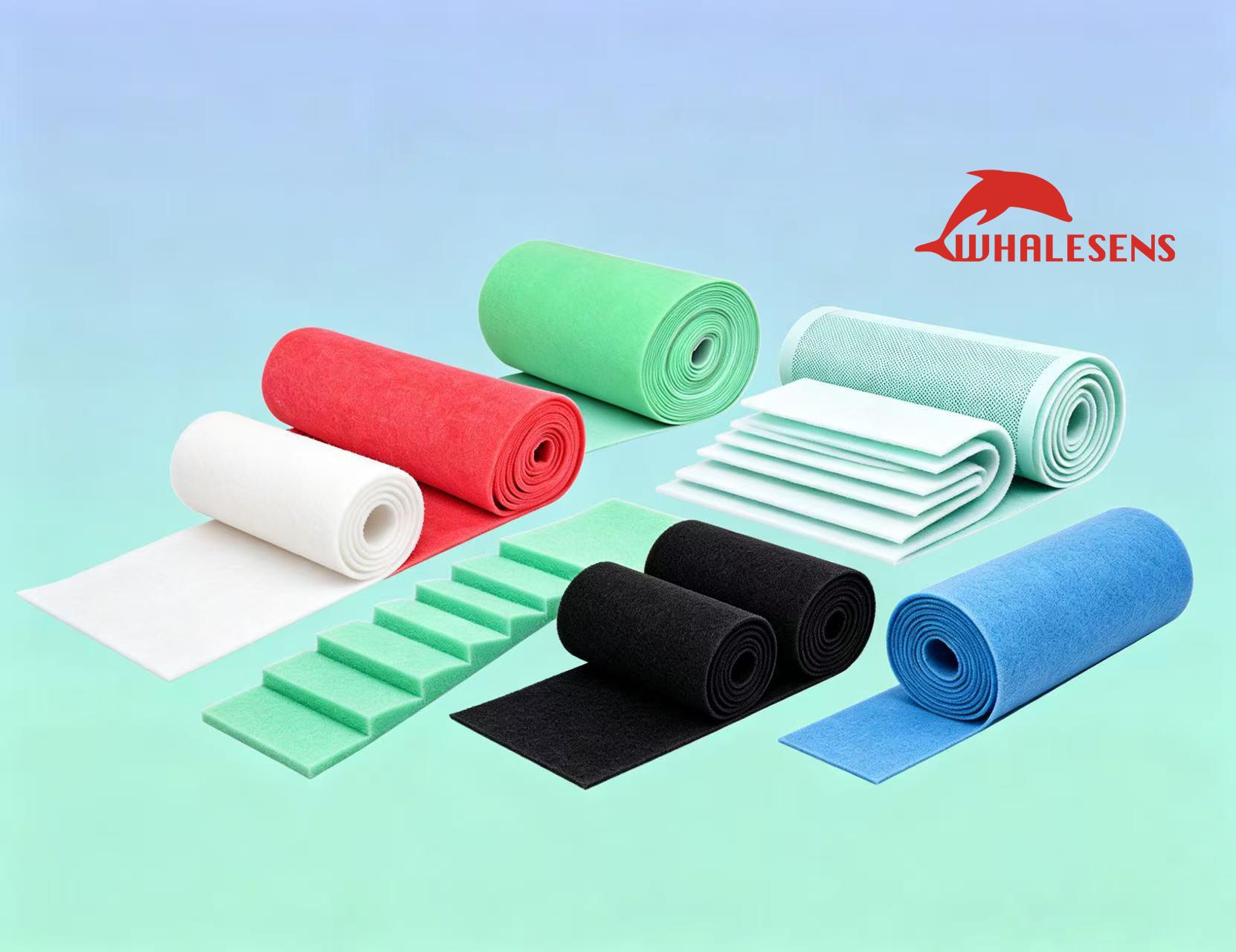
Washable & Reusable
Cut Costs, Reduce Waste
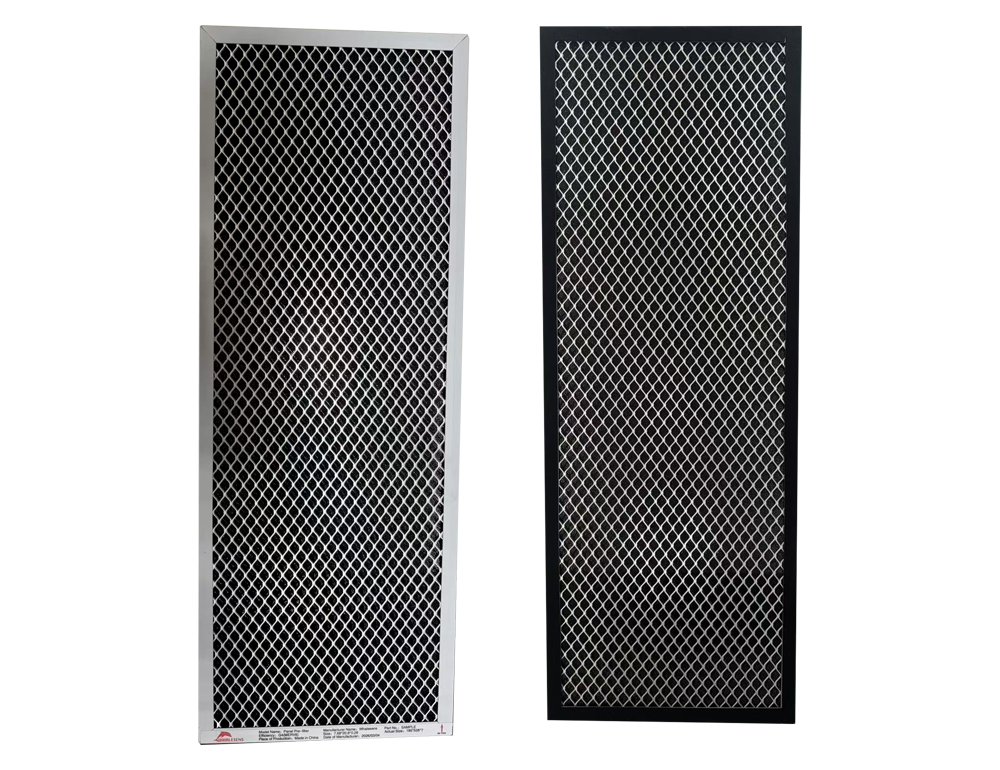
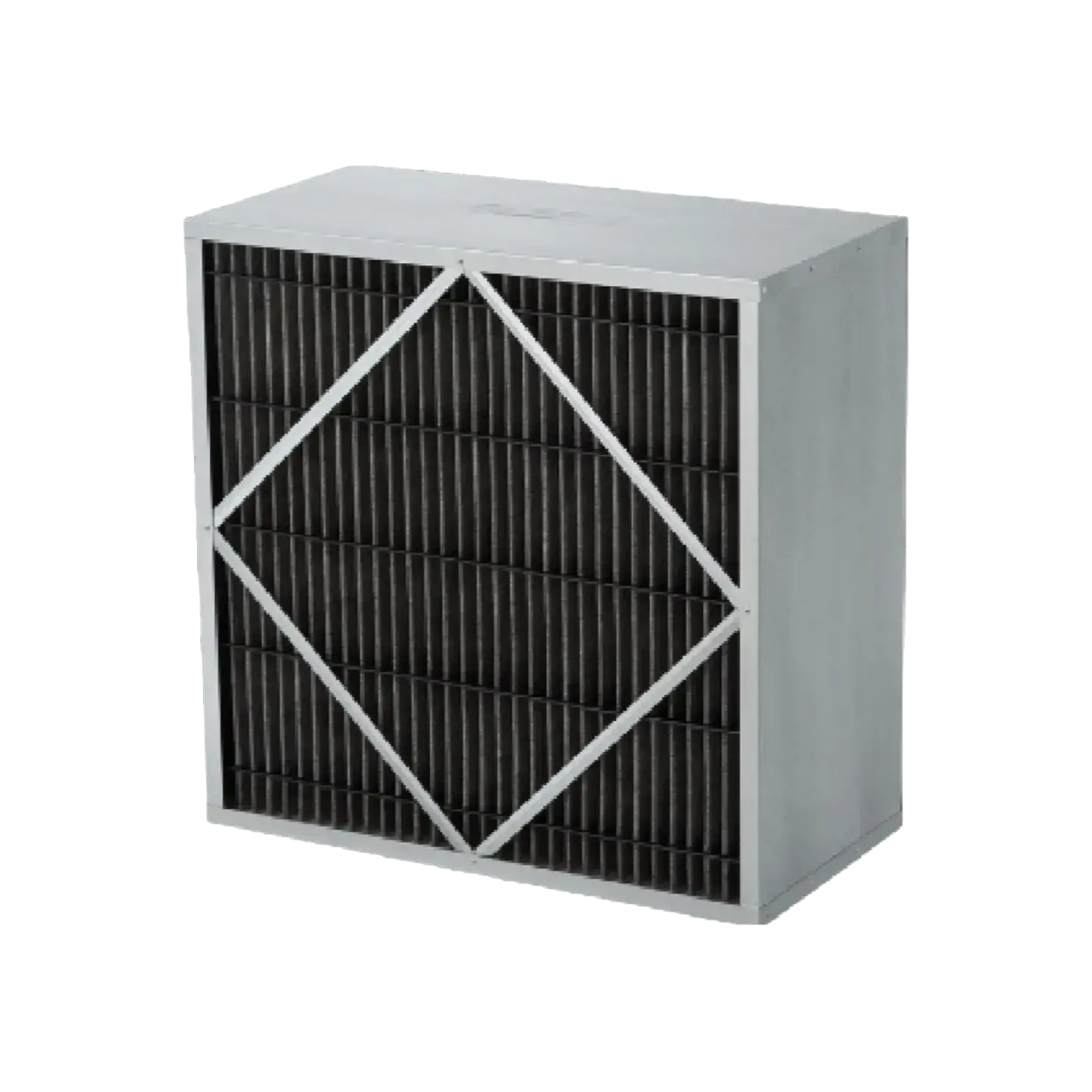
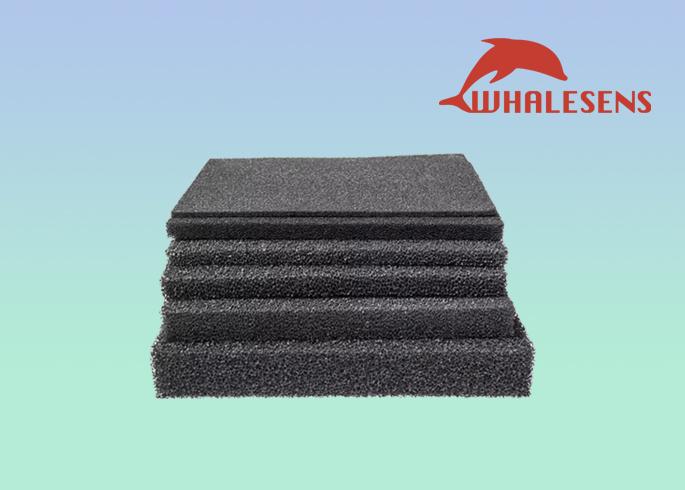
Activated Carbon
Odor & Harmful Gas Removal
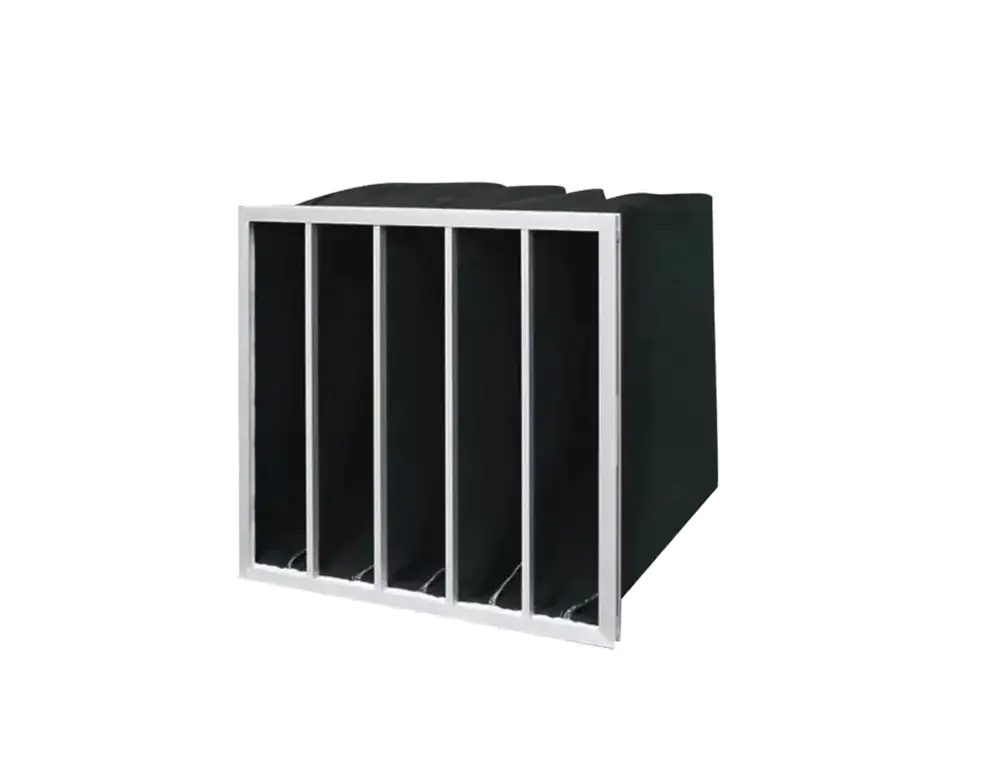
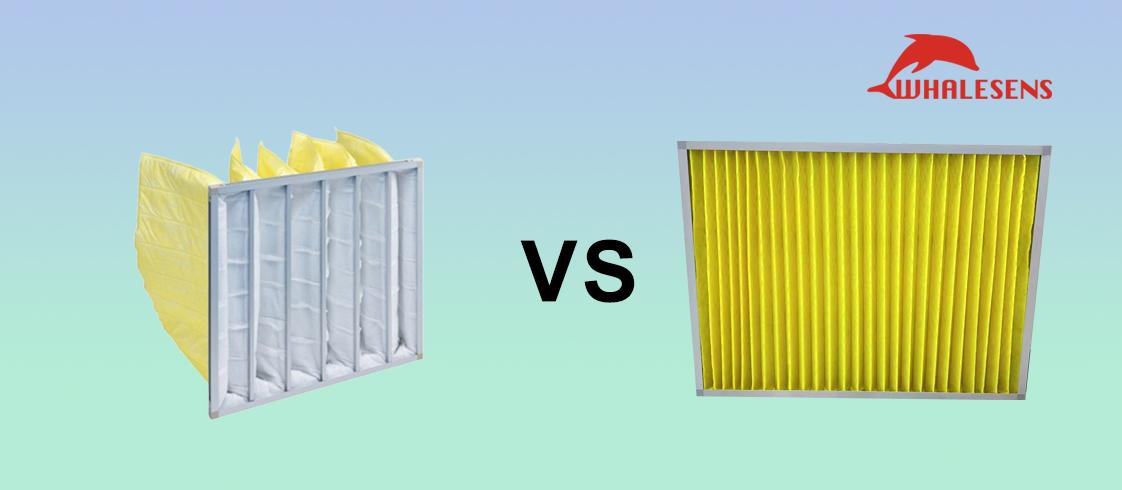
Bag Filter
High Dust-Holding, Long Life
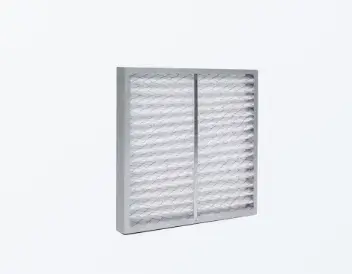
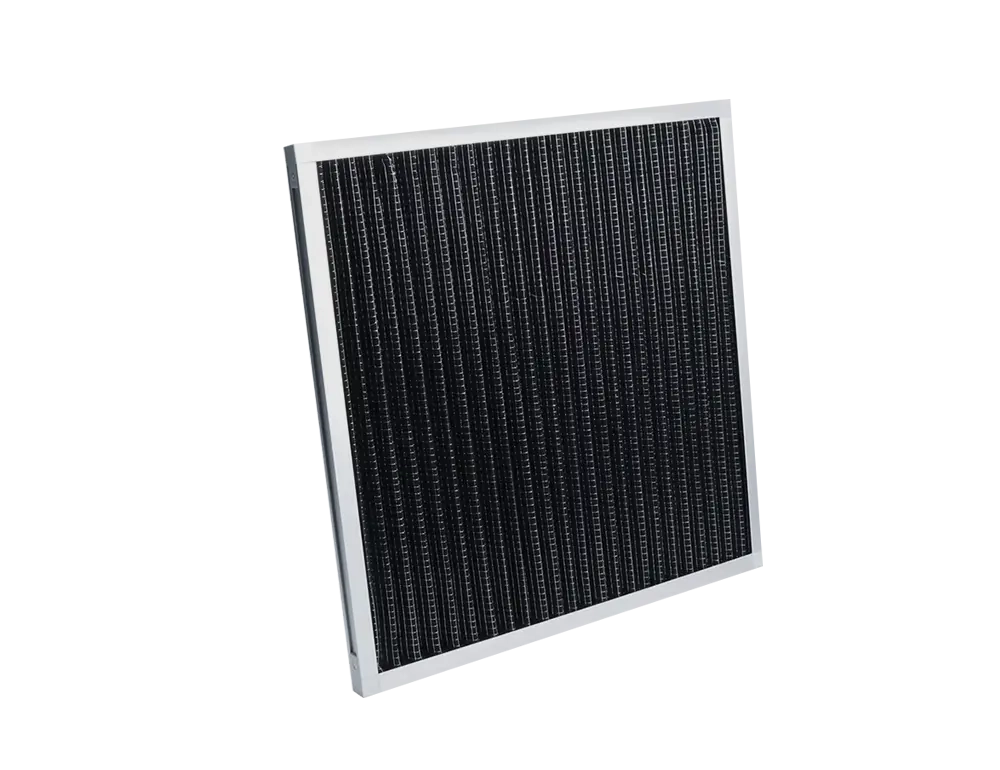
Panel / Pleated Filter
Compact Space-Saving Design
Low-Resistance Airflow
Energy-Saving Operation
Industrial-Grade Heat Tolerance
Built with specialized heat-resistant materials, operating stably up to 250°C for paint ovens, industrial dryers, and high-temperature process environments.
View Related Products →Cut Costs, Reduce Waste
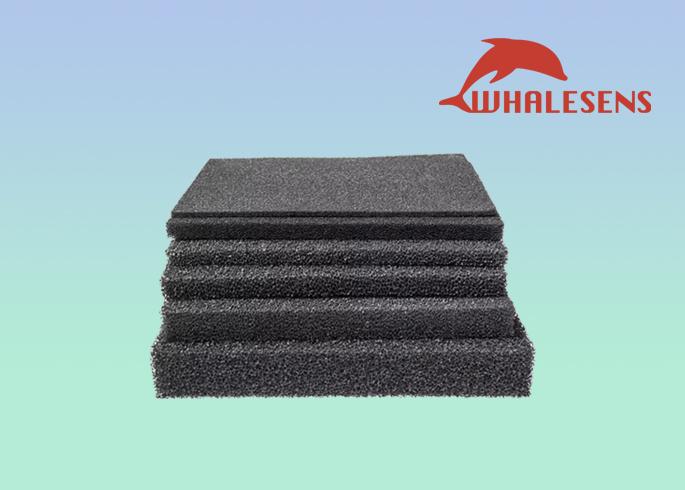
Cleanable by water washing or air blowing, reusable multiple times to significantly reduce replacement frequency and O&M costs — an economical, eco-friendly choice.
View Related Products →Odor & Harmful Gas Removal
Leverages activated carbon's high adsorption capacity to eliminate odors, VOCs, and formaldehyde, ideal for newly renovated spaces and industrial exhaust treatment.
View Related Products →High Dust-Holding, Long Life
Bag-style construction delivers a larger filtration area, high dust-holding capacity, and extended service life — ideal for high-dust environments with reduced replacement frequency.
View Related Products →Compact Space-Saving Design
Compact form factor for easy installation and replacement; pleated structure maximizes filtration area within a small footprint for higher efficiency.
View Related Products →Energy-Saving Operation
Low-resistance design minimizes pressure drop while maintaining filtration performance, reducing fan energy consumption for cost-effective, eco-friendly operation.
View Related Products →



















 English(Global)
 简体中文
 Language




Mold Control in Food Plant Cleanrooms: Where Moisture, Airflow and Verification Fail
A food plant cleanroom is not a sterile box. Mold control there does not start with a stronger disinfectant: mold needs a spore source, usable moisture and a suitable temperature, and people, packaging, materials, equipment surfaces and outdoor air all deliver the first of those every shift.
In practice, mold control usually starts with one question: which condition stopped being held, and for how long.
That is why it is less about the dose in the bucket and more about whether the envelope, airflow, filtration and maintenance routine keep moisture and spores from settling anywhere long enough to grow.
Why mold appears in a cleanroom
A cleanroom is not sterile. Mold needs three things to establish itself: a spore source, available moisture and a suitable temperature. People, materials, packaging, equipment surfaces and outdoor air all bring microorganisms or spores into the space.
Under normal operation the envelope, pressure differentials, air changes, filtration, cleaning and disinfection, and personnel control hold those risks inside an acceptable band. Trouble starts when one of those elements keeps failing instead of being corrected once:
Six elements that tend to fail quietly
- Condensation on air handling units, ducts, walls or ceilings
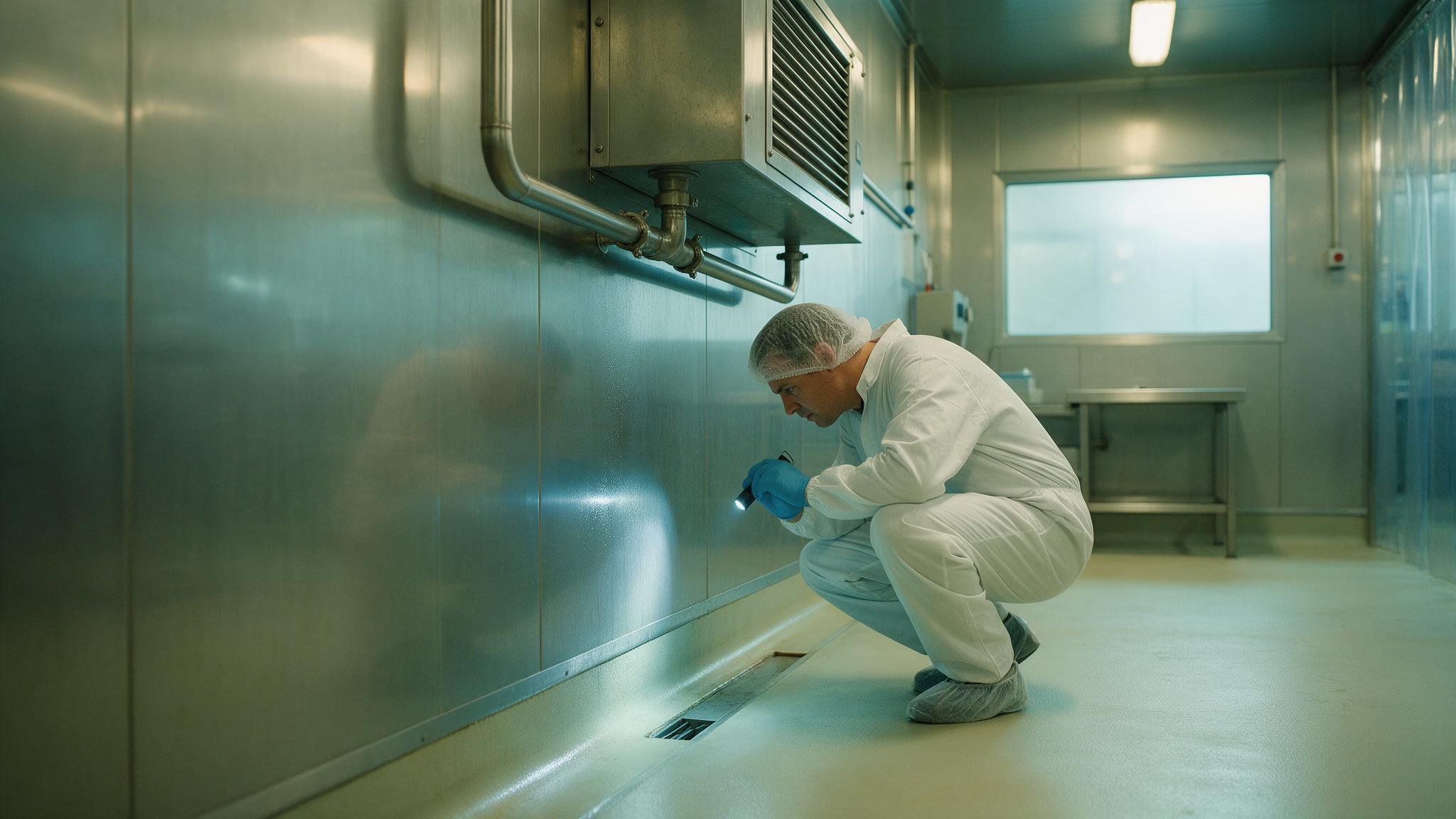
- Standing water in floor drains, drainage channels or under equipment
- Persistently high humidity, or surfaces that dry too slowly after cleaning
- Dust and moisture collecting at return grilles, filter housings or seals
- Contamination carried in by people and materials without effective interception
- Cleaning and disinfection that touches visible surfaces only, with no verification of corners and hard-to-clean areas
The first rule of mold control in a cleanroom: the surface where the stain shows up is not necessarily the source. It is often just where moisture and airflow combine first, which is why wiping the visible spot does not remove the conditions that produced it, and that distinction is the whole basis of a practical mold control routine.
Moisture first: the highest-return step in mold control
If you can only act on one thing, act on moisture: it is where mold control earns the most, in the shortest time.
Check the areas with the largest temperature difference across the envelope, terminal supply points, duct insulation, the condensate pan of the air handling unit, wall corners, ceilings, door frames, floor-to-equipment joints, and every area that stays damp after cleaning.
A hygrometer reading of a normal average humidity does not prove that no local condensation is forming. Where a local surface temperature falls below the dew point, a thin film of moisture can sit there without being obvious, and that film is enough for mold.
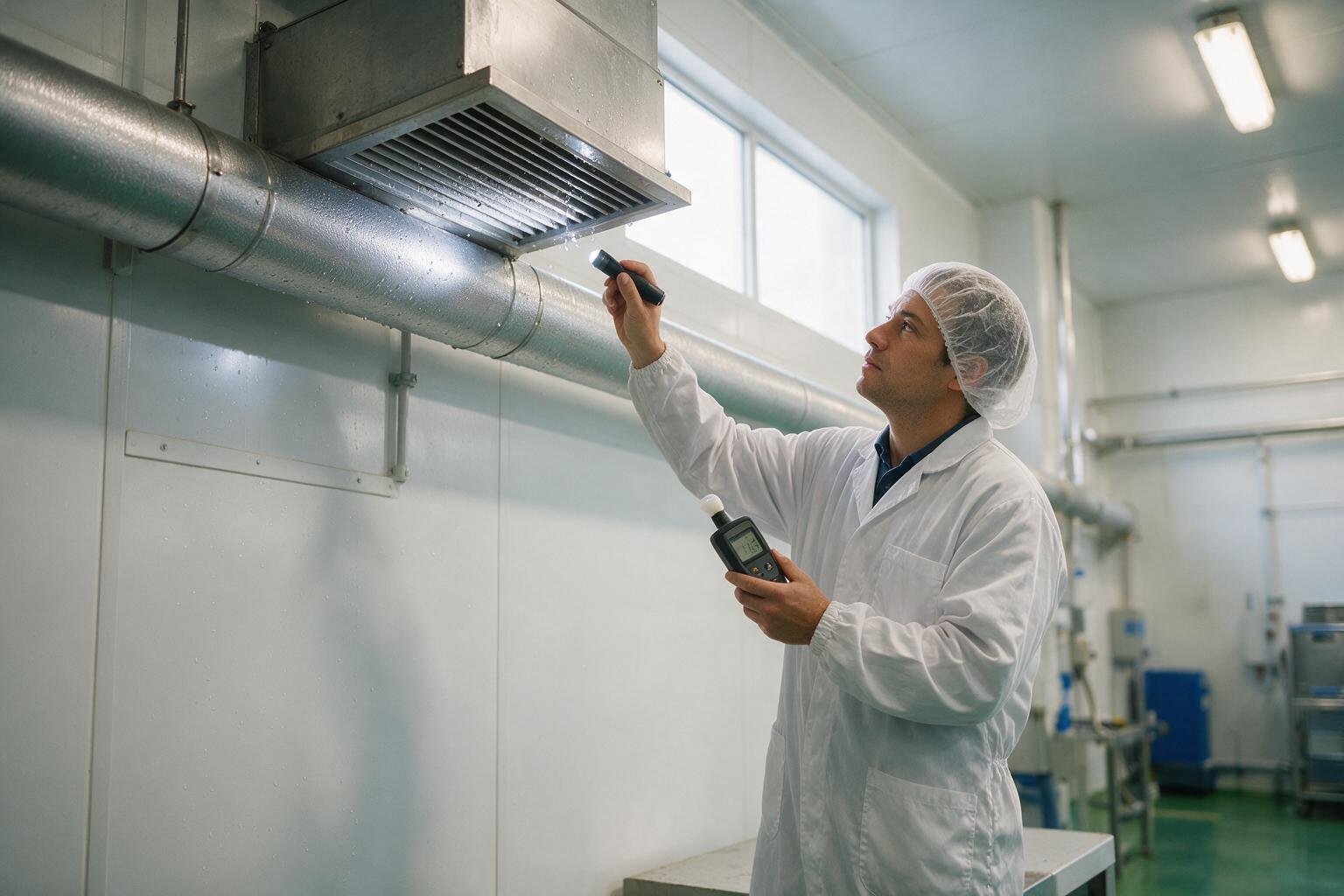
So do not judge from one room-level humidity log. Read it together with surface temperature, dew point, visible condensation traces, insulation integrity and drainage condition, and treat the result as one mold control reading rather than a comfort reading.
Filtration reduces carry-in but does not solve mold alone
A filter is one line of mold control, not the whole program. A high-efficiency filter reduces the particles and microbial carriers that enter the clean zone, but it is not a mold control switch. If the filter is damp, heavily loaded, badly sealed in the housing, or installed with bypass leakage, the system can still carry contamination in or let it accumulate locally.
Put these on the periodic inspection list, and keep the pressure readings in the same file as the mold control records:
- Differential pressure that keeps rising or fluctuates abnormally
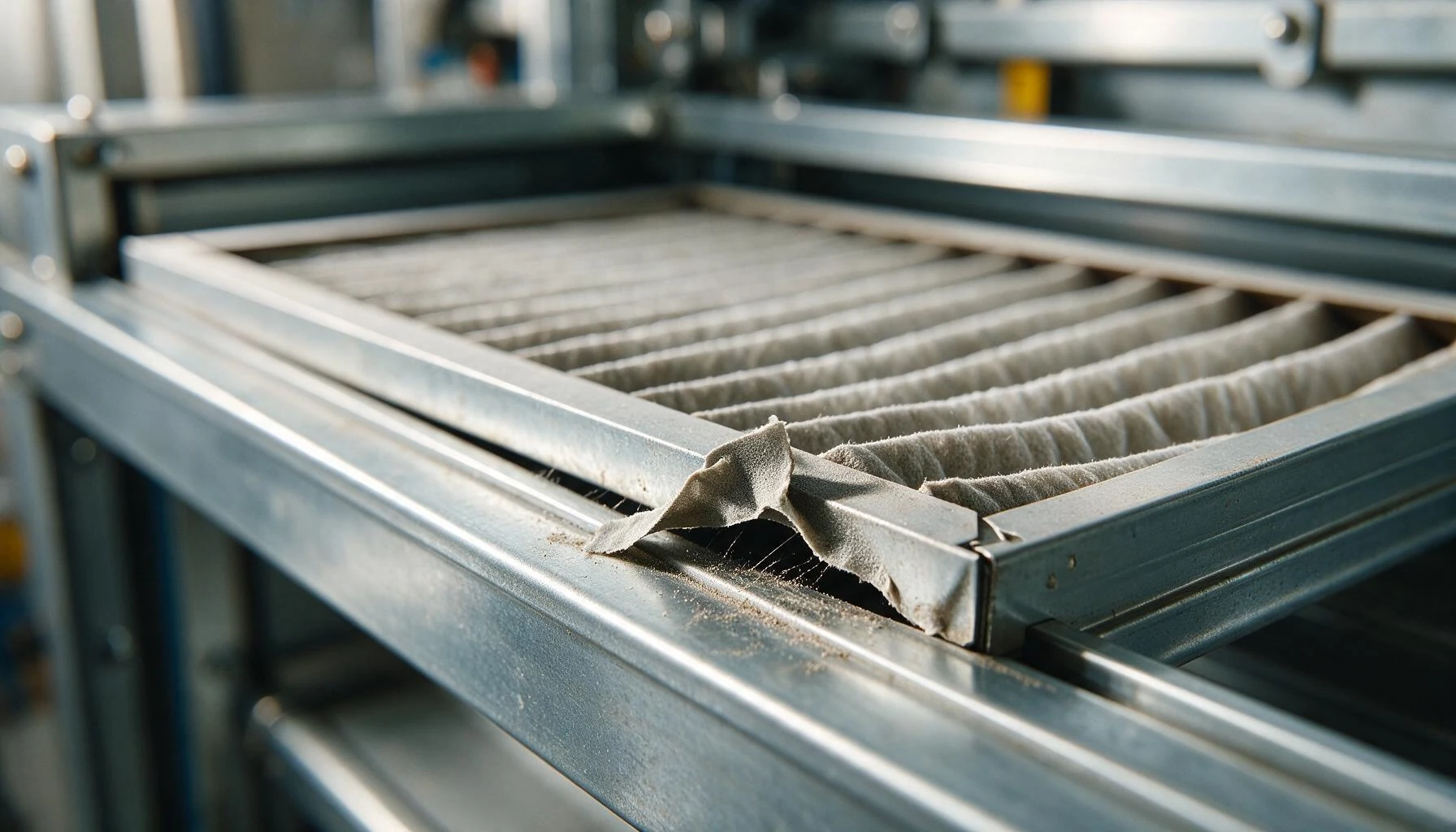
- Leakage at the filter frame, gasket and installation edge
- Unusual deposits downstream of the filter and near supply terminals
- Whether installation confirmation and integrity verification were completed after a change
- Damp dust inside the air handling unit, the return section and the ductwork
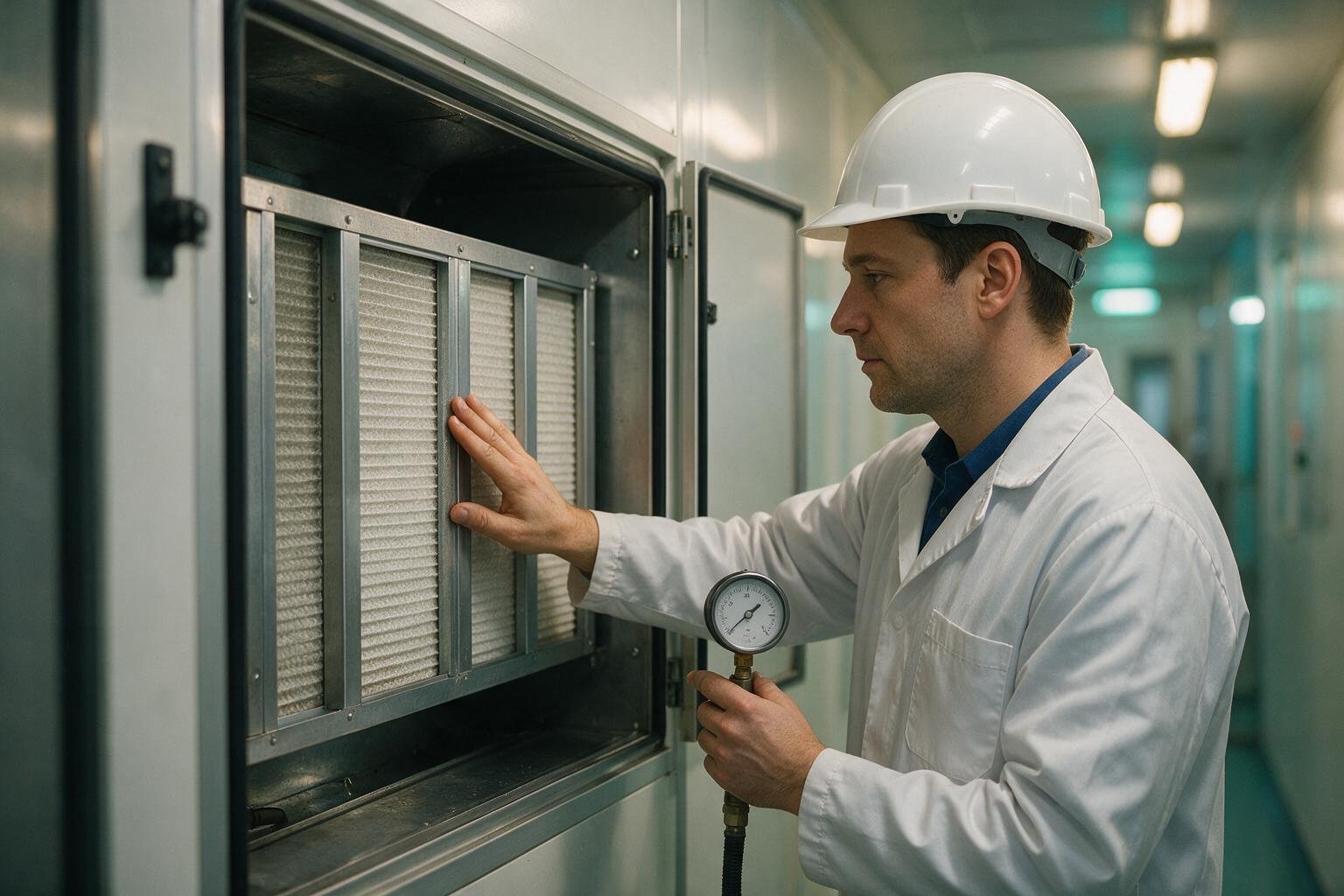
The filter intercepts; the seal and the airflow are what make the interception real. They have to be judged together.
Filtration and mold control in food plant cleanrooms
For terminal supply duty in a food plant, compare the frame and gasket construction of a mini-pleated HEPA filter and a liquid tank HEPA filter, then follow the field steps in HEPA filter leak testing for integrity verification.
This is where mold control most often gets misdiagnosed: the problem is written off as an insufficient filter class while housing dryness, gasket compression and installation edges are never checked.
Airflow, pressure differentials and the people-material path
Airflow is the second line of mold control after moisture. Mold risk in a cleanroom depends less on filtration efficiency alone than on whether contamination lingers, recirculates and spreads where it lands.
If the pressure differential is lost, doors are opened constantly, or racks and equipment block the air pattern, contamination can move from a lower cleanliness zone into a cleaner one, and can stall in corners that no airflow sweeps. Gowning, hand hygiene, tool transfer and the removal of outer packaging also change how many spores are carried in.
Draw the map along three paths — people, materials, air: where people enter, where materials are unpacked, staged and transferred, where air is supplied, which route it takes and where it returns. Placing the stained area back onto that map usually finds the root cause faster than cleaning the stain again.
For the wider filtration layout of a food processing site, the food processing air filtration overview shows how pre-filtration, medium efficiency and terminal stages are normally split, so you are not left redesigning the final stage over and over.
Cleaning and disinfection: coverage plus verification
Cleaning is a mold control step rather than a cosmetic one. A stronger disinfectant is not automatically a better one, and neither is a higher frequency. What matters is whether the agent reaches the contaminated surface, whether contact time is respected, whether rotation or validation is planned, and whether hard-to-clean structures and the underside of equipment are actually treated.
For porous, damaged, aged or already colonized materials, wiping usually only improves the surface for a while. At that point the question becomes whether the material should be replaced, whether the envelope needs repair, and whether the area should be isolated and re-checked.
Verification after cleaning cannot rely on looking clean either. Combine environmental monitoring, surface sampling, trend analysis and deviation records to confirm that the measures actually lowered the risk, and that the mold control loop is closing rather than being re-opened every season.
When you find mold, work through this sequence
A mold control response has a fixed order. Jumping to disinfection first hides the cause and brings the problem back within weeks.
Run that sequence as a mold control routine rather than a one-off cleanup; three habits break it, and all three treat a system problem as a single-point problem:
| Common move | Why it is not enough | Better move |
|---|---|---|
| Increase disinfectant concentration only | Where the root cause is a leak, condensation or damp material, a stronger dose only delays the symptom and can add corrosion and residue risk | Find the water source first, then decide the disinfection plan |
| Replace the HEPA filter only | When the housing leaks, the air handling unit stays damp or the pressure differential is lost, a new filter can foul again | Check filter, seal, housing dryness and pressure differential as one package |
| Judge from a single test report | One test describes one moment in time | Track the trend: humidity, pressure differential, filter differential pressure, monitoring and repair records over months |
Mold control in a food plant cleanroom is system management, not a single disinfectant, a single machine or a single person's task. The envelope, HVAC, filtration, process hygiene, people and materials, and quality verification all have to hold at the same time.
The habit worth building is to treat every mold finding as a full root-cause exercise: find the moisture, confirm the airflow, audit the contamination path, repair the damaged element, and then verify with data. When the cleanroom stays dry, the airflow stays stable, the filtration system stays sealed and the material routes stay clear, mold control shifts from repeated firefighting to something you can prevent, trace and verify.
For stage-by-stage configuration in food and beverage plants, the food and beverage air filtration solutions page maps pre-filtration, medium efficiency and terminal HEPA duty against cleanroom requirements, and is a reasonable starting point before adjusting anything on site; it also keeps the mold control conversation on conditions rather than on product claims.
Need a custom air filtration solution?
Contact the Whalesens engineering team for product selection and OEM/ODM support.
Email whalesens@gmail.com
Related Products
These products cover the filtration stages discussed above; see each product page for full specifications.
 ProductMini-Pleated HEPA FilterTerminal supply filtration for food processing, packaging and clean production areas, with frame size, rated airflow and system resistance checked togetherView product details →
 ProductLiquid Tank HEPA FilterCleanroom terminal duty where sealing reliability is critical and the liquid tank structure protects the filter-to-frame jointView product details →
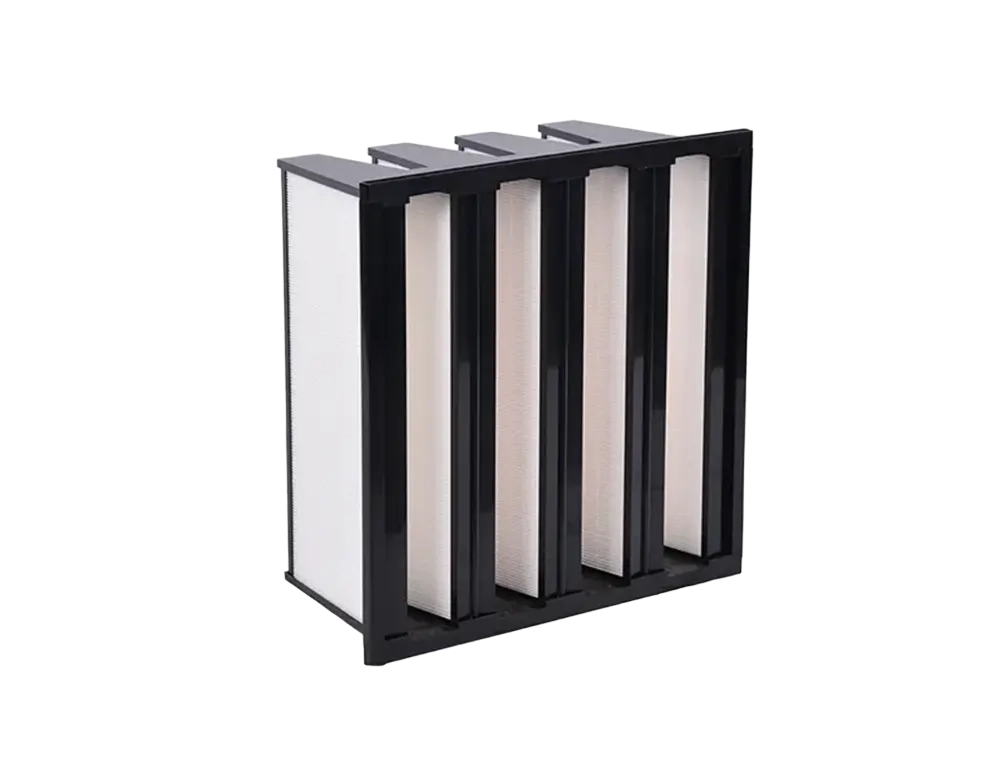
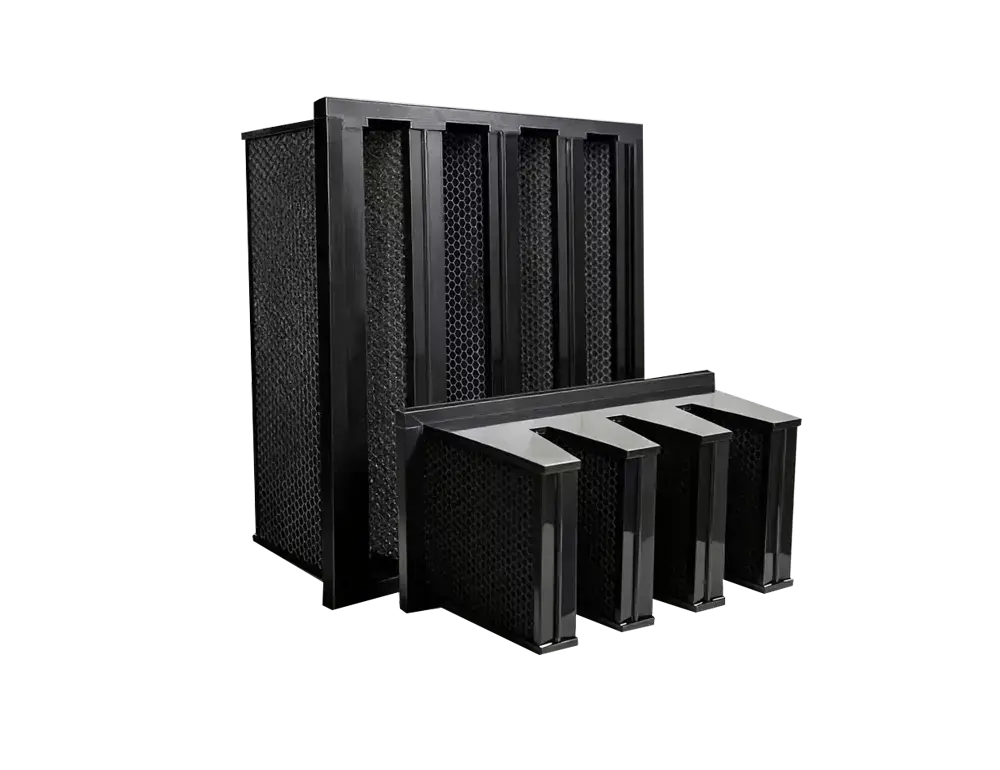
 ProductV-Bank HEPA FilterHigh-airflow supply terminals and air handling units where a larger filter face area and lower resistance matterView product details →
 ProductF9 Medium Efficiency Bag Air FilterMedium efficiency interception ahead of the HEPA stage, taking dust and moisture load off the final filterView product details →
 ProductDeep Pleated HEPA FilterConventional cleanrooms and commercial buildings where a mature structure keeps specifications and replacements easy to matchView product details →